The Wright Brothers and the Patent Application for the Wright Flyer
1903 · Dayton, United States
The Wright brothers applied for a patent on their airplane, the Wright Flyer.
May 22, 1906
The Wright brothers were granted a patent for their flying machine, marking a significant milestone in aviation history.
Washington, D.C., United States | United States Patent Office
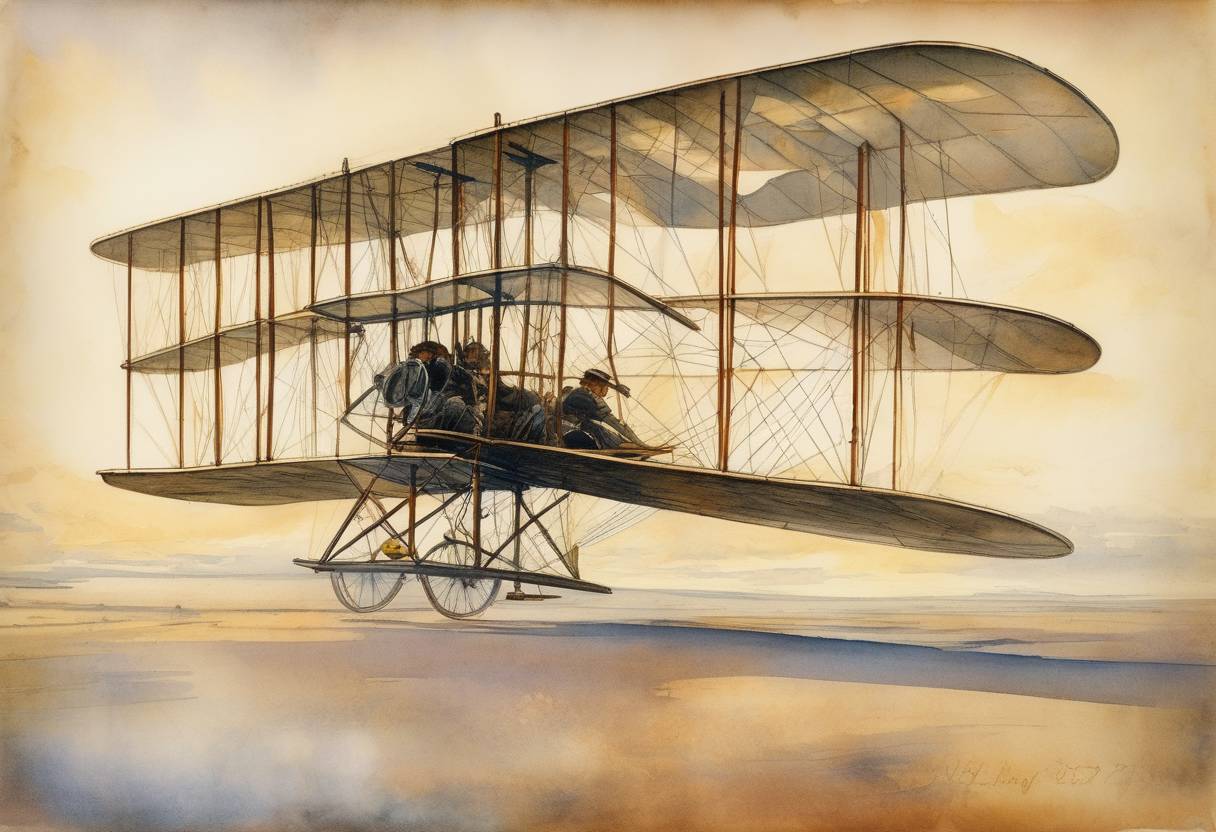
On May 22, 1906, the Wright brothers, Orville and Wilbur Wright, were granted U.S. Patent No. 821,393 for their invention of a “Flying Machine.” This patent marked a pivotal moment in aviation history, as it legally recognized the Wright brothers’ innovative control system that made powered flight possible.
The Wright brothers, originally bicycle manufacturers from Dayton, Ohio, had been experimenting with flight since the late 1890s. Their interest in aviation was sparked by the works of earlier pioneers like Otto Lilienthal and Samuel Langley. The brothers focused on solving the problem of controlled flight, which they believed was the key to successful aviation.
The patent, filed on March 23, 1903, and granted in 1906, primarily covered the Wright brothers’ method of controlling an aircraft in flight. Their design included:
The granting of the patent was a significant milestone because it legally protected the Wright brothers’ innovations, allowing them to assert their rights over their invention. This patent was crucial in establishing the Wright brothers as the pioneers of controlled, powered flight.
The patent granted on May 22, 1906, was not just a legal document; it was a testament to the Wright brothers’ ingenuity and determination, marking a transformative moment in the history of human flight.
Source: en.wikipedia.org