The Treaty of Paris and the Cession of Florida - February 10, 1763
1763 · Paris, France
In the Treaty of Paris negotiations, Spain ceded Florida to Great Britain in exchange for Havana, ending the Seven Years' War in Spanish Florida.
February 10, 1763
The Treaty of Paris is signed, ending the Seven Years' War and marking the beginning of British dominance outside Europe.
Paris, France | British Empire
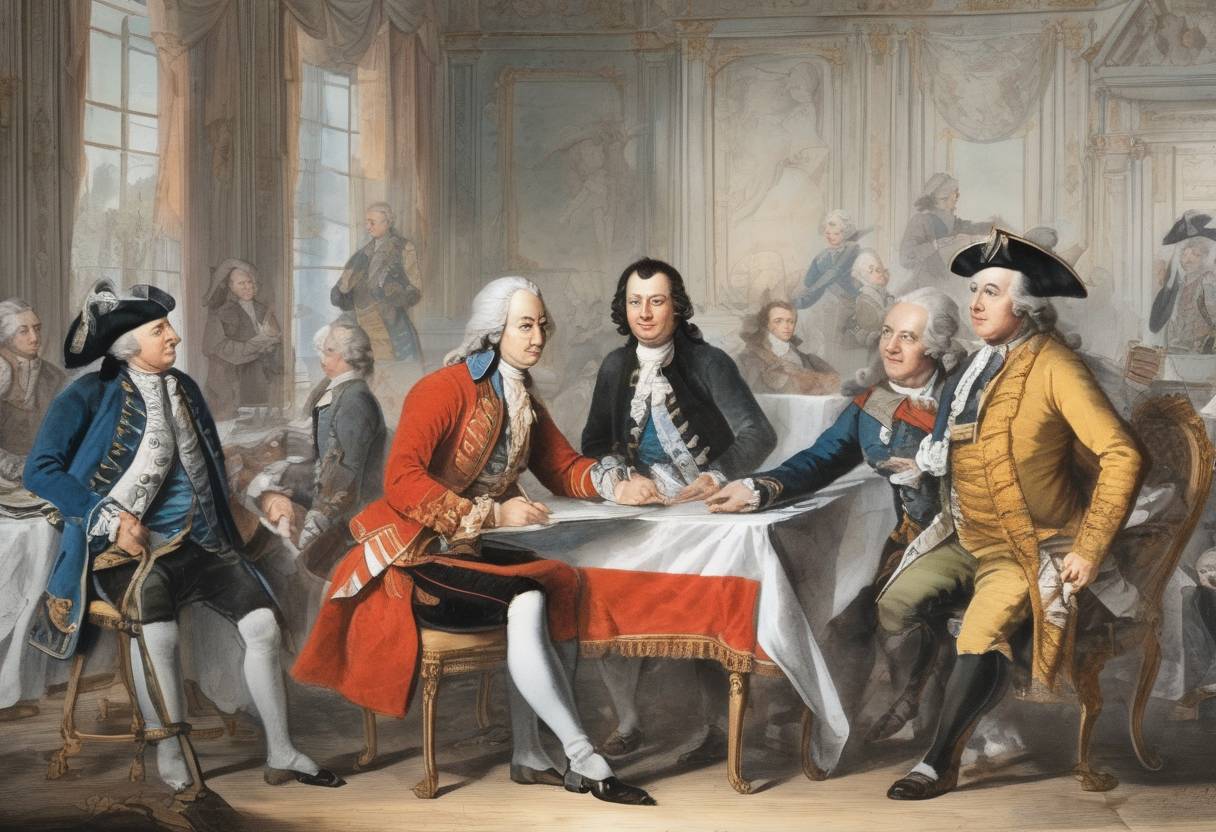
On February 10, 1763, the Treaty of Paris was signed, marking the end of the Seven Years’ War, a global conflict that had involved most of the great powers of the time. This treaty had profound implications, reshaping the geopolitical landscape and heralding the beginning of British dominance outside Europe.
The Seven Years’ War (1756-1763) was a complex conflict that spanned multiple continents, involving battles in Europe, North America, South America, Africa, and Asia. Known in North America as the French and Indian War, it was primarily a struggle between Britain and France, with each side supported by various allies.
The Treaty of Paris resulted in significant territorial changes:
The Treaty of Paris (1763) was a turning point in world history, laying the groundwork for the British Empire’s expansion and influencing the political dynamics of the 18th and 19th centuries. It also highlighted the interconnectedness of global politics and the impact of European conflicts on the wider world.
In summary, the Treaty of Paris not only concluded a major conflict but also set the stage for future geopolitical developments, underscoring the shifting balance of power in the 18th century.
Source: en.wikipedia.org