Publication of *Species Plantarum* by Carl Linnaeus
1753 · Stockholm, Sweden
Publication of Species Plantarum by Carl Linnaeus, marking the formal start of plant taxonomy.
February 11, 1650
René Descartes, the influential French philosopher, mathematician, and scientist, known for his statement 'Cogito, ergo sum' (I think, therefore I am), died in Stockholm.
Stockholm, Sweden | None
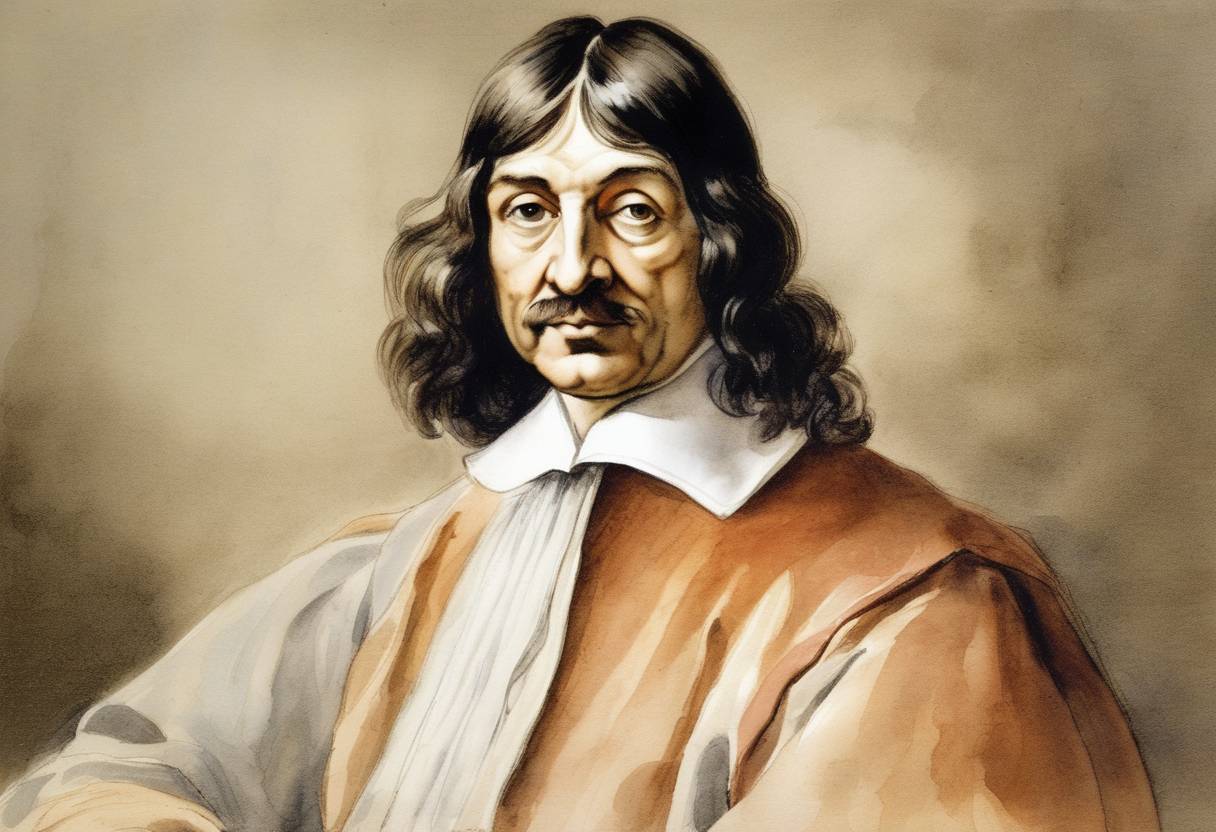
René Descartes, a towering figure in Western philosophy and science, died on February 11, 1650, in Stockholm, Sweden. His death marked the end of a significant intellectual life that laid foundational groundwork for modern Western thought.
René Descartes was born on March 31, 1596, in La Haye en Touraine, France. As a key figure in the Scientific Revolution, Descartes’ work in philosophy and mathematics established him as one of the architects of the modern age. He is famously known for the philosophical statement “Cogito, ergo sum” (“I think, therefore I am”), which became a fundamental element in Western philosophy.
In 1649, Descartes was invited to Sweden by Queen Christina. Admiring his intellect and works, she wanted him as a tutor to help cultivate her understanding of philosophy and scientific concepts. Descartes, despite his initially reluctant stance on moving to the cold Scandinavian climate, accepted the queen’s invitation with hopes of further advancing scientific thought and gaining influence in the Swedish court.
After his arrival in Stockholm, Descartes faced the harsh realities of the Swedish winter, which was a stark contrast from the climate he was accustomed to in France. Additionally, he had to adjust his schedule drastically to meet the Queen’s demands, which involved early morning sessions when the temperatures were frigid.
Descartes’ health deteriorated quickly under these conditions. On February 11, 1650, he succumbed to pneumonia. The rigorous schedule and the climate likely exacerbated his illness, leading to his untimely death at the age of 53.
Descartes’ death was not merely the loss of a genius of his era but marked the conclusion of a life that fundamentally changed several fields of study. His philosophical works, especially “Meditations on First Philosophy,” challenged the prevailing scholastic traditions and championed a new approach to scientific inquiry.
In mathematics, Descartes’ introduction of the Cartesian coordinate system significantly advanced geometry. His ideas paved the way for future developments in calculus and were crucial in the advancement of modern analytical geometry.
Descartes’ influence persists, as his methods and philosophies continue to be critical components of educational curricula in mathematics and philosophy. His integration of reason as the basis for knowledge established the groundwork for the Enlightenment, impacting countless generations of thinkers that followed.
Source: en.wikipedia.org