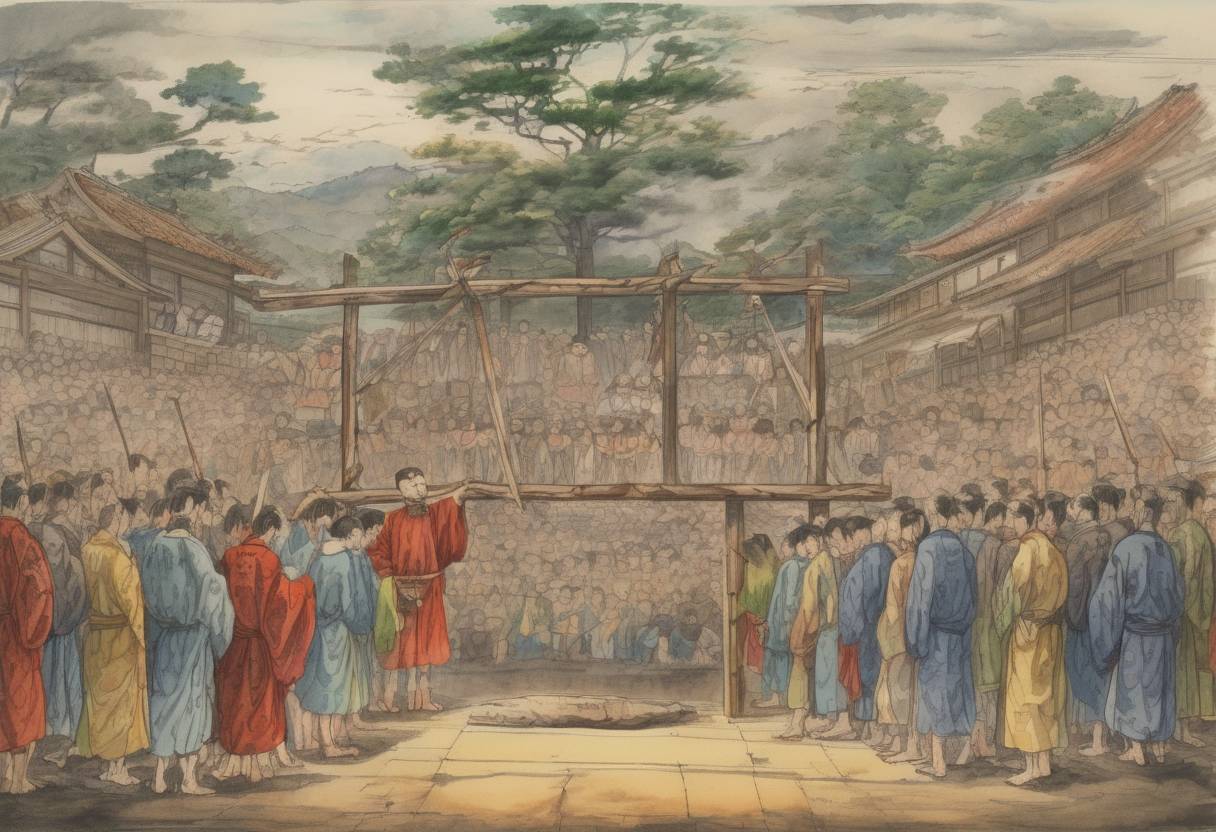
The Execution of the Twenty-Six Martyrs of Japan - February 5, 1597
On February 5, 1597, a significant and tragic event unfolded in Nagasaki, Japan, marking a pivotal moment in the history of Christianity in the country. This was the execution of the Twenty-six Martyrs of Japan, a group of Christian missionaries and converts who were crucified on the orders of Toyotomi Hideyoshi, the de facto ruler of Japan at the time.
Historical Context
Christianity in Japan
- Introduction: Christianity was introduced to Japan in 1549 by the Jesuit missionary Francis Xavier. The religion initially found a receptive audience, particularly among the daimyos (feudal lords) and the populace in the southwestern regions of Japan.
- Growth and Tensions: Over the next few decades, Christianity spread rapidly, with thousands of converts. However, this growth also led to tensions with the traditional Buddhist and Shinto establishments, as well as concerns about foreign influence and colonial ambitions.
Toyotomi Hideyoshi’s Edicts
- Political Climate: Toyotomi Hideyoshi, who unified Japan after a period of civil war, was wary of the growing influence of Christianity and its potential to undermine his authority.
- Edict of 1587: In 1587, Hideyoshi issued an edict expelling Christian missionaries from Japan, although it was not strictly enforced initially.
The Event
Arrest and Execution
- Arrest: In 1596, Hideyoshi ordered the arrest of 26 Christians, including six foreign missionaries (four Spaniards and two Portuguese) and 20 Japanese converts. They were taken from Kyoto and Osaka and forced to march over 600 miles to Nagasaki.
- Execution: On February 5, 1597, the group was executed by crucifixion on Nishizaka Hill in Nagasaki. This method of execution was chosen to mock the Christian symbol of the cross.
The Martyrs
- Composition: The group included members of the Jesuit and Franciscan orders, as well as laypeople, including children.
- Legacy: These martyrs were later canonized by the Catholic Church, and their sacrifice became a symbol of faith and resilience for Japanese Christians.
Aftermath and Significance
Impact on Christianity in Japan
- Persecution: The execution marked the beginning of a period of severe persecution of Christians in Japan, which intensified under the Tokugawa shogunate.
- Underground Christianity: Many Christians went underground, practicing their faith in secret, leading to the development of the “Kakure Kirishitan” or “Hidden Christians.”
Broader Historical Significance
- Isolationist Policies: The event foreshadowed Japan’s eventual isolationist policies, known as Sakoku, which lasted for over two centuries.
- Cultural Memory: The story of the Twenty-six Martyrs remains a poignant chapter in the history of Christianity in Japan, symbolizing the complex interplay between faith, politics, and cultural identity.
The execution of the Twenty-six Martyrs of Japan is remembered not only as a moment of profound tragedy but also as a testament to the enduring spirit of those who maintained their faith in the face of persecution.