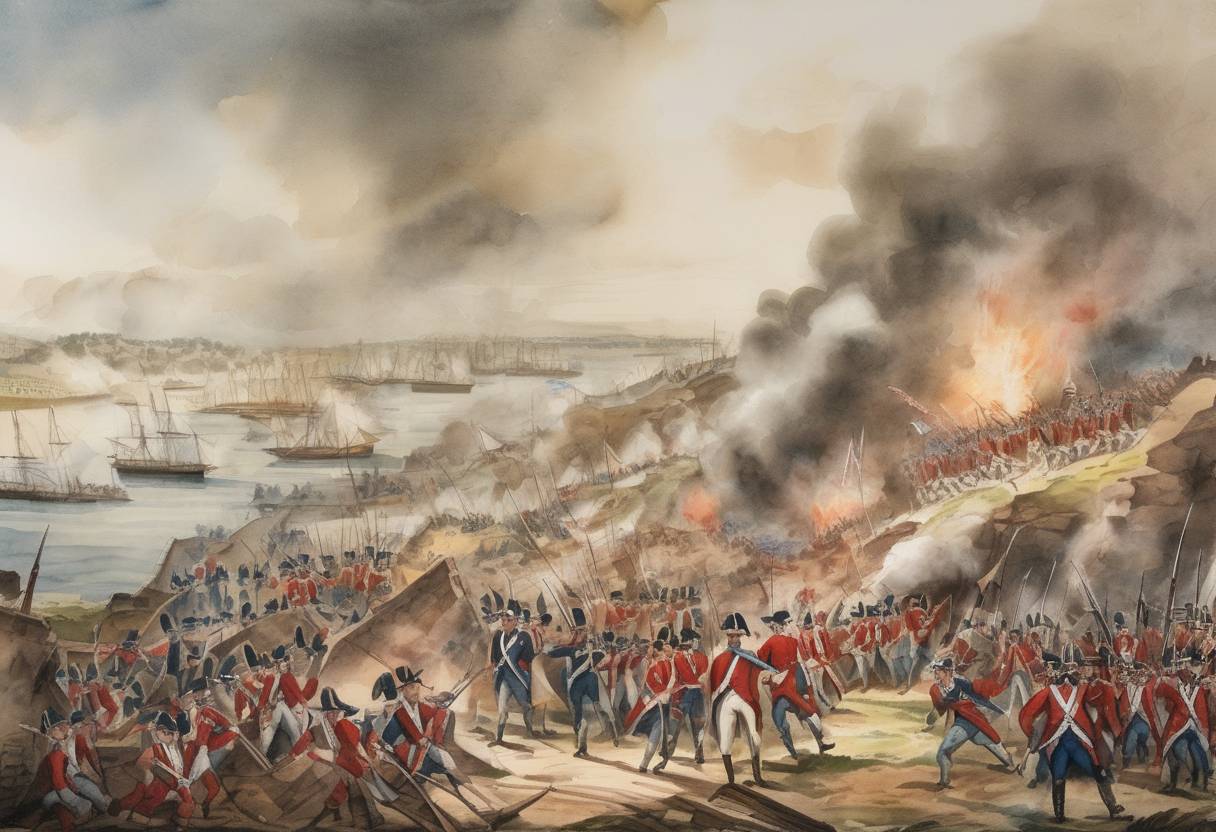
The Battle of Bunker Hill: June 17, 1775
The Battle of Bunker Hill, fought on June 17, 1775, was a pivotal early conflict in the American Revolutionary War. Despite its name, most of the fighting occurred on nearby Breed’s Hill in Charlestown, Massachusetts. This battle demonstrated the determination and resilience of the colonial forces, setting the stage for the protracted struggle for American independence.
Context Leading Up to the Battle
- The Siege of Boston: Following the skirmishes at Lexington and Concord in April 1775, colonial militias surrounded Boston, effectively laying siege to the city, which was occupied by British troops under General Thomas Gage.
- Strategic Importance: The hills surrounding Boston, including Bunker and Breed’s Hill, were of strategic importance. Control of these heights would allow the British to break the siege or the colonists to strengthen it.
Key Events of the Battle
- Colonial Fortifications: On the night of June 16, 1775, approximately 1,200 colonial troops, led by Colonel William Prescott, fortified Breed’s Hill. Their objective was to preemptively challenge British control of the area.
- British Assault: On the morning of June 17, British forces, commanded by Major General William Howe, launched a frontal assault on the colonial positions. The British troops, numbering around 2,200, advanced in well-organized ranks.
- Colonial Defense: The colonial forces, though outnumbered and with limited ammunition, held their ground. Prescott famously instructed his men to hold fire until they could see “the whites of their eyes,” ensuring maximum effectiveness of their limited resources.
- Outcome: After two failed assaults, the British succeeded on their third attempt, primarily due to the colonists running low on ammunition. The British took the hill but suffered heavy casualties, with over 1,000 soldiers killed or wounded.
Aftermath and Significance
- Casualties: The British victory came at a high cost, with significant losses that shocked British command. The colonial forces suffered around 450 casualties, including the death of Dr. Joseph Warren, a prominent leader in the Patriot cause.
- Moral Victory for Colonists: Despite losing the ground, the battle proved that colonial forces could stand up to the professional British army. It bolstered American morale and support for the war effort.
- Strategic Implications: The heavy British losses led to a more cautious approach in subsequent engagements. The battle also galvanized colonial support and recruitment, contributing to the eventual formation of the Continental Army under George Washington.
The Battle of Bunker Hill remains a symbol of American tenacity and the willingness to fight for independence, marking a significant escalation in the Revolutionary War.