Mark Spitz's Historic Achievement at the 1972 Munich Olympics
1972 · Munich, West Germany
Mark Spitz won his seventh gold medal at the Munich Olympics, setting a record for the most gold medals won in a single Olympic Games.
September 5, 1972
The Munich massacre occurred during the Summer Olympics in Munich, West Germany, when members of the Palestinian terrorist group Black September took eleven Israeli Olympic team members hostage and eventually killed them.
Munich, West Germany | Black September
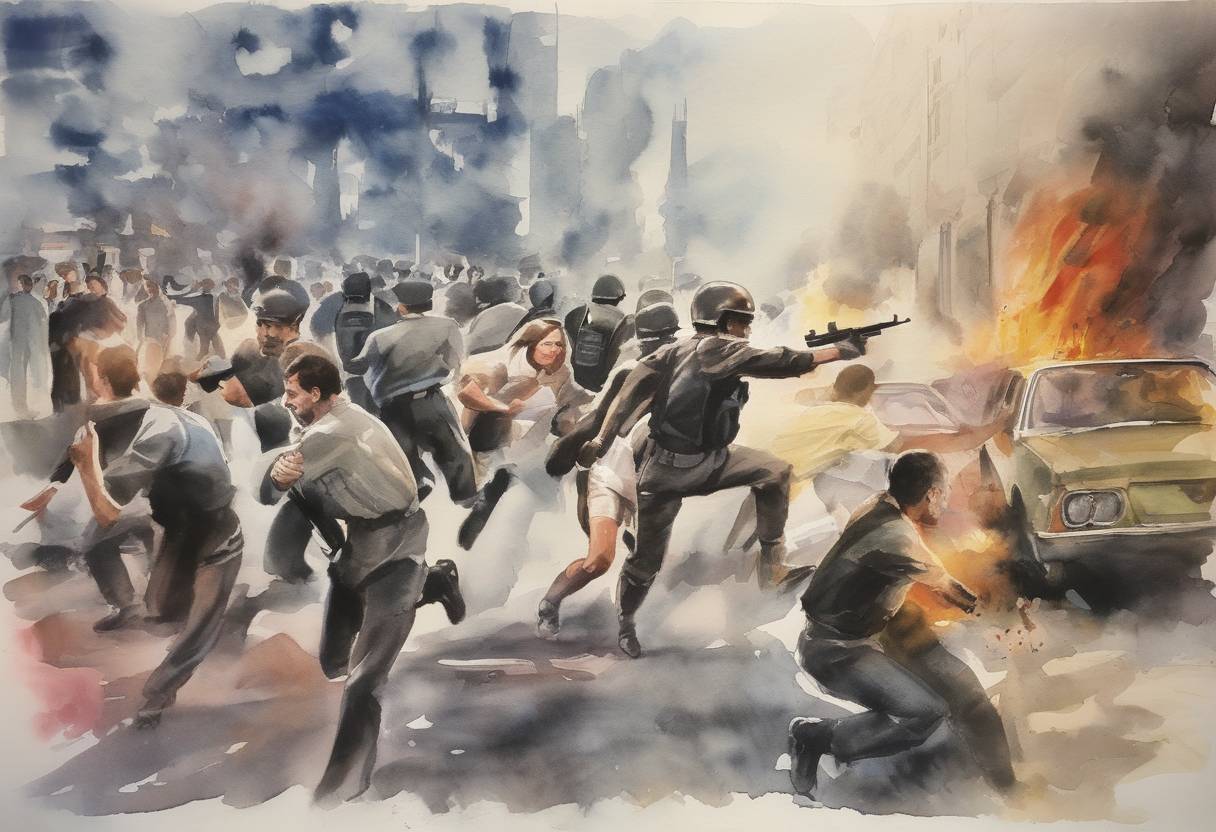
The Munich Massacre was a tragic event that unfolded during the 1972 Summer Olympics in Munich, West Germany. It involved the kidnapping and eventual murder of eleven Israeli athletes and coaches by the Palestinian terrorist group Black September.
The 1972 Summer Olympics were intended to showcase a new, peaceful Germany, contrasting with the militaristic image from the 1936 Berlin Olympics under Nazi rule. However, the geopolitical tensions of the time, particularly the Israeli-Palestinian conflict, cast a shadow over the games.
Black September, a faction of the Palestine Liberation Organization (PLO), sought to use the global stage of the Olympics to draw attention to their cause and demand the release of 234 prisoners held in Israeli jails, as well as two German terrorists held in Germany.
In the early hours of September 5, eight members of Black September infiltrated the Olympic Village. Disguised as athletes, they entered the Israeli team’s quarters, killing two team members and taking nine others hostage.
The terrorists demanded the release of the prisoners and safe passage out of Germany. Negotiations ensued, but the German authorities, inexperienced in dealing with such a crisis, struggled to manage the situation effectively.
The crisis culminated at Fürstenfeldbruck Air Base, where a botched rescue attempt by German police resulted in a firefight. All nine hostages, five of the terrorists, and one German police officer were killed during the chaotic operation.
The Munich Massacre marked a turning point in the history of terrorism, illustrating the potential for international events to be targeted for political purposes. It also underscored the need for international cooperation in combating terrorism and protecting global events.
The tragedy remains a somber reminder of the intersection between sports and politics and the enduring impact of geopolitical conflicts on the world stage.
Source: www.britannica.com