Pardon of Confederate Soldiers on December 25, 1868
1868 · Washington, D.C., United States
President Andrew Johnson issued a final unconditional pardon to all Confederate soldiers.
February 1, 1865
President Abraham Lincoln signs the Thirteenth Amendment to the United States Constitution, abolishing slavery.
Washington, D.C., United States | United States Government
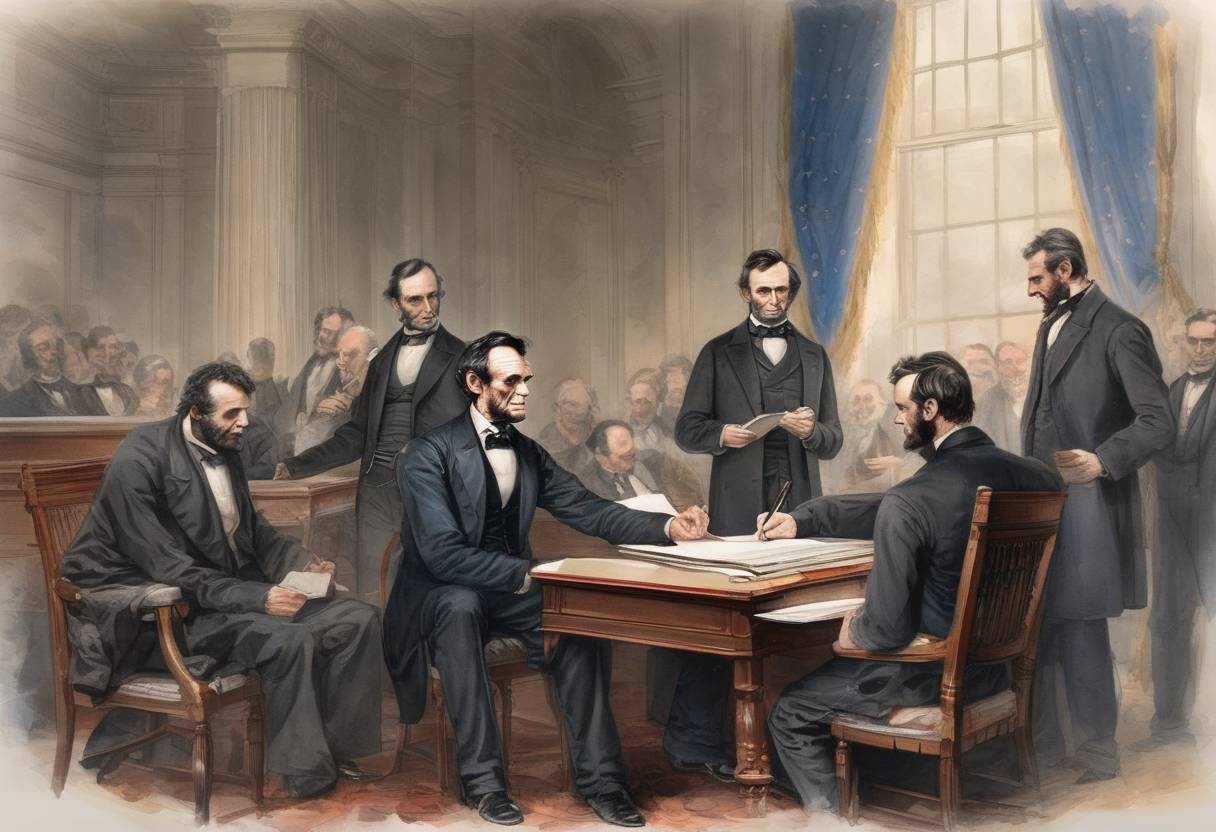
On February 1, 1865, President Abraham Lincoln took a significant step in American history by signing the Thirteenth Amendment to the United States Constitution, which aimed to abolish slavery throughout the nation. This momentous event marked a pivotal point in the struggle for civil rights and the abolition of slavery in the United States.
The Thirteenth Amendment was the culmination of a long and arduous battle against the institution of slavery, which had been a contentious issue in the United States since its founding. The Civil War, which began in 1861, was largely fought over the issue of slavery, with the Confederate states seeking to maintain and expand the practice, while the Union sought to preserve the nation and eventually end slavery.
President Lincoln, who had issued the Emancipation Proclamation on January 1, 1863, which declared the freedom of slaves in Confederate-held territory, recognized that a constitutional amendment was necessary to ensure the permanent abolition of slavery.
Proposal and Passage: The Thirteenth Amendment was first proposed in Congress in 1864. It faced significant opposition, particularly from Democrats who were sympathetic to the Southern cause. However, with persistent efforts from abolitionists and Lincoln’s administration, the amendment passed the Senate on April 8, 1864, and the House of Representatives on January 31, 1865.
Lincoln’s Advocacy: President Lincoln was a strong advocate for the amendment, understanding its importance in redefining the nation’s values and ensuring freedom for all individuals. He used his political influence to garner support for its passage in the House.
On February 1, 1865, following its passage in Congress, President Lincoln signed the Thirteenth Amendment. Although the President’s signature was not a constitutional requirement for amendments, Lincoln’s endorsement symbolized his commitment to ending slavery and his role in the legislative process.
Ratification: The amendment required ratification by three-fourths of the states. This process was completed on December 6, 1865, when Georgia became the 27th state to ratify it, officially making the amendment part of the Constitution.
Impact: The Thirteenth Amendment abolished slavery and involuntary servitude, except as punishment for a crime, throughout the United States. It laid the foundation for subsequent civil rights advancements and was a crucial step towards equality and justice for African Americans.
Broader Significance: The amendment’s passage and ratification marked a transformative moment in American history, reshaping the nation’s legal and moral landscape. It also set the stage for the Fourteenth and Fifteenth Amendments, which further expanded civil rights and protections.
In conclusion, President Abraham Lincoln’s signing of the Thirteenth Amendment on February 1, 1865, was a landmark event in the abolition of slavery in the United States, reflecting a profound shift in the country’s commitment to human rights and equality.
Source: en.wikipedia.org