The An Lushan Rebellion and the Capture of Liyang on June 2, 760
760 · Liyang, China
The An Lu-shan Rebellion in China sees the rebels capture Liyang, making it a key stronghold.
February 5, 0756
An Lushan, a general of the Tang Dynasty, declared himself emperor and established the Yan Dynasty, marking a significant point in the An Lushan Rebellion.
Luoyang, China | Yan Dynasty
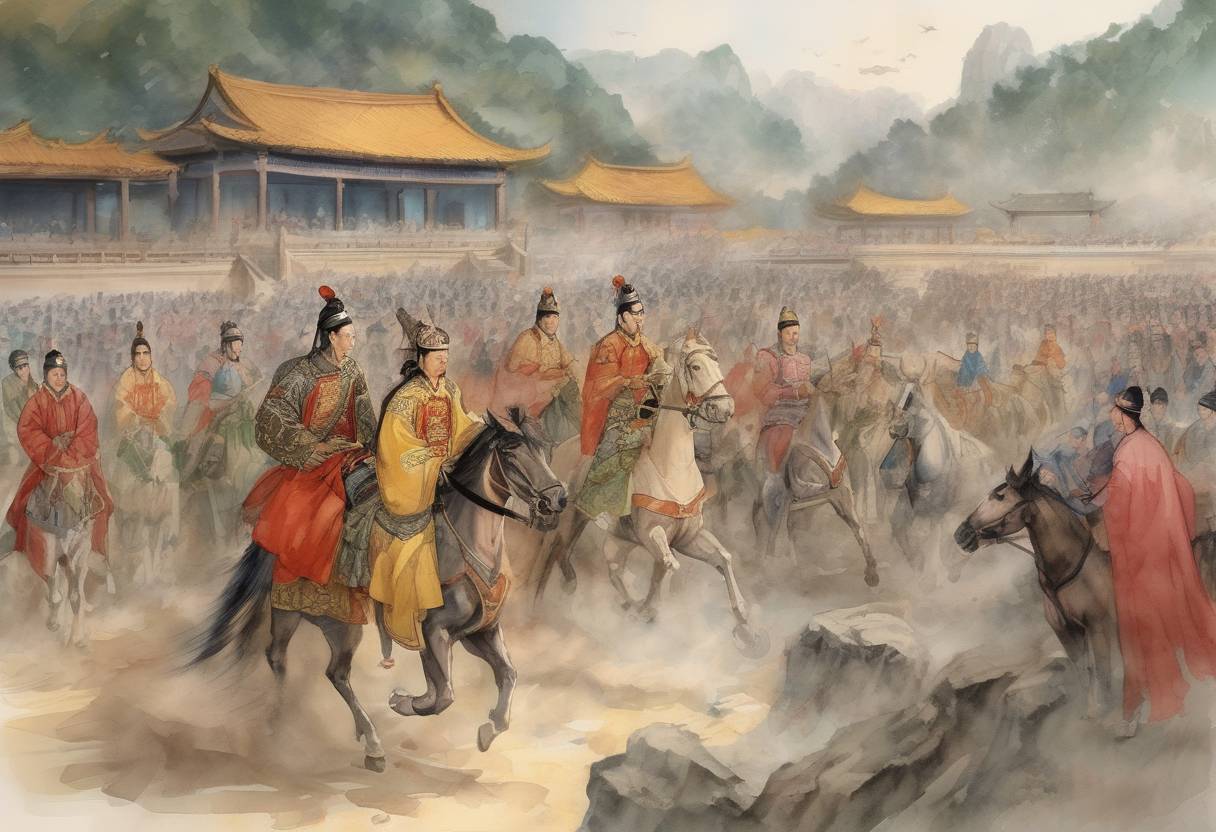
On February 5, 756, An Lushan, a prominent general of the Tang Dynasty, declared himself emperor and established the Yan Dynasty. This event marked a pivotal moment in the An Lushan Rebellion, a devastating conflict that significantly weakened the Tang Dynasty.
The Tang Dynasty, which ruled China from 618 to 907, was one of the most prosperous and culturally vibrant periods in Chinese history. However, by the mid-8th century, internal strife, corruption, and military overextension began to erode the stability of the empire. An Lushan, a Sogdian-Turkic general, rose to prominence due to his military prowess and close ties with the Tang court, particularly with Emperor Xuanzong.
An Lushan’s rebellion began in December 755, driven by a combination of personal ambition and dissatisfaction with the Tang administration. He amassed a large army and quickly captured the eastern capital of Luoyang. His forces continued their advance, threatening the heart of the Tang Empire.
On February 5, 756, An Lushan proclaimed himself emperor, establishing the Yan Dynasty in Luoyang. This bold declaration was not merely a challenge to the Tang authority but also a statement of his intent to replace the Tang Dynasty altogether. The establishment of the Yan Dynasty symbolized the peak of An Lushan’s power and the seriousness of the rebellion.
The An Lushan Rebellion had far-reaching consequences for the Tang Dynasty and Chinese history:
Military and Economic Strain: The rebellion lasted until 763, causing immense military and economic strain on the Tang Dynasty. It led to the loss of life, destruction of infrastructure, and a significant depletion of the empire’s resources.
Political Instability: The rebellion exposed and exacerbated existing political weaknesses within the Tang administration, leading to a decline in central authority and the rise of regional warlords.
Cultural Impact: Despite the turmoil, the period saw continued cultural development, although the rebellion marked the beginning of the end for the Tang’s golden age.
Long-term Decline: Although the Tang Dynasty survived the rebellion, it never fully recovered its former strength and eventually fell in 907.
The An Lushan Rebellion remains one of the most significant uprisings in Chinese history, illustrating the fragility of even the most powerful empires when faced with internal dissent and external pressures.
Source: www.britannica.com