Siege of Fort Sumter - September 8, 1863
1863 · Charleston, United States
The Union forces began the siege of Fort Sumter as part of the American Civil War, following earlier attempts to recapture it.
April 13, 1861
Fort Sumter surrenders to Confederate forces, marking the beginning of the American Civil War.
Charleston, United States | Confederate States Army
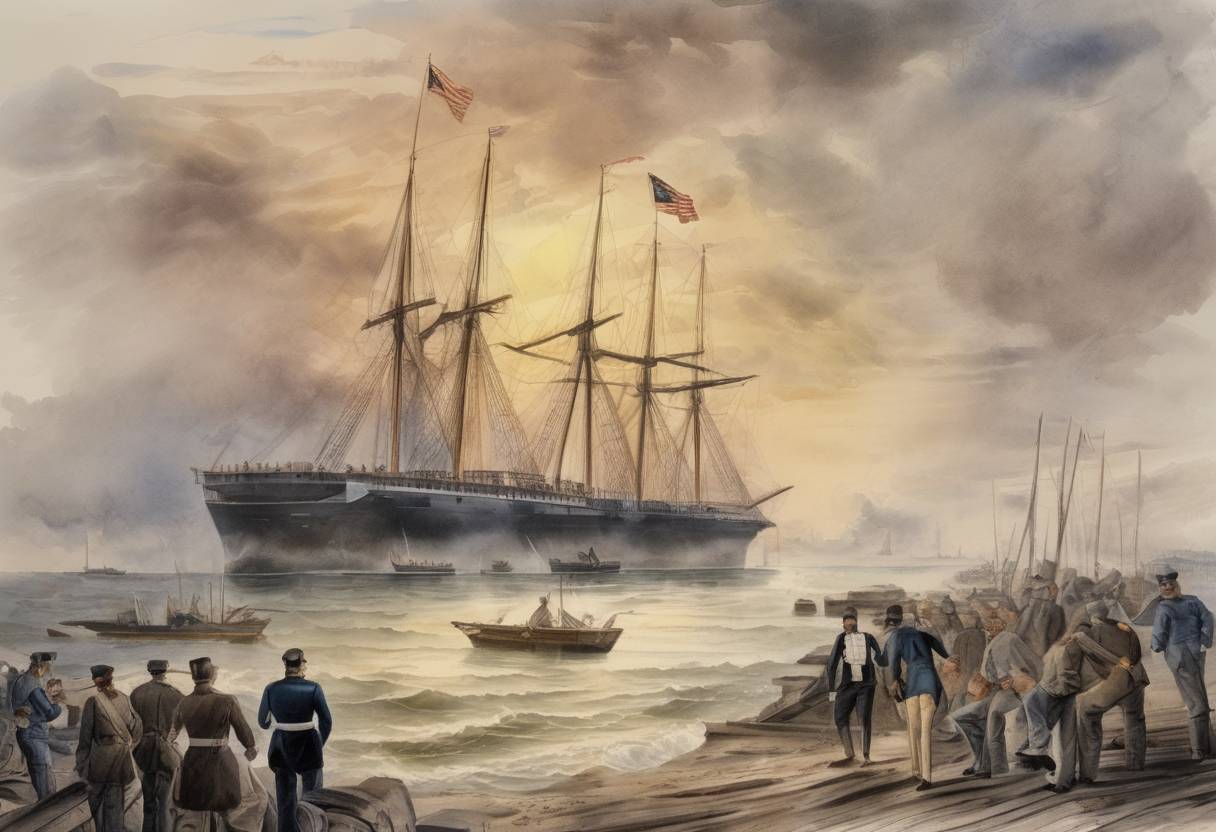
On April 13, 1861, Fort Sumter, located in Charleston Harbor, South Carolina, surrendered to Confederate forces, marking the beginning of the American Civil War. This event followed a 34-hour bombardment by Confederate artillery, which began on April 12, 1861.
The tensions leading to the confrontation at Fort Sumter had been escalating for decades, primarily over issues of states’ rights and slavery. The election of Abraham Lincoln as President in November 1860 was a catalyst for secession, as Southern states feared his policies would threaten the institution of slavery. South Carolina was the first state to secede from the Union on December 20, 1860, followed by several other Southern states.
Fort Sumter, a federal fortification, became a flashpoint because it was one of the few remaining Union-held forts in the seceded states. Major Robert Anderson, commanding the Union garrison, moved his troops to Fort Sumter in December 1860 to avoid conflict with South Carolina militia forces.
By April 1861, the situation had reached a critical point. Confederate forces, led by General P.G.T. Beauregard, demanded the surrender of Fort Sumter. Major Anderson, aware of his limited supplies and manpower, refused to surrender without a fight.
On the morning of April 12, 1861, Confederate batteries opened fire on Fort Sumter. The bombardment continued for 34 hours, during which time the fort’s defenses were significantly damaged. Despite the intense shelling, there were no casualties during the bombardment itself.
On April 13, with his supplies nearly exhausted and the fort heavily damaged, Major Anderson agreed to evacuate. The terms of surrender allowed the Union garrison to leave with their personal arms and to salute the U.S. flag before lowering it.
The surrender of Fort Sumter galvanized the North and solidified the resolve of the Union to preserve the nation. President Lincoln called for 75,000 volunteers to suppress the rebellion, prompting four more states to secede and join the Confederacy.
The fall of Fort Sumter marked the official start of the American Civil War, a conflict that would last four years and become one of the most defining periods in American history. The war ultimately resulted in the preservation of the Union and the abolition of slavery, but at the cost of over 600,000 lives.
The surrender of Fort Sumter is significant as it marked the transition from political tension to armed conflict. It underscored the deep divisions within the United States and set the stage for a prolonged and bloody civil war. The events at Fort Sumter also highlighted the strategic importance of controlling key military installations and the role of military leadership in shaping the early course of the war.
Source: en.wikipedia.org