Henry the Fowler Elected King of Germany - February 21, 919
919 · Fritzlar, East Francia
Henry the Fowler is elected King of Germany, marking the beginning of the Ottonian dynasty.
April 5, 0919
Duke Henry of Saxony was elected King of East Francia, marking the beginning of the Ottonian dynasty.
Fritzlar, East Francia | East Francia
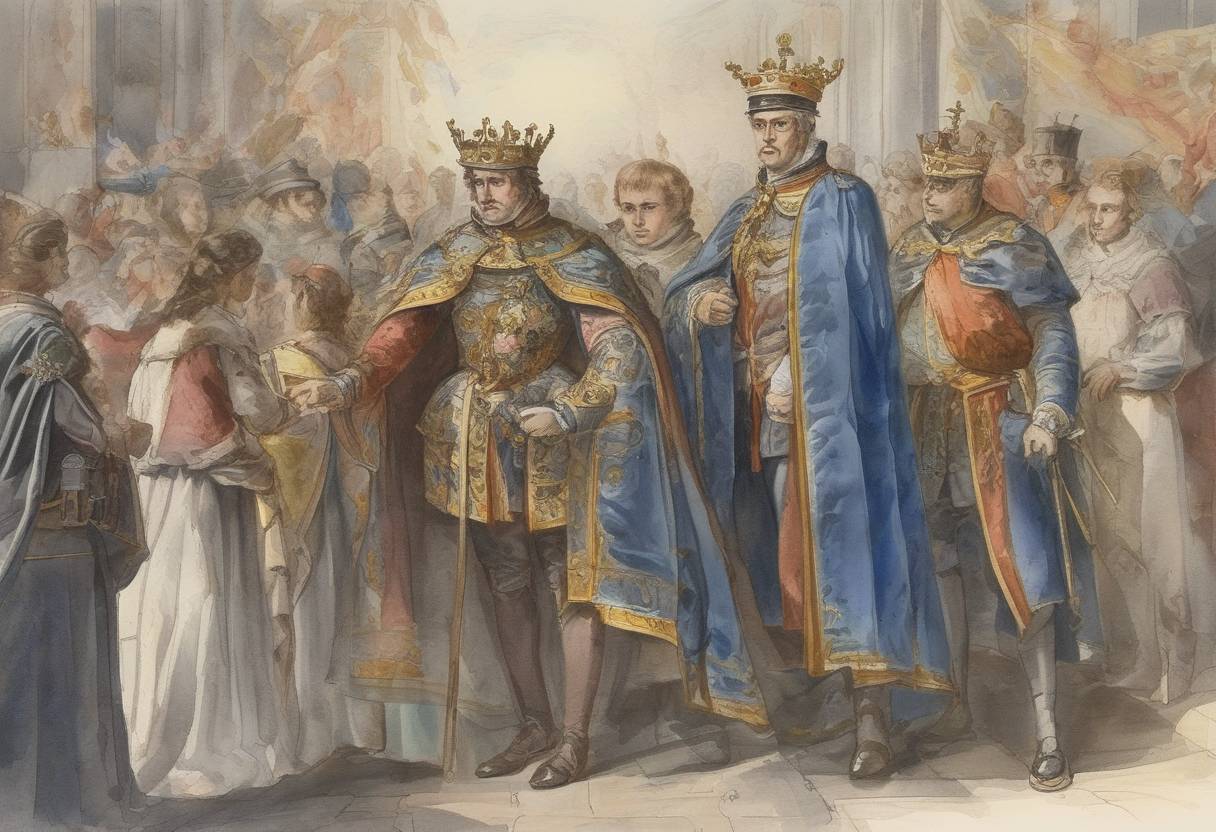
On April 5, 919, Duke Henry of Saxony, also known as Henry the Fowler, was elected King of East Francia, marking the beginning of the Ottonian dynasty. This event was a pivotal moment in the history of the German territories, setting the stage for the consolidation of power and the eventual formation of the Holy Roman Empire.
Carolingian Decline: By the early 10th century, the Carolingian Empire, which had dominated much of Western Europe, was in decline. The death of Emperor Louis the Child in 911 left East Francia without a clear successor from the Carolingian line, leading to political fragmentation and the rise of regional dukes.
Rise of Regional Powers: The vacuum of power allowed regional leaders, such as the dukes of Saxony, Bavaria, Swabia, and Franconia, to gain influence. These leaders often acted independently, and their support was crucial for any claimant to the throne.
Conrad I’s Reign: After Louis the Child’s death, Conrad I of Franconia was elected king in 911. His reign was marked by struggles to assert control over the powerful regional dukes, particularly in Saxony and Bavaria.
Conrad’s Death: Conrad I died in December 918, and on his deathbed, he recommended Henry of Saxony as his successor, recognizing Henry’s strength and influence as a unifying force for the kingdom.
Election at Fritzlar: On April 5, 919, a council of nobles convened at Fritzlar, a town in present-day Hesse, to elect a new king. Henry of Saxony was chosen, largely due to his reputation as a capable leader and his ability to maintain peace among the duchies.
Acceptance of the Crown: Henry initially hesitated to accept the crown, preferring to be seen as a primus inter pares (first among equals) rather than a monarch with absolute power. This approach helped him gain the support of other dukes and solidify his position.
Foundation of the Ottonian Dynasty: Henry’s election marked the beginning of the Ottonian dynasty, which would rule East Francia and later the Holy Roman Empire until 1024. The dynasty is named after Henry’s son, Otto I, who would become one of the most significant emperors of the medieval period.
Consolidation of Power: Henry’s reign focused on strengthening the kingdom’s defenses against external threats, such as the Magyars, and consolidating internal power by fostering alliances with the church and regional leaders.
Legacy: The Ottonian dynasty played a crucial role in shaping medieval European politics, culture, and religion. Their reign saw the revival of the imperial title and the strengthening of ties between the Germanic kingdoms and the Papacy.
Henry the Fowler’s election as king was a turning point in medieval European history, laying the groundwork for the future Holy Roman Empire and influencing the political landscape of the continent for centuries.
Source: en.wikipedia.org