676 · Rome, Italy
Pope Adeodatus II was consecrated as the head of the Catholic Church, beginning his papacy. Adeodatus II's tenure is noted for its peace during troubled times and rebuilding efforts.
December 24, 0640
Pope John IV was consecrated as the Bishop of Rome, succeeding Pope Severinus.
Rome, Byzantine Empire | Catholic Church
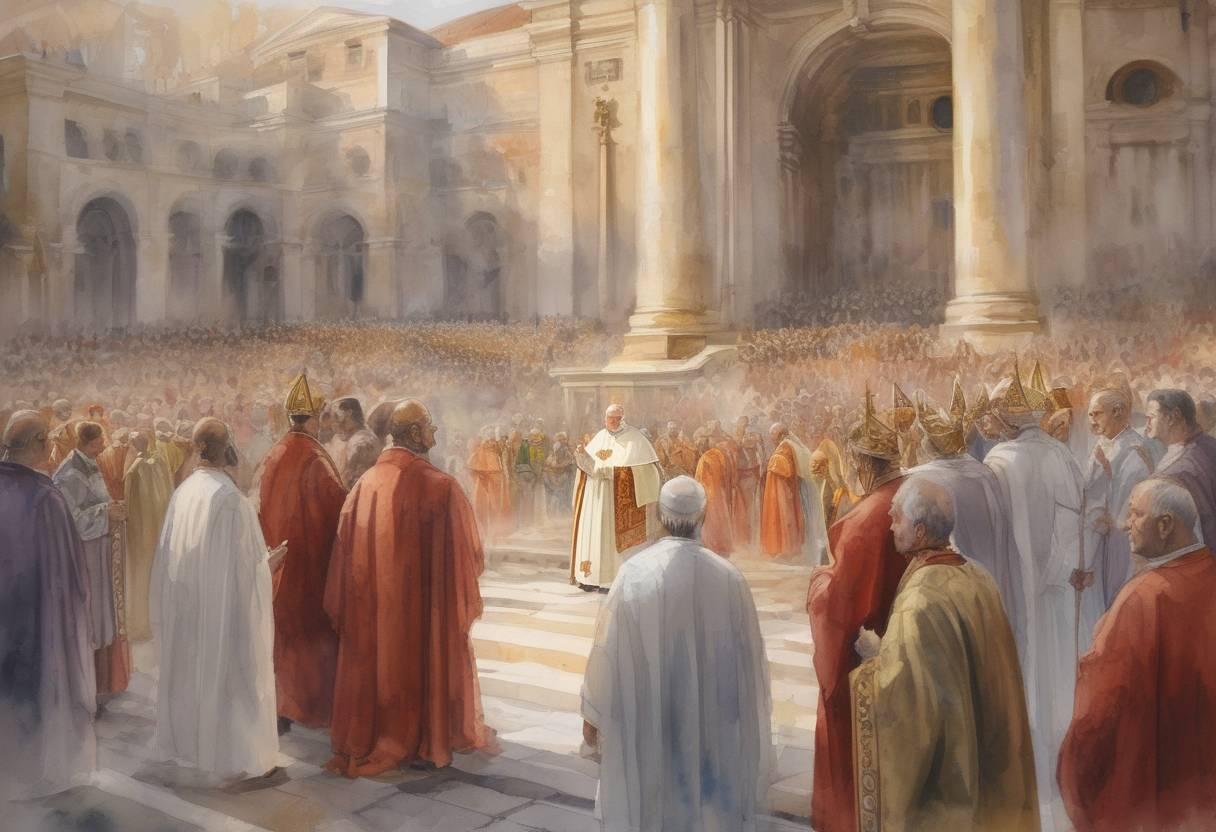
On December 24, 640, John IV was consecrated as the Bishop of Rome, succeeding Pope Severinus. His papacy, though relatively brief, was marked by significant ecclesiastical and political challenges. Here is a detailed account of the context, events, and significance surrounding his consecration:
Predecessor’s Papacy: Pope Severinus, John IV’s predecessor, had a short papacy from 638 to 640. His reign was primarily occupied with resolving the Monothelitism controversy, a theological dispute concerning the nature of Christ’s will.
Monothelitism Controversy: This heresy proposed that Christ had only one will, which was contrary to the orthodox position of dyothelitism, asserting both a divine and human will. The controversy was a significant issue during this period, influencing the papacies of Severinus and John IV.
Political Climate: The early 7th century was a time of political instability, with the Byzantine Empire exerting influence over the papacy. The relationship between the papacy and the Byzantine emperors was crucial, as the emperors often played a role in papal elections.
Addressing Monothelitism: John IV continued the efforts of his predecessor to combat Monothelitism. He upheld the decisions of the Third Council of Constantinople, which condemned the heresy, reinforcing the orthodox position of dyothelitism.
Relations with the Byzantine Empire: John IV maintained a delicate balance in his relations with the Byzantine Empire. He sought to preserve the independence of the papacy while navigating the political pressures from Constantinople.
Humanitarian Efforts: One of John IV’s notable actions was his response to the Slavic invasions in Dalmatia. He organized aid for the affected regions and worked to ransom captives, demonstrating the papacy’s role in humanitarian efforts during this period.
Theological Impact: John IV’s firm stance against Monothelitism helped solidify the orthodox Christian doctrine regarding the nature of Christ, influencing theological debates for years to come.
Papal Authority: His papacy reinforced the authority of the Bishop of Rome in theological matters, setting precedents for future popes in dealing with heresies and doctrinal disputes.
Legacy: Although his papacy lasted only until 642, John IV’s actions during his tenure contributed to the strengthening of the papal office and its influence in both religious and secular affairs.
In summary, Pope John IV’s consecration marked a continuation of the efforts to address significant theological controversies of the time while navigating the complex political landscape of the early medieval period. His papacy, though short, played a crucial role in shaping the direction of the Church during a time of doctrinal and political challenges.
Source: en.wikipedia.org