1526 · Madrid, Spain
Treaty of Madrid was signed, in which Francis I of France was forced to cede Burgundy to Charles V, Holy Roman Emperor, after his defeat at the Battle of Pavia.
January 23, 1719
The Principality of Liechtenstein is created within the Holy Roman Empire.
Vaduz, Liechtenstein | Holy Roman Empire
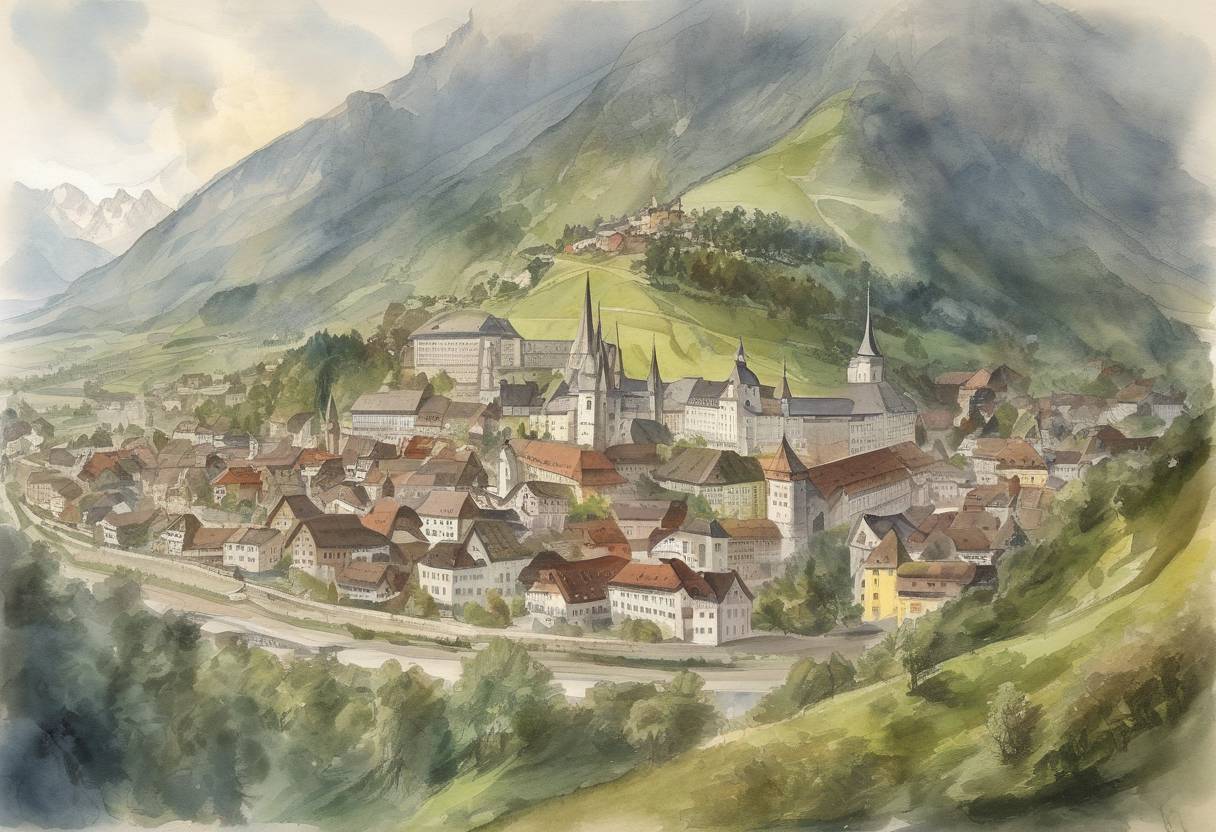
On January 23, 1719, the Principality of Liechtenstein was officially established within the Holy Roman Empire. This event marked a significant moment in European history, as it led to the formation of one of the smallest yet enduring sovereign states in Europe.
Acquisition of Lands: The Liechtenstein family, originally from Austria, had long aspired to gain a seat in the Imperial Diet of the Holy Roman Empire. To achieve this, they needed to own land that was directly subordinate to the Emperor, rather than to any feudal lord. Over the years, the family strategically acquired several territories.
Purchase of Schellenberg and Vaduz: In 1699, Prince Hans-Adam I of Liechtenstein purchased the Lordship of Schellenberg. This was followed by the acquisition of the County of Vaduz in 1712. These territories were contiguous and directly subject to the Emperor, fulfilling the requirements for a seat in the Imperial Diet.
Imperial Decree: On January 23, 1719, Emperor Charles VI issued a decree that united the Lordship of Schellenberg and the County of Vaduz into the Principality of Liechtenstein. This decree elevated the status of the Liechtenstein family, granting them the long-sought seat in the Imperial Diet.
Naming: The new principality was named after the Liechtenstein family, solidifying their influence and legacy within the Holy Roman Empire.
Sovereignty and Survival: Despite its small size, Liechtenstein has maintained its sovereignty through various European conflicts and political changes, including the dissolution of the Holy Roman Empire in 1806 and the upheavals of the Napoleonic Wars.
Modern Era: Today, Liechtenstein is a prosperous, independent nation known for its strong financial sector and high standard of living. It is a member of the United Nations and the European Economic Area, reflecting its integration into the broader international community.
Cultural and Political Identity: The creation of the Principality of Liechtenstein is a testament to the strategic acumen of the Liechtenstein family and their ability to navigate the complex political landscape of early 18th-century Europe. It remains a unique example of a microstate that has successfully preserved its independence and cultural identity over the centuries.
The establishment of Liechtenstein is a fascinating chapter in the history of the Holy Roman Empire and highlights the intricate interplay of power, politics, and ambition in shaping the map of Europe.
Source: en.wikipedia.org