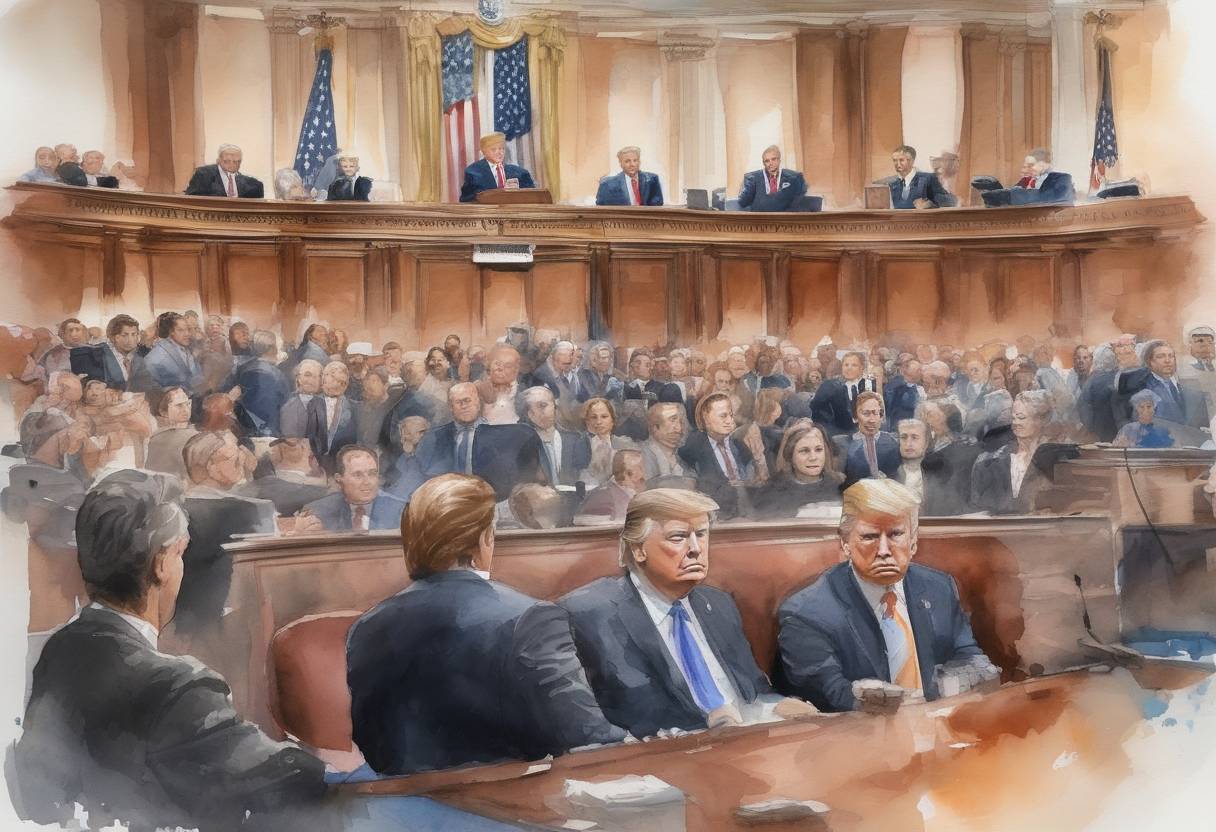
Impeachment Hearings Against President Donald Trump: November 20, 2019
On November 20, 2019, the United States House of Representatives conducted a significant public impeachment hearing as part of the inquiry into President Donald Trump’s dealings with Ukraine. This event was a pivotal moment in the impeachment process, which had been initiated by the House Democrats in September 2019.
Context and Background
The impeachment inquiry centered around a whistleblower complaint alleging that President Trump had solicited foreign interference in the 2020 U.S. presidential election. The complaint specifically accused Trump of pressuring Ukrainian President Volodymyr Zelensky to investigate Joe Biden, a political rival, and his son Hunter Biden. This pressure was allegedly tied to the withholding of nearly $400 million in military aid to Ukraine, which had been approved by Congress.
Key Events Leading Up to the Hearing
Whistleblower Complaint: In August 2019, a whistleblower from the intelligence community filed a complaint regarding a phone call between President Trump and President Zelensky on July 25, 2019.
House Inquiry: On September 24, 2019, Speaker of the House Nancy Pelosi announced a formal impeachment inquiry, citing the whistleblower’s allegations as a breach of national security and election integrity.
Closed-Door Depositions: Prior to the public hearings, the House Intelligence, Oversight, and Foreign Affairs Committees conducted closed-door depositions with various officials, including diplomats and national security personnel.
The November 20 Hearing
The public hearing on November 20, 2019, featured testimony from two key witnesses:
Gordon Sondland: The U.S. Ambassador to the European Union, Sondland was a central figure in the inquiry due to his direct involvement in the communications between the Trump administration and Ukrainian officials. During his testimony, Sondland confirmed that there was a “quid pro quo” linking the military aid to Ukraine with the investigations desired by President Trump.
Laura Cooper: The Deputy Assistant Secretary of Defense for Russia, Ukraine, and Eurasia, Cooper provided insights into the implications of withholding military aid to Ukraine and the timeline of events.
Significance and Aftermath
The November 20 hearing was crucial in shaping public perception and the narrative of the impeachment inquiry. Sondland’s testimony, in particular, was seen as a turning point due to his admission of the quid pro quo arrangement.
Following the hearings, the House of Representatives moved forward with drafting articles of impeachment. On December 18, 2019, the House voted to impeach President Trump on charges of abuse of power and obstruction of Congress. The case then proceeded to the Senate, where Trump was acquitted on February 5, 2020.
Broader Historical Impact
The impeachment hearings and subsequent trial underscored deep political divisions in the United States and highlighted issues related to executive power, foreign policy, and election integrity. The events of 2019-2020 continue to influence American political discourse and have had lasting implications for the presidency and congressional oversight.
This hearing was a key moment in the broader narrative of President Trump’s presidency and the political landscape of the United States during this period.