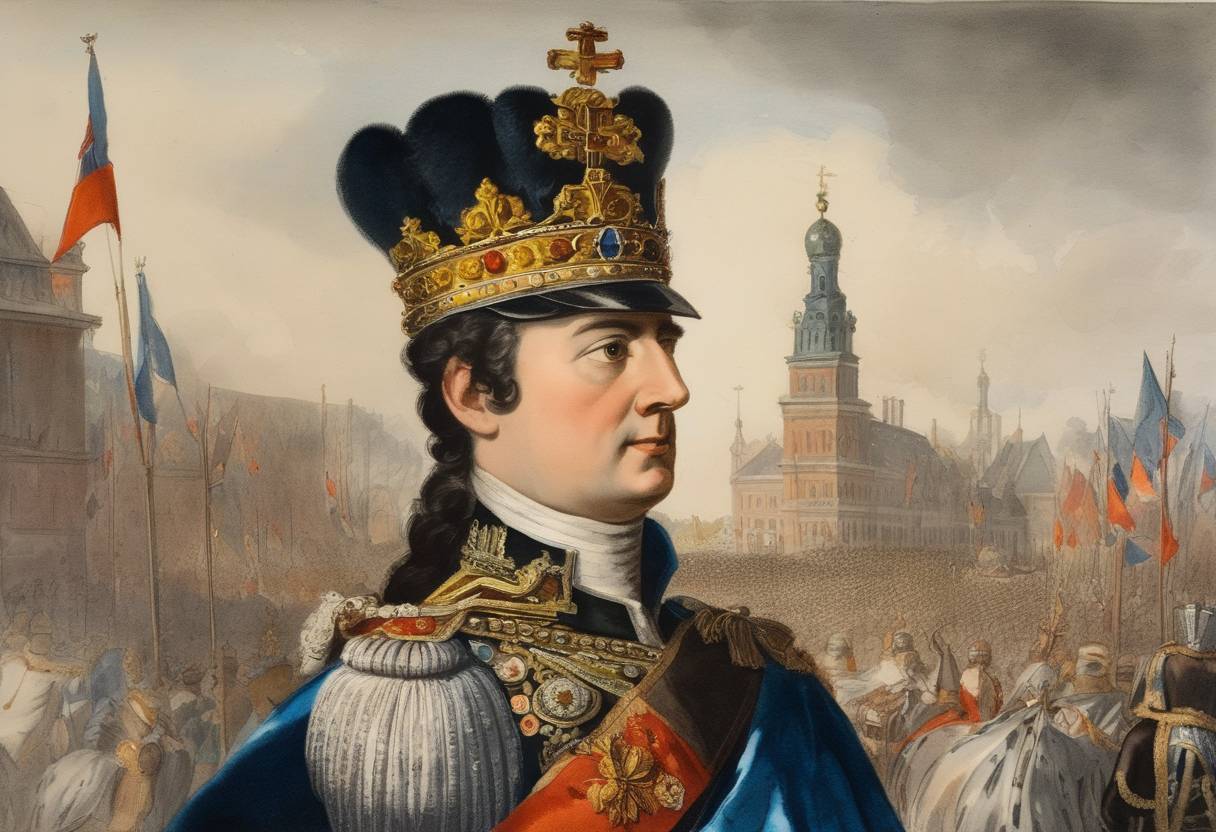
Frederick I Crowned King of Prussia
On January 18, 1701, Frederick III, Elector of Brandenburg, was crowned King Frederick I of Prussia, an event that marked a significant shift in the European geopolitical landscape. This historic coronation took place in Königsberg (present-day Kaliningrad, Russia) and symbolized the elevation of Prussia from a duchy to a kingdom, a strategic move that laid the foundation for Prussia’s emergence as a major European power.
Historical Context
Brandenburg-Prussia’s Rise
- Brandenburg-Prussia: Prior to Frederick’s coronation, the region was known as Brandenburg-Prussia, a significant state within the Holy Roman Empire, controlled by the Hohenzollern dynasty.
- Frederick William: Frederick I’s predecessor, known as the “Great Elector,” had laid the groundwork for elevating Prussia’s status through military reforms and territorial expansion.
Diplomatic Maneuvers
- Frederick sought to secure the title of king, an ambition that demanded delicate negotiations due to the complex political structure of the Holy Roman Empire.
- Leopold I, Holy Roman Emperor: Played a crucial role in the coronation, agreeing to Frederick’s royal status in exchange for support in the War of the Spanish Succession, acknowledging Frederick as “king in Prussia” rather than “king of Prussia,” reflecting the nuanced diplomatic balances of the era.
The Coronation
Frederick’s coronation was a lavish event reflecting the grandeur he sought for his new kingdom. Held at Königsberg Castle in the Prussian capital, the ceremony was attended by numerous dignitaries and showcased the opulence of Frederick’s court.
Significance and Aftermath
State Building
- The coronation marked a centralization of power within Brandenburg-Prussia, setting the stage for more cohesive state building and administration.
Military Impact
- Known for its military discipline, Prussia under Frederick I continued to develop its army, emphasizing its role in regional and later European conflicts.
Cultural Influence
- Frederick I’s reign began a cultural renaissance as he invested in the arts and architecture, aiming to transform Prussia into a beacon of enlightenment with Berlin as a cultural hub.
Long-term Implications
- Frederick I’s acquisition of the royal title was a crucial stepping stone in the Hohenzollern dynasty’s ascent, which continued to wield power in Europe, culminating in Prussia’s dominance under Frederick the Great in the 18th century and its critical role in the eventual unification of Germany.
The coronation of Frederick I signified not only the rise of Prussia as a kingdom but also the beginning of its transformation into a pivotal European state, influencing the continent’s political dynamics for centuries to come.