Operation Desert Storm Begins: January 17, 1991
1991 · Baghdad, Iraq
Operation Desert Storm begins as the United States and coalition forces launch a massive air offensive against Iraq in response to Iraq's invasion of Kuwait.
June 1, 1941
The British completed the reoccupation of Iraq following a pro-Axis coup, ensuring control over its oil fields and the strategic Persian Gulf.
Baghdad, Iraq | British Armed Forces
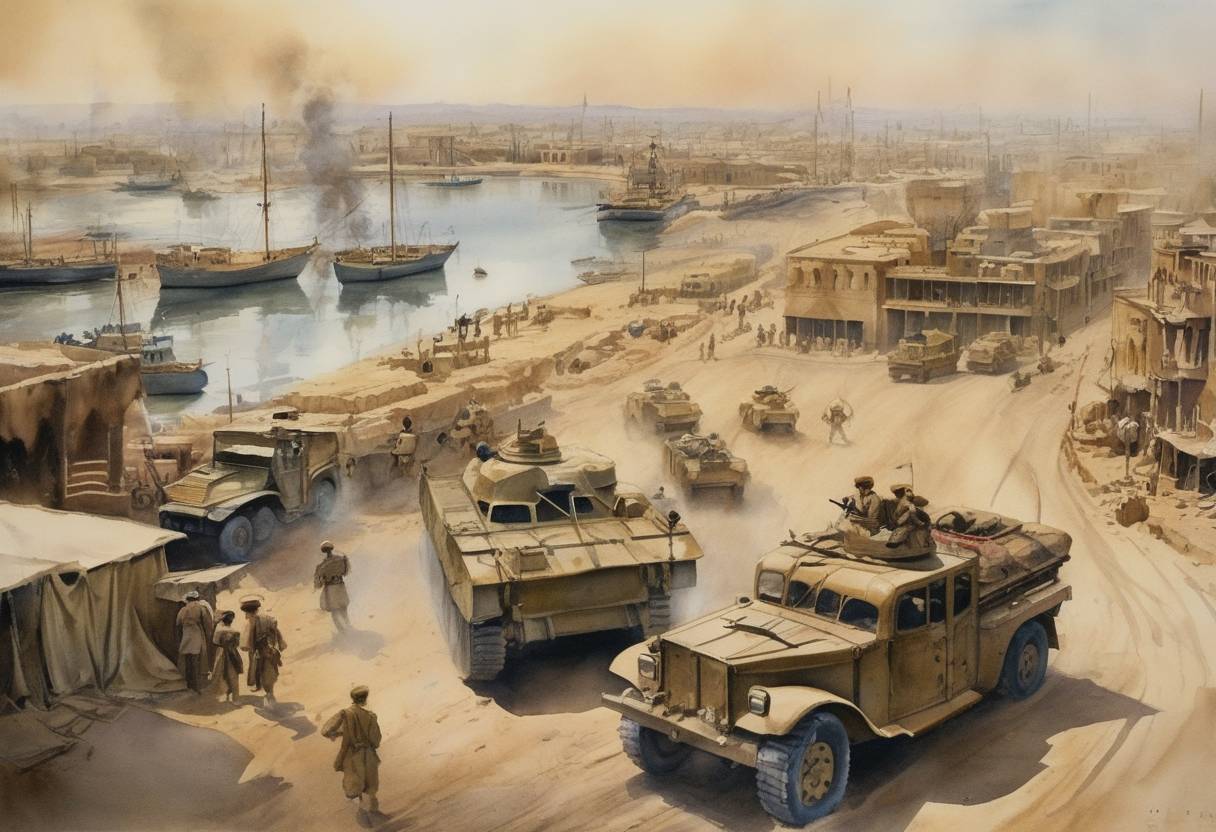
The reoccupation of Iraq by British forces on June 1, 1941, marked the successful conclusion of a significant military campaign aimed at reasserting control over Iraq following a pro-Axis coup. This military operation ensured British access to vital oil fields and maintained their strategic position in the Persian Gulf during World War II.
The geopolitical importance of Iraq during World War II was chiefly due to its abundant oil reserves and strategic location. In April 1941, a nationalist government led by Rashid Ali al-Gaylani, sympathetic to the Axis powers, seized power in Iraq through a coup. This development alarmed the British authorities, as the Anglo-Iraqi Treaty of 1930 had established Iraq as an ally, granting military and logistical advantages to the British Empire.
In response to the coup, the British launched a military campaign to overthrow al-Gaylani’s government and reestablish their control. The ensuing conflict, known as the Anglo-Iraqi War, involved the deployment of British and Commonwealth forces, which included troops from India and Transjordan.
By June 1, 1941, British forces had effectively reoccupied Iraq. The reestablishment of British control in Iraq had several significant outcomes:
Secured Oil Supplies: The operation safeguarded crucial oil supplies for the Allied war effort, which were vital for sustaining British military campaigns in the Middle East and beyond.
Maintained British Influence: The reoccupation underscored British resolve to maintain influence in the region, preventing the spread of Axis sympathies and securing the Persian Gulf as a critical strategic position.
Stability in the Middle East: Later, the British facilitated the installation of a pro-British government, headed by Nuri al-Said, which helped stabilize the region temporarily during the complexities of World War II.
The events in Iraq were a significant demonstration of the global strategies employed during World War II, reflecting the interconnectedness of geopolitical interests at the time.
Source: www.britannica.com