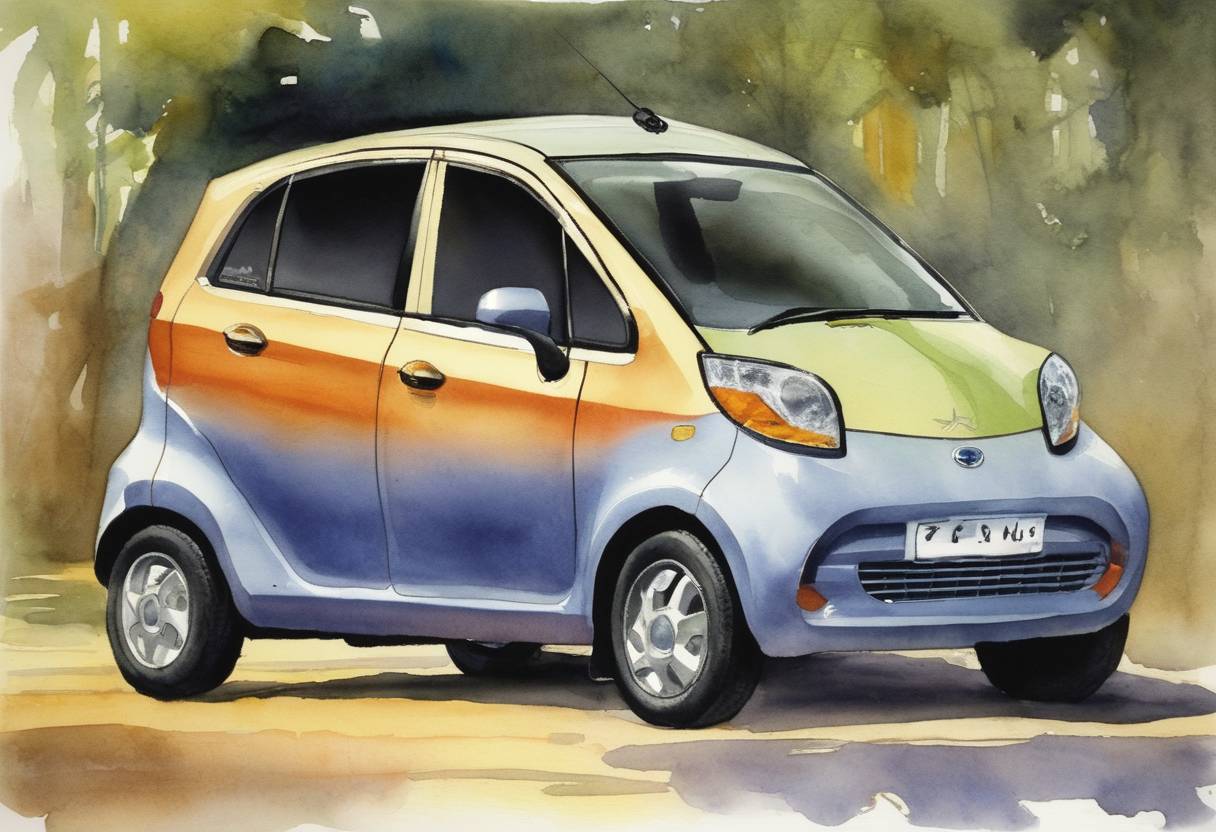
Launch of the Tata Nano
On April 22, 2008, Tata Motors officially launched the Tata Nano in Mumbai, India. Touted as the world’s cheapest car, the Nano was introduced with the intention of making automobile ownership accessible to a broader segment of the Indian population. This strategic move aimed to revolutionize personal transportation by offering an affordable alternative to two-wheelers, which were commonly used by middle and lower-income families for daily commutes.
Design and Specifications
The Tata Nano was engineered to be both cost-effective and fuel-efficient. It featured a compact, lightweight design, with a rear-mounted 624cc engine. Despite its economical pricing, the Nano was designed to meet India’s strict safety and emissions standards, offering basic amenities and sufficient space to seat a family.
Pricing and Production
Upon its launch, the Nano was priced at approximately 100,000 Indian Rupees (around $2,500 USD at the time), a revolutionary pricing point in the global automotive market. Tata Motors initially planned to produce the car at its Singur plant in West Bengal. However, due to land acquisition disputes, production was shifted to Sanand, Gujarat.
Impact and Aftermath
The introduction of the Tata Nano marked a significant milestone in the automotive industry, showcasing innovations in manufacturing and cost control. While the vehicle attracted substantial international attention and created high expectations for transforming personal transport in India, it faced hurdles including production delays and safety concerns. Despite its initial promise, sales did not meet projected targets, and by 2018, Tata Motors decided to halt production due to declining demand.
Broader Historical Significance
The Tata Nano’s launch highlighted the emerging trend of ultra-low-cost cars and underscored the challenges of balancing affordability with consumer expectations in terms of safety, comfort, and brand perception. It remains a notable case study in automotive history for its ambitious vision of democratizing automobile ownership.