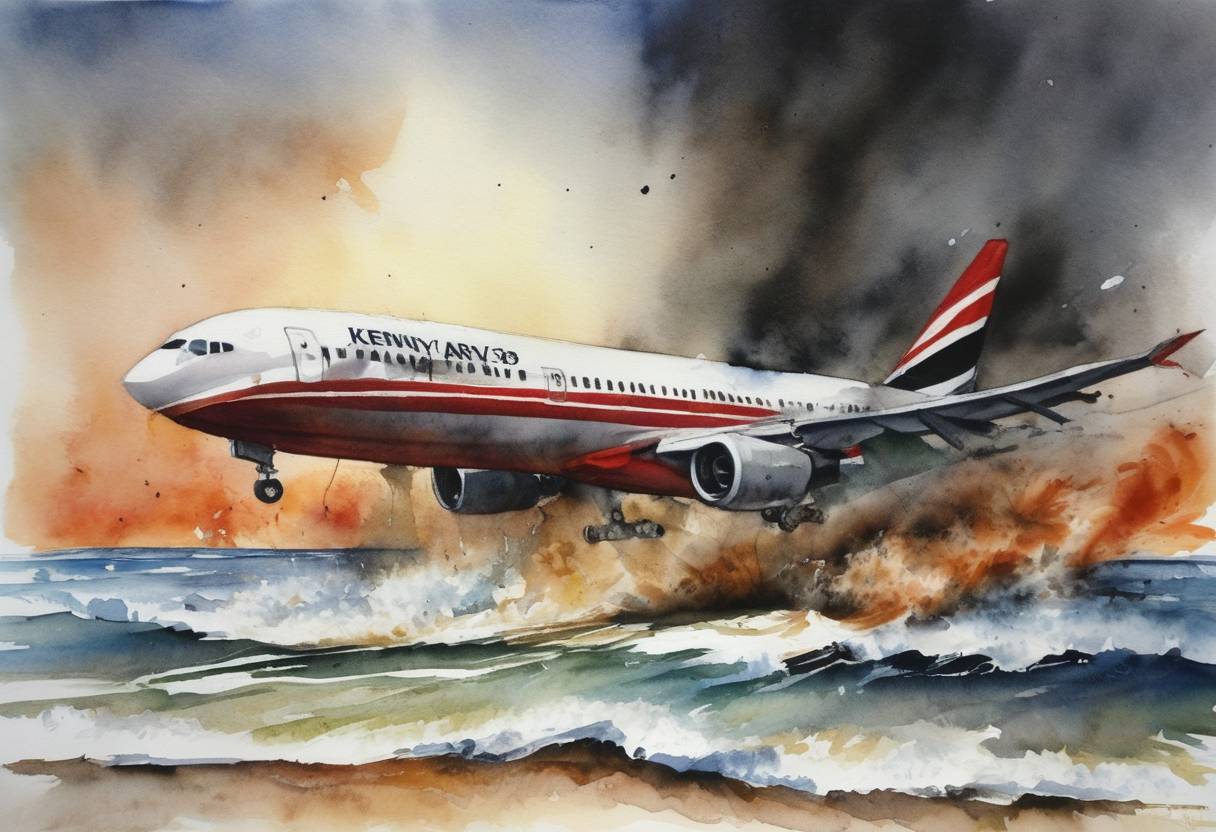
Kenya Airways Flight 431 Crash
Date and Location
On January 30, 2000, Kenya Airways Flight 431 crashed into the Atlantic Ocean shortly after takeoff from Félix-Houphouët-Boigny International Airport in Abidjan, Côte d’Ivoire. This tragic event resulted in the death of 169 of the 179 passengers and crew on board, marking it as one of the deadliest aviation disasters in West Africa.
Aircraft and Flight Details
The aircraft involved was an Airbus A310-304, operating Kenya Airways’ scheduled passenger service from Abidjan to Nairobi, with an intermediary stopover in Lagos, Nigeria.
Events Leading to the Crash
Flight 431 took off at around 21:08 local time. Shortly after departure, approximately one minute into the flight, the aircraft encountered a critical situation leading to its crash into the ocean. The cockpit crew reported a false stall warning, prompting improper corrective actions. In a time-critical decision-making scenario under heavy stress, the pilot reduced the engine thrust and failed to recover in time, resulting in a loss of control.
Casualties and Rescue Efforts
Out of the 179 individuals on board, 169 lost their lives. Ten passengers survived the crash, with rescue operations being carried out swiftly by local fishing boats and coast guard services. Survivors clung to debris or life vests until they were rescued.
Investigation and Causes
Following the disaster, an investigation was conducted by the Commission of Inquiry established by the Côte d’Ivoire government, with assistance from the French Bureau of Enquiry and Analysis for Civil Aviation Safety (BEA). The investigation highlighted several factors:
- The erroneous stall warning which led to the misjudgment of the crew.
- The lack of adequate crew training for handling misinformation from aircraft instruments during critical phases of flight.
- Absence of proper recovery protocol execution in response to perceived in-flight stall situations.
Aftermath and Safety Measures
The accident prompted significant safety reviews and updates in training protocols for addressing stall recovery methods, focusing on ensuring pilots could accurately assess and respond to similar malfunctions. The tragic incident underscored the importance of effective communication, adherence to established safety protocols, and the need for continual improvement in aviation safety measures and pilot training programs.