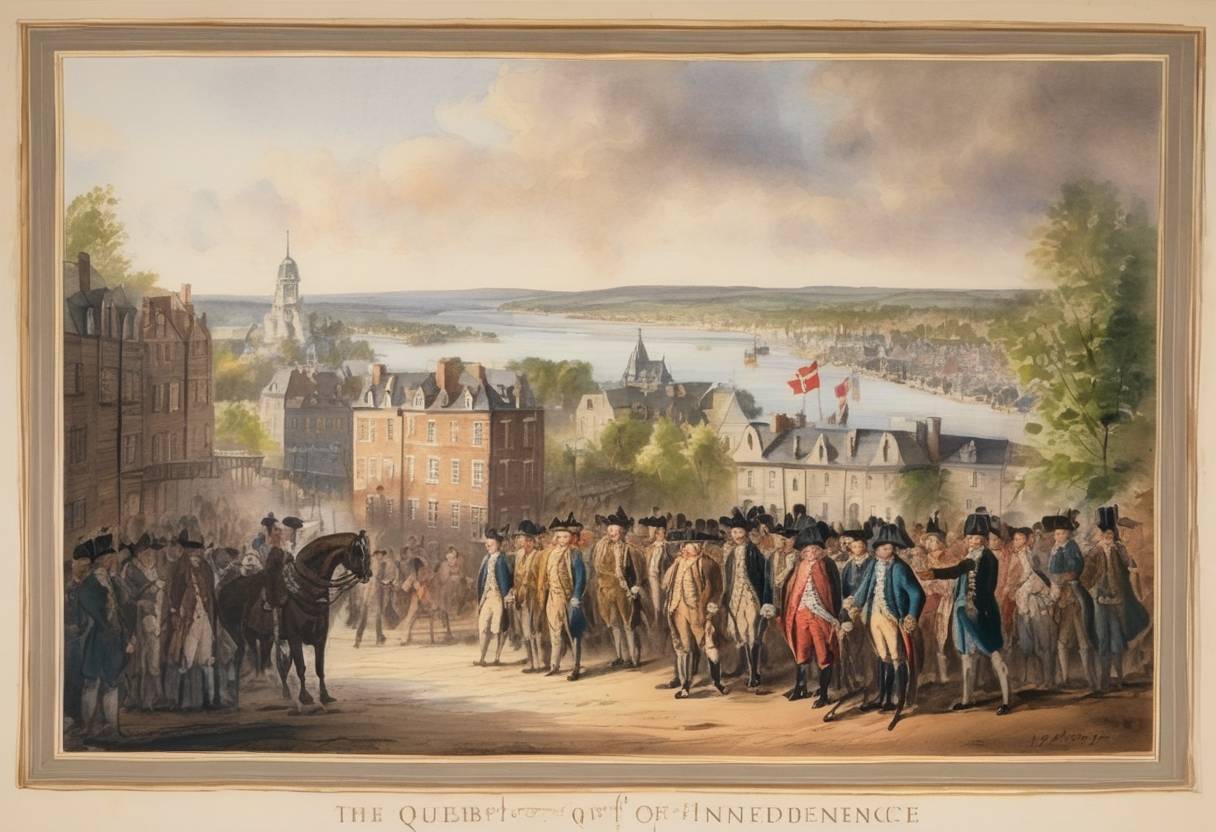
The First Public Reading of the Declaration of Independence in Quebec City
On August 10, 1776, the Declaration of Independence was read publicly for the first time in Quebec City, Canada. This event came about during a period of heightened tensions and military engagements in North America, as the American colonies sought independence from British rule.
Context and Background
The American Revolutionary War was well underway by 1776, following the outbreak of hostilities at the Battles of Lexington and Concord in 1775. The Continental Congress had adopted the Declaration of Independence on July 4, 1776, formally asserting the American colonies’ intention to break away from British rule. Though largely symbolic at the time, the Declaration represented a significant ideological shift that inspired other movements for self-determination.
The public reading in Quebec City can be attributed to the movements of the American Continental Army. Under the command of General Richard Montgomery and later, Benedict Arnold, American forces had initiated an invasion of Quebec in late 1775. The military campaign, however, proved unsuccessful. By the time of the Declaration’s reading, American military presence in the area had been reduced due to retreat.
The reading of the Declaration was not an official act by recognized authorities but was likely an attempt by American supporters or sympathizers within the city to spread the revolutionary spirit. By 1776, Quebec was firmly under British control following the failed American invasion, and public support for the American cause was not widespread among the Canadian populace.
Aftermath and Historical Significance
Despite the Declaration’s reading in Quebec City, the impact on the local population remained limited. The colonies of Canada did not join the American revolutionary efforts, choosing instead to remain loyal to the British Crown. This adherence to British rule would contribute to the divergent paths taken by Canada and the United States in their respective national developments.
Nonetheless, the reading of the Declaration in Quebec City serves as a testament to the widespread reach and influence of the American Revolution. It highlights the complexity of colonial allegiances and the broader revolutionary ideals that resonated beyond the borders of the Thirteen Colonies.
The event underscores the Declaration’s role as a profound document championing the principles of liberty and self-governance that have continued to inspire movements worldwide long after its creation.