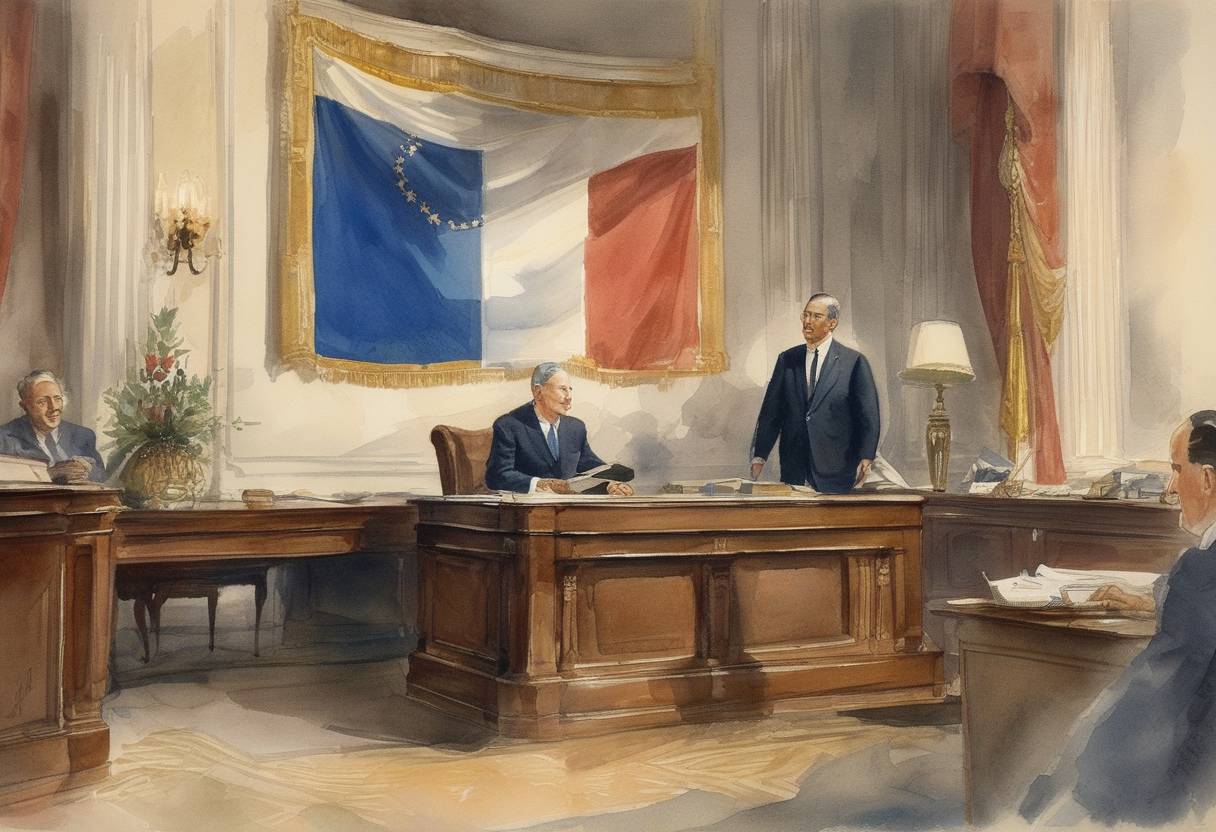
On May 4, 1949, the United States formally recognized the newly established state of Israel. This momentous event followed Israel’s declaration of independence on May 14, 1948, and marked a significant diplomatic development in the aftermath of World War II and the Holocaust.
Context
Israel’s Declaration of Independence
Israel proclaimed its independence on May 14, 1948, as the British Mandate for Palestine came to an end. The declaration initially led to the outbreak of the Arab-Israeli War as neighboring Arab states opposed the establishment of a Jewish state.
Immediately following the declaration, on May 14, 1948, President Harry S. Truman extended de facto recognition to the state of Israel, just 11 minutes after Israel’s formal announcement. This was a strategic and symbolic gesture that underscored the United States’ support.
War and Ceasefire Negotiations
The following year was marked by hostilities and ceasefire negotiations under the auspices of the United Nations. The U.N. mediated several truces between Israel and the Arab states, leading to armistice agreements that helped stabilize the region temporarily.
Israel’s U.N. Membership
On May 11, 1949, just a week after U.S. formal recognition, Israel was admitted to the United Nations as its 59th member state, affirming its status in the international community.
Broader Implications
U.S.-Israel Relations
This formal recognition was a critical step in establishing strong diplomatic ties between Israel and the United States, laying the groundwork for a strategic partnership that has endured over decades.
Middle Eastern Geopolitics
The decision by the United States to formally recognize Israel further fueled tensions in the Middle East, as it was seen by many in the Arab world as taking a definitive side in the regional conflict. This created lasting geopolitical ripples and influenced subsequent U.S. foreign policy in the region.
Conclusion
The formal recognition of Israel by the United States on May 4, 1949, was a pivotal event in the mid-20th century, reflecting the complex interplay of global politics, emerging national identities, and Cold War dynamics. This recognition affirmed a critical alliance and set a lasting precedent in international diplomatic relations.