Disbandment of the Spanish Inquisition - July 15, 1834
1834 · Madrid, Spain
The Spanish Inquisition is officially disbanded after more than 350 years of religious persecution and trials.
October 17, 1483
The Spanish Inquisition was established by the Catholic Monarchs Ferdinand II of Aragon and Isabella I of Castile.
Seville, Spain | Catholic Church
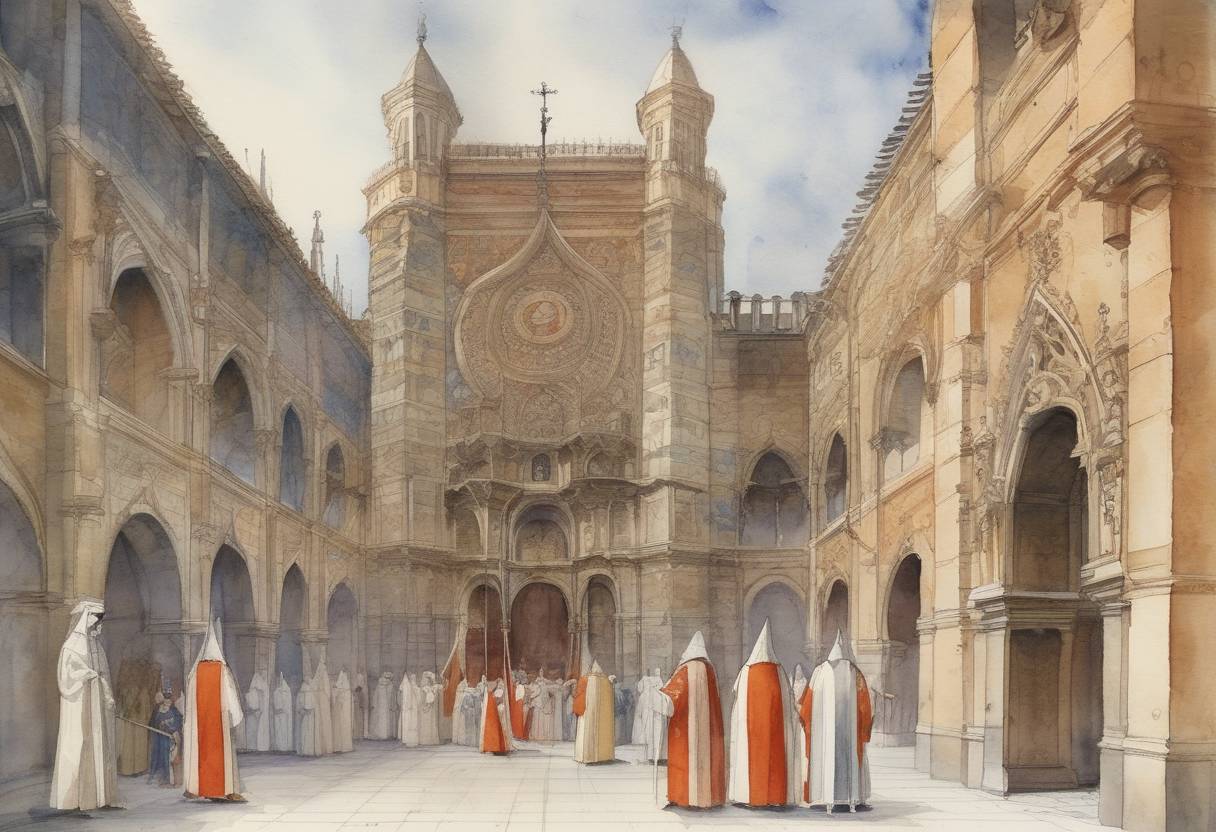
On October 17, 1483, the Spanish Inquisition was formally established by the Catholic Monarchs Ferdinand II of Aragon and Isabella I of Castile. This institution was a significant development in the history of Spain and had profound implications for its society, politics, and religion.
The Spanish Inquisition was part of a broader effort by Ferdinand and Isabella to consolidate their power and unify Spain under a single Catholic identity. The Reconquista, the centuries-long campaign to reclaim the Iberian Peninsula from Muslim rule, had recently concluded with the fall of Granada in 1492. The monarchs were determined to strengthen Catholic orthodoxy across their newly unified kingdom.
Religious Context: The late 15th century was a period of religious tension in Spain. There was a significant population of Jews and Muslims, as well as conversos (Jews who had converted to Christianity, often under duress). Many conversos were suspected of secretly practicing Judaism, leading to widespread suspicion and social unrest.
Papal Authorization: In 1478, Pope Sixtus IV issued a papal bull authorizing the Catholic Monarchs to appoint inquisitors to root out heresy in their realms. This was a crucial step that laid the groundwork for the formal establishment of the Inquisition.
Political Motivation: The Inquisition also served political purposes. It allowed Ferdinand and Isabella to exert greater control over their territories by targeting powerful converso families who held significant influence in society and the economy.
First Inquisitor General: On October 17, 1483, Tomás de Torquemada was appointed as the first Grand Inquisitor. Torquemada was a Dominican friar known for his zealous pursuit of heresy and played a pivotal role in shaping the Inquisition’s procedures and policies.
Organizational Framework: The Inquisition was organized into tribunals located in major cities across Spain. It operated independently of secular authorities, although it often collaborated with them to enforce its mandates.
Religious Persecution: The Inquisition led to the persecution of thousands of individuals accused of heresy. Many were subjected to torture, imprisonment, and execution, often by burning at the stake.
Cultural and Social Effects: The Inquisition contributed to a climate of fear and suspicion, stifling intellectual and cultural expression. It also played a role in the eventual expulsion of Jews from Spain in 1492 and the forced conversion or expulsion of Muslims in the early 16th century.
Long-term Legacy: The Spanish Inquisition remained active for over three centuries, not officially abolished until 1834. Its legacy is a complex one, symbolizing both religious zeal and intolerance, as well as the consolidation of centralized monarchical power in Spain.
The establishment of the Spanish Inquisition on October 17, 1483, marked a turning point in Spanish history, reflecting the intersection of religious fervor and political ambition in the late medieval period.
Source: en.wikipedia.org