The Opening of the Liverpool and Manchester Railway: September 15, 1830
1830 · Liverpool, United Kingdom
The Liverpool and Manchester Railway, the world's first inter-city railway, opened.
May 3, 1830
The Canterbury and Whitstable Railway opens. It is the first steam-hauled passenger and freight railway to issue season tickets and carry livestock.
Canterbury, United Kingdom | Canterbury and Whitstable Railway Company
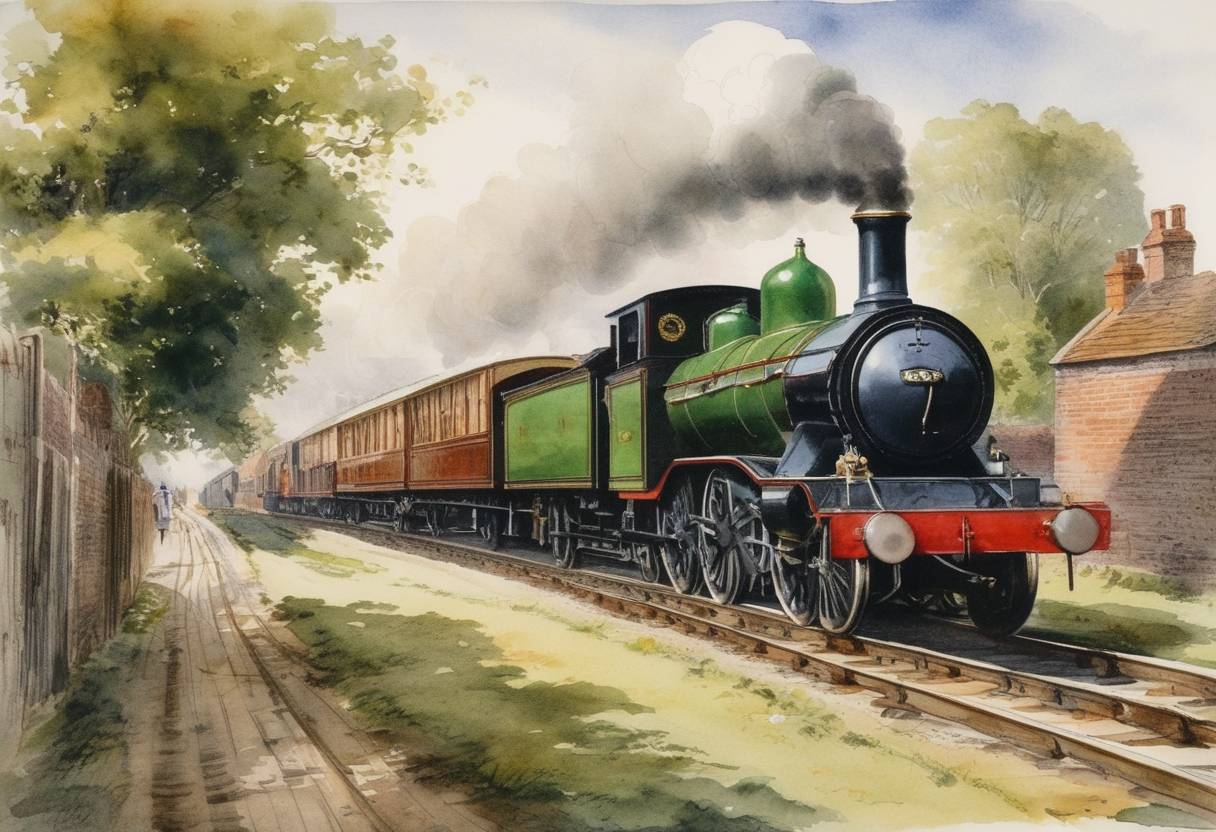
On May 3, 1830, the Canterbury and Whitstable Railway (C&WR), also known as the “Crab and Winkle Line,” opened in Kent, England. This historic event marked a significant milestone in railway history as it was one of the earliest steam-powered railways designed for both passenger and freight services. The C&WR distinguished itself from earlier railways by being the first to introduce season tickets and to transport livestock, setting important precedents for railway operations.
The development of the C&WR was part of a broader railway expansion in the UK, fueled by the success of earlier ventures such as the Stockton and Darlington Railway in 1825 and the Liverpool and Manchester Railway in 1830. The Canterbury and Whitstable Railway Company was formed in 1825 to improve transport links between the inland city of Canterbury and the coastal town of Whitstable, primarily to facilitate the movement of goods and to support the local coal trade.
The construction of the 6-mile (approximately 9.7 kilometers) track was a challenging endeavor due to the varied landscape along the route. One of the notable engineering feats on the line was the Tyler Hill Tunnel, one of the earliest railway tunnels, which stretched around 828 yards (758 meters), demonstrating the ambitious scope of early railway engineering.
The line employed a mix of stationary engines and pioneering locomotives to handle the challenging gradients. The most famous of these was “Invicta,” a locomotive designed by the celebrated engineer George Stephenson. “Invicta” provided a practical demonstration of time schedules and reliable service, albeit with some operational challenges typical of early steam technology.
Opening as the second steam-powered, properly documented passenger railway in the world following the Liverpool and Manchester Railway, the Canterbury and Whitstable line helped establish key practices in railway logistics and economics. The introduction of season tickets became an innovative step in passenger access and affordability. The line’s ability to transport livestock was significant for agriculture and local trade, showcasing the railway’s potential to affect diverse sectors.
Though the railway ceased passenger services in 1931 and closed entirely in 1953, its impact was hard-felt in the evolution of railway systems. The C&WR was a step forward in illustrating the viability and potential of steam railways, influencing future British and global railway development.
The route of the C&WR now forms part of a walking and cycling path, preserving its historical significance and maintaining its legacy as a symbol of early railway ambition. The locomotive “Invicta” can be viewed at the Canterbury Heritage Museum, serving as a tangible reminder of the early days of railway travel.
Source: www.kentrail.org.uk