1914 · Belfast, United Kingdom
HMHS Britannic, the third and largest Olympic-class ocean liner of the White Star Line, was launched. It was intended to be a transatlantic passenger ship but was instead used as a hospital ship during World War I.
November 21, 1916
The HMHS Britannic, a White Star Line ocean liner and sister ship of the Titanic, sank in the Aegean Sea after hitting a mine. Despite the rapid sinking, the death toll was remarkably low, with 30 out of 1,066 people onboard losing their lives.
Kea, Greece | White Star Line
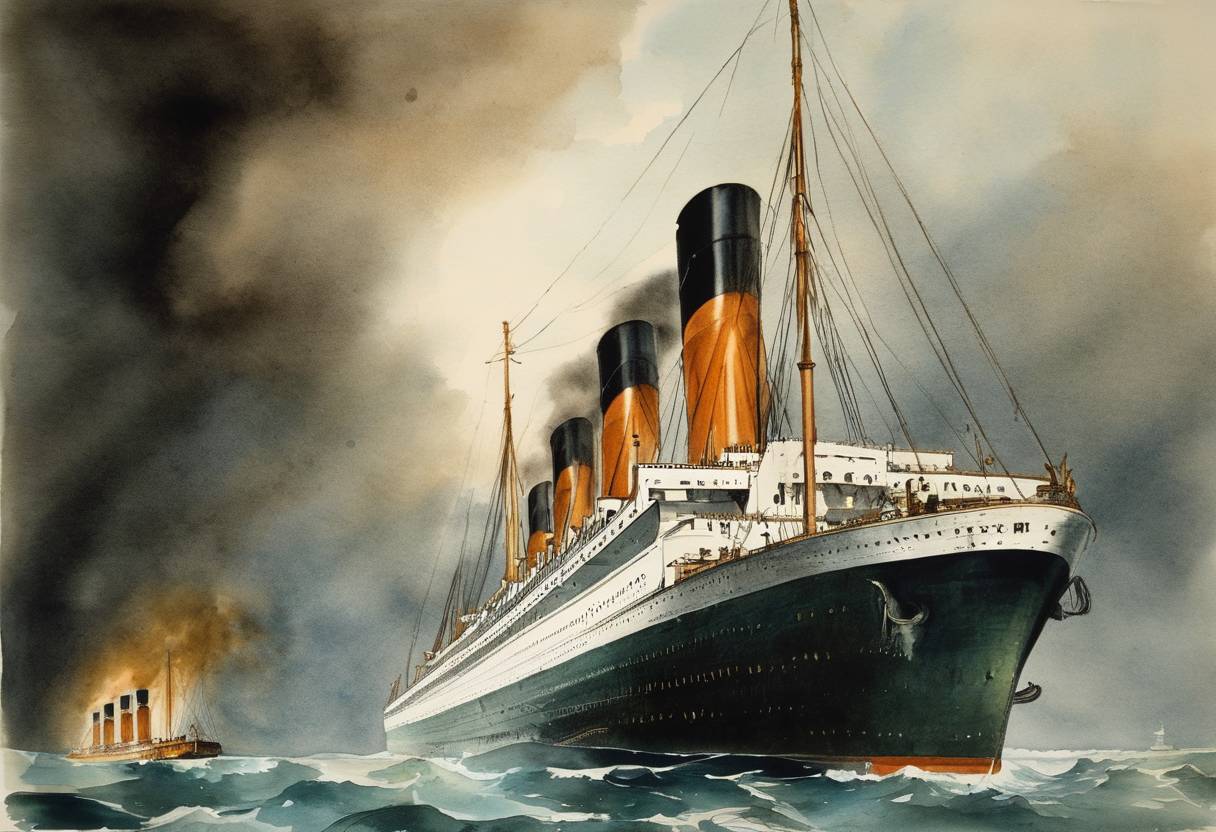
On November 21, 1916, the HMHS Britannic, the largest sister ship of the RMS Titanic, met a tragic fate in the Aegean Sea. The Britannic was the third vessel of the Olympic-class ocean liners operated by the White Star Line, initially intended for luxury passenger services. During World War I, the ship was repurposed as a hospital ship to transport injured soldiers.
While en route from Naples to the port of Mudros in the Greek island of Lemnos, the Britannic entered the Kea Channel in the Aegean Sea. At approximately 8:12 AM, the ship struck a mine laid by the German submarine SM U-73. The explosion occurred on the starboard side, causing critical damage.
Despite advanced safety measures incorporated into its design, including those learned from the Titanic disaster, the Britannic sank in less than 55 minutes. The speed of its descent was hastened by several factors, such as open portholes meant for ventilation, which allowed water to flood multiple decks.
Out of 1,066 individuals aboard, including crew and medical staff, 30 lives were lost. Many deaths occurred during premature lifeboat launches that were sucked into the ship’s rotating propellers as it continued to move forward. The majority of the passengers and crew were successfully evacuated thanks to the swift response by local fishing vessels and other rescue efforts.
The loss of the Britannic, despite its significant structural improvements, underscored the persistent risks faced by ocean liners during wartime. The wreck of the Britannic lies at a depth of approximately 400 feet (around 120 meters) near the island of Kea, and it remains a site of interest for maritime historians and divers.
The event bore testament to the constant hazards of naval warfare and underscored the importance of naval safety protocols, influencing future shipbuilding standards and oceanic navigation procedures.
Source: www.britannica.com