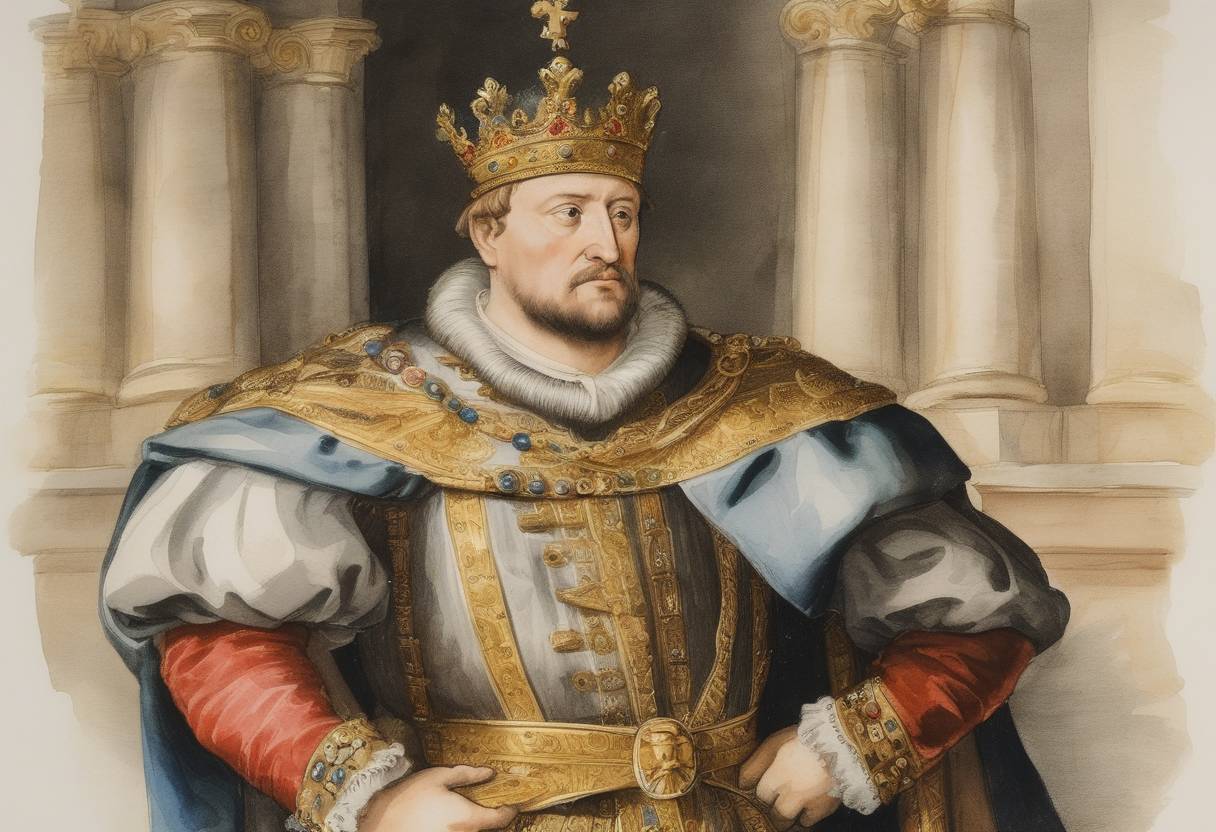
Ferdinand I Elected King of the Romans on February 24, 1538
On February 24, 1538, Ferdinand I was elected King of the Romans, a significant event that further paved the way for him to eventually become the Holy Roman Emperor. This election was a pivotal moment in Central European history and played a key role in the political structure of the Holy Roman Empire.
Background
Ferdinand I was a member of the influential Habsburg dynasty, which was one of the principal ruling dynasties in Europe at the time. He was born on March 10, 1503, as the younger brother of Charles V, the Holy Roman Emperor. Charles V’s reign faced numerous challenges, including religious tensions spurred by the Protestant Reformation and conflicts with the Ottoman Empire.
In the complex hierarchy of the Holy Roman Empire, the title “King of the Romans” was typically given to the heir-apparent to the imperial throne. It was a clear indication that the holder was next in line to become the Holy Roman Emperor, pending the formal coronation by the Pope.
Election and Significance
The election on February 24, 1538, took place during a period of considerable political and religious upheaval in Europe. Ferdinand’s election as King of the Romans was crucial not only for securing the Habsburg influence in the empire but also for maintaining Catholic dominance during a time of burgeoning Protestant movements.
As King of the Romans, Ferdinand was effectively the deputy of his brother Charles V, who was occupied with vast imperial responsibilities and military campaigns across Europe. Ferdinand’s election ensured that the Habsburg line retained control over the empire and provided a reliable governance structure in Charles’ absence.
Path to the Emperor
This election set Ferdinand on his course to eventually become the Holy Roman Emperor. Although Ferdinand was not immediately granted the imperial title after being elected King of the Romans, his position made him the de facto leader of the empire’s German territories. He officially became Holy Roman Emperor Ferdinand I after his brother abdicated in 1556. It served to stabilize the Habsburg rule amidst growing rivalries and helped in the continuation of their policies.
Conclusion
Ferdinand I’s election as King of the Romans on February 24, 1538, was a vital step in the maintenance of Habsburg power in 16th-century Europe. It reflected the intricate balance of power within the Holy Roman Empire and underscored the importance of political maneuvering in an era dominated by dynastic and religious complexities.