Texas Secedes from the United States: February 1, 1861
1861 · Austin, United States
Texas secedes from the United States, joining the Confederate States of America.
January 21, 1861
Jefferson Davis of Mississippi resigns from the United States Senate following the state's secession from the Union.
Washington, D.C., United States | United States Senate
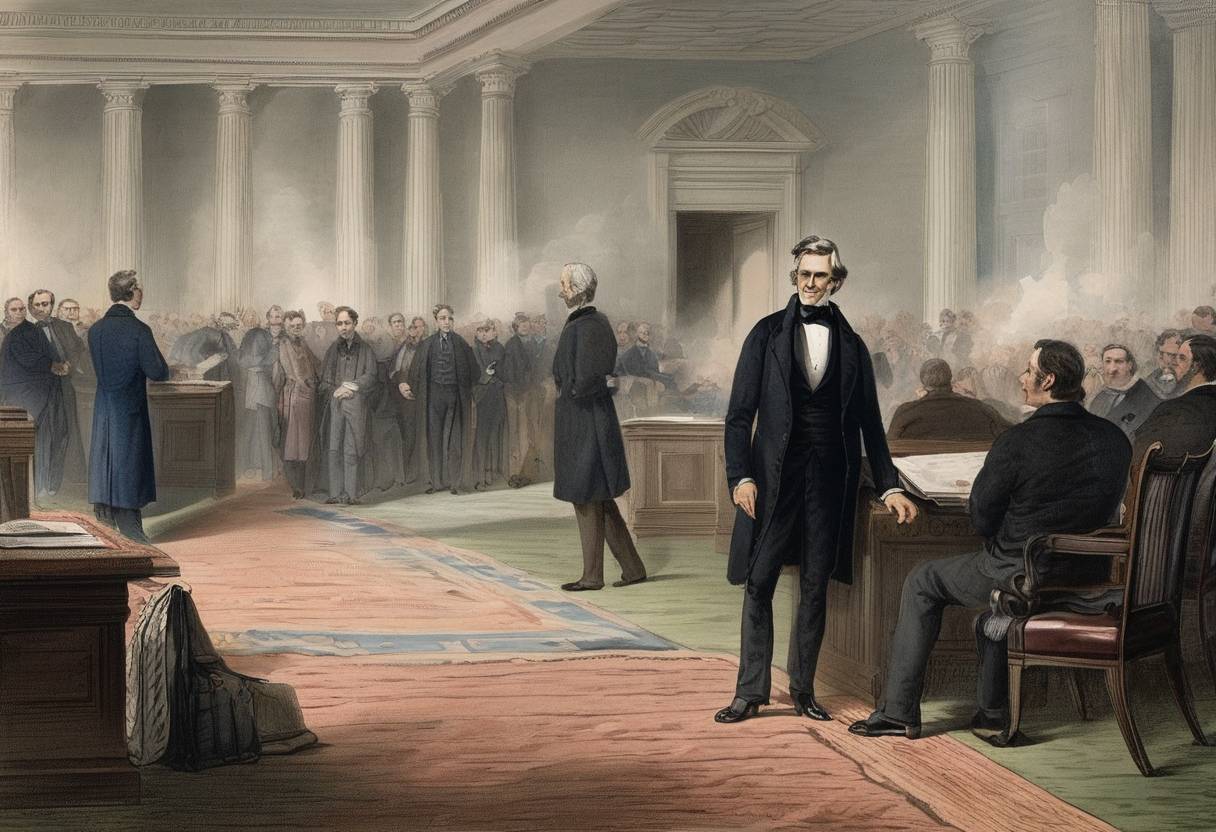
On January 21, 1861, Jefferson Davis, representing Mississippi, officially resigned from the United States Senate, a pivotal moment precipitated by Mississippi’s secession from the Union on January 9, 1861. This event marked a significant escalation in the crisis between the Northern states and the seceding Southern states, setting the stage for the American Civil War.
Jefferson Davis was a prominent political figure and a staunch advocate for states’ rights and the Southern cause. His resignation was not merely a personal decision but a reflection of Mississippi’s commitment to disassociate from the Union following the election of Abraham Lincoln in November 1860. Lincoln’s election, perceived as a direct threat to the institution of slavery and Southern autonomy, fueled secessionist sentiment across the South.
Mississippi was among the first wave of Southern states to secede, driven by the fear that the Republican administration would infringe on Southern interests. As a serving U.S. Senator from Mississippi, Davis found himself in a difficult position, caught between his obligations to the Union and his allegiance to his home state.
On the day of his resignation, Davis delivered an impassioned farewell address to the Senate. In his speech, he expressed his sorrow at leaving the Union but maintained that Mississippi’s choice was justified. He emphasized the constitutional right of states to withdraw from the Union—a doctrine rooted in the principle of state sovereignty.
Davis outlined his views on the constitutional and moral grounds that he believed supported the Southern position. His speech reflected a deep-seated belief in the importance of states’ rights and the legality of secession, aspects that would soon be vigorously contested on the battlefield.
Following his resignation, Jefferson Davis returned to Mississippi, where he was selected to serve as the provisional president of the Confederate States of America shortly thereafter. His leadership role in the Confederacy cemented his legacy as a central figure in the Civil War.
Davis’ resignation, alongside those of other Southern senators, vividly illustrated the deep divisions that had come to characterize American politics. The departure of Southern legislators from Congress symbolized the fracture of the United States and underscored the gravity of the secession crisis.
The events of January 21, 1861, and the months surrounding it set the nation on an irreparable path to conflict. The issues at stake—state sovereignty, federal authority, and the future of slavery—would be dissected on the national stage through the crucible of war. Jefferson Davis’ role and the decision to resign from the Senate remain emblematic of the intense sectionalism that led to the American Civil War.
Source: www.senate.gov