The Libyan Civil War: February 17, 2011
2011 · Benghazi, Libya
The Libyan Civil War began with protests in Benghazi against Muammar Gaddafi's government, leading to a full-scale conflict and international intervention.
February 23, 2011
The Libyan Civil War intensifies as protests against the rule of Muammar Gaddafi spread throughout Libya. The international community begins to respond to the violence.
Benghazi, Libya | Libyan Government
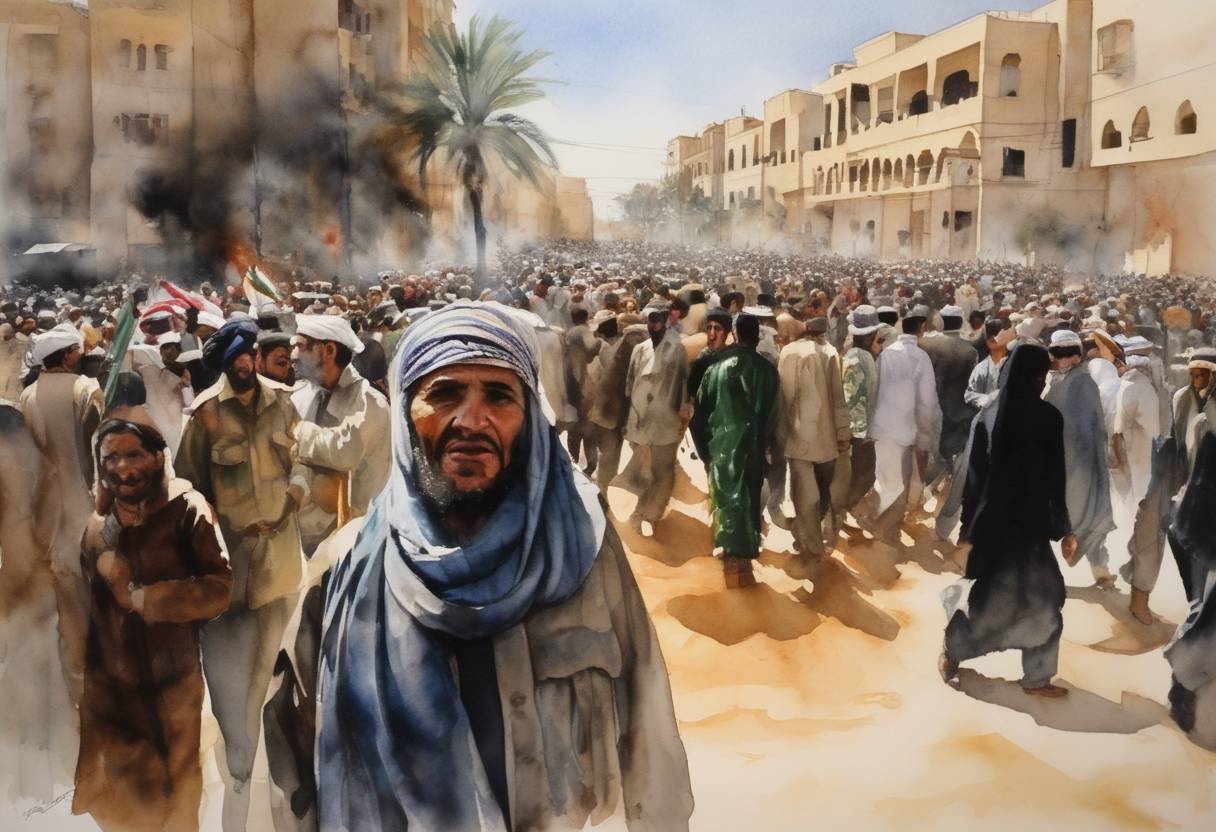
On February 23, 2011, the Libyan Civil War saw a significant escalation as protests and uprisings against the regime of Muammar Gaddafi spread throughout the country. The conflict was part of the broader wave of the Arab Spring, where numerous countries in the Middle East and North Africa experienced revolts against authoritarian regimes. In Libya, the civil unrest began in mid-February 2011, gaining momentum quickly as citizens demanded an end to Gaddafi’s long-standing autocratic rule.
Muammar Gaddafi had been in power since 1969, ruling Libya with an iron fist, often employing violent means to suppress dissent. The initial protests in Libya were inspired by similar demonstrations in Tunisia and Egypt, which saw the ousting of their long-time leaders. In Libya, the uprising started in the eastern city of Benghazi before rapidly spreading to other parts of the country, including the capital, Tripoli.
By late February, the situation had deteriorated into a full-scale conflict. Protesters increasingly took up arms in response to the regime’s brutal crackdown. Gaddafi’s forces used heavy weaponry, aircraft, and mercenaries to suppress the opposition, leading to significant casualties among the civilian population.
On February 23, the international community began to respond more decisively to the escalating violence in Libya. Global leaders condemned Gaddafi’s use of force against protesters. The United Nations Security Council held discussions about possible measures to address the humanitarian crisis and protect civilians from the regime’s crackdown.
Countries like France and the United Kingdom called for immediate sanctions against Gaddafi’s government. Various international human rights organizations also reported on the severe violations being committed against civilians. The situation prompted debates about potential international intervention to prevent further bloodshed.
The events of February 23, 2011, marked a turning point in the Libyan conflict, highlighting the regime’s willingness to use extreme measures to maintain control. The international response also underscored a growing consensus that intervention might be necessary to halt the violence. This set the stage for subsequent actions by the United Nations and NATO, leading eventually to a military intervention in Libya.
The intensification of the conflict in Libya not only altered the political landscape of the country but also had significant implications on regional stability and the global understanding of humanitarian intervention. It illustrated the potential and limits of international efforts in addressing domestic conflicts and protecting human rights in authoritarian states.
Source: www.bbc.com