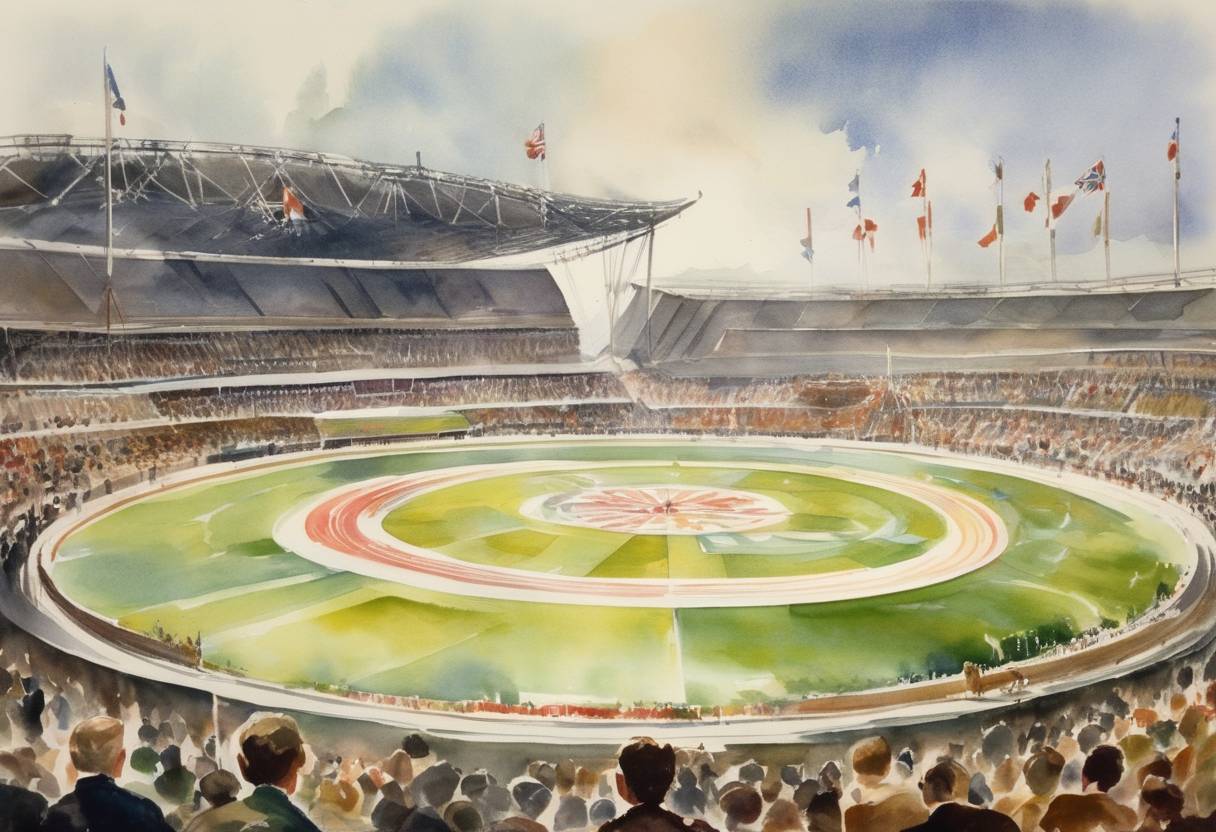
1948 Summer Olympics Opening in London
The 1948 Summer Olympics officially opened on July 29, 1948, marking a significant moment in sports history as they were the first Olympic Games held after a 12-year hiatus due to World War II. These Games, officially known as the Games of the XIV Olympiad, were hosted in London, a city that had itself endured the devastation of the war.
Historical Context
- Post-War Recovery: The decision to hold the Olympics in London was made in 1946, just one year after the war’s end. Despite widespread rationing and economic challenges, Britain restored parts of its infrastructure to accommodate athletes and visitors.
- Austerity Games: Due to economic constraints, the 1948 Olympics were nicknamed the “Austerity Games.” No new venues were built; existing facilities, such as Wembley Stadium, were used.
Key Events on Opening Day
- Opening Ceremony: The grand opening ceremony took place at Wembley Stadium, attended by approximately 85,000 spectators. King George VI declared the Games open in a formal address, accompanied by Queen Elizabeth and members of the British royal family.
- Participation: Nearly 4,000 athletes from 59 nations paraded during the opening. Notably, Germany and Japan were not invited to participate due to their roles in the war, while the Soviet Union elected not to send athletes, though it did send observers to evaluate the event.
Highlights and Significance
- Symbol of Peace and Unity: As the first Olympics after World War II, the 1948 Games symbolized a push towards international peace and cooperation, providing a platform for countries to come together in the spirit of friendly competition.
- Inclusivity: Although limited by the times, these Games were a step towards greater inclusivity. For instance, the event saw increased female participation compared to previous editions.
Aftermath
- Economic Impact: Despite the budgetary limitations, the 1948 Olympics were profitable, with London capitalizing on its pre-existing structures and managing costs effectively.
- Legacy: The success of the 1948 Games set the stage for subsequent Olympics and demonstrated the enduring appeal and power of the Olympic movement as a means to unite disparate nations and cultures.
Overall, the 1948 Olympics marked a critical juncture in both Olympic history and global relations, as nations emerged from the shadow of war towards an era of competitive harmony and shared aspirations.