July 24, 1132

The Battle of Nocera took place in Italy as part of the conflicts during the Anarchy in England. This battle was fought between the forces of King Stephen of England and those of the Empress Matilda, against the backdrop of the civil war for the English crown.


Nocera, Italy | Royal forces
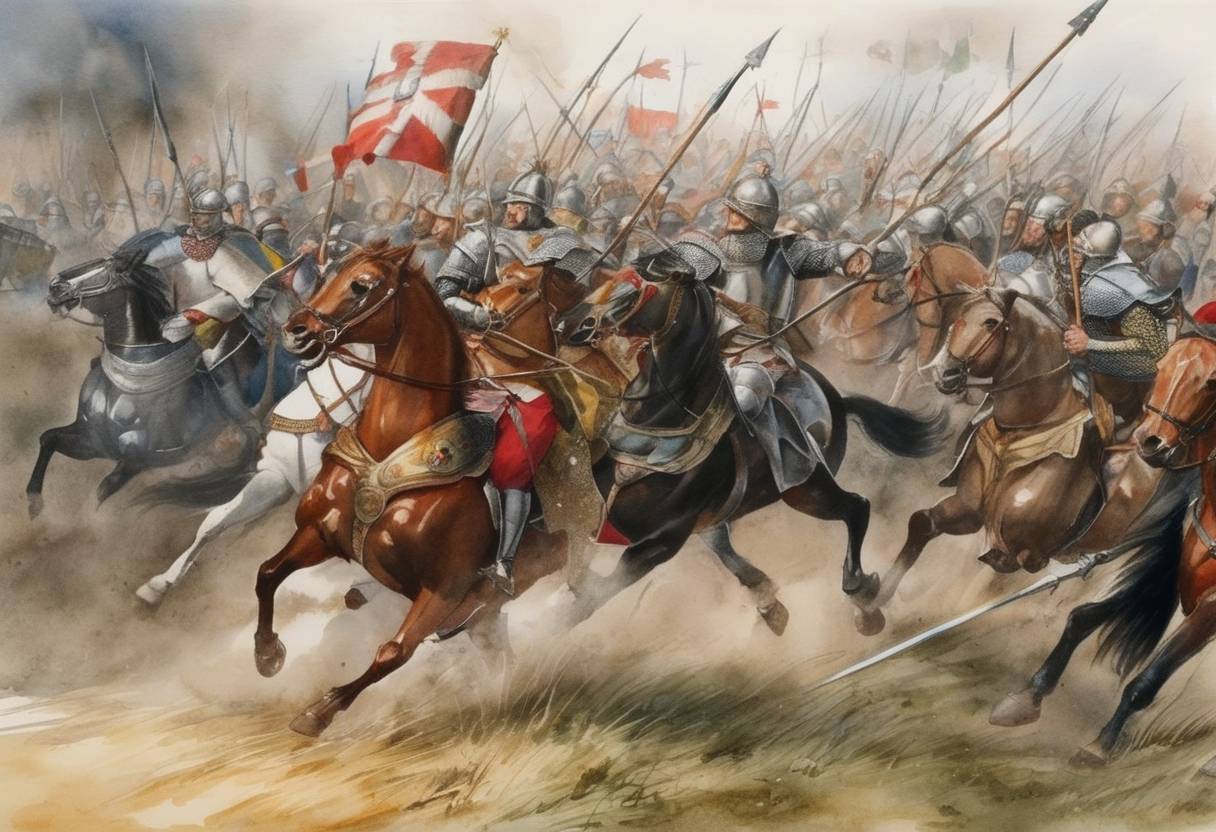
Watercolor painting based depiction of The Battle of Nocera took place in Italy as part of the conflicts during the Anarchy in England. This battle was fought between the forces of King Stephen of England and those of the Empress Matilda, against the backdrop of the civil war for the English crown. (1132)

The Battle of Nocera (July 24, 1132)

The Battle of Nocera, which occurred on July 24, 1132, in Nocera Inferiore, Italy, is often recounted within the context of the larger geopolitical struggles of the period, though it typically falls outside the central narrative of the Anarchy in England, since the Anarchy primarily took place later between 1135 and 1153.

Historical Context

Before delving into the events of Nocera, it’s important to understand the broader historical backdrop:

  • The Anarchy in England: This civil war began in 1135 following the death of King Henry I of England. The conflict was primarily between his daughter, the Empress Matilda, and his nephew, Stephen of Blois, who had seized the throne.
  • International Conflicts: While the Anarchy unfolded in England, conflicts across Europe frequently intersected either through personal ties or broader anti-monarchial alliances.

The Battle

The Battle of Nocera occurred against this international backdrop, involving:

  • Actors: Though not directly part of the English succession disputes, some historians note this event for its overlapping military interests and alliances formed by English nobles and attendees.
  • Participants: Unlike the key figures of the English Anarchy, the Battle of Nocera involved local Italian forces led by the Papal ally, Count Ranulf of Alife, and Roger II of Sicily, rather than being directly spearheaded by King Stephen or the Empress Matilda.

The Outcome

The battle was significant in Italy for reasons beyond the English scope:

  • Victory: Count Ranulf’s forces successfully repelled Roger II, bolstering Papal interests in the region.
  • Consequences: This battle influenced the local balance of power in Southern Italy, contributing to the consolidation of territories and power dynamics that would play a role in Italian and European affairs separate from the English civil war.

Broader Significance

While not central to the Anarchy in England, the Battle of Nocera exemplified the interconnectedness of European medieval politics:

  • Network of Alliances: The battle underscores how nobles were often involved in transnational disputes, aligning themselves variously in matters of political or religious import.
  • Impact on England: Such battles indirectly influenced English politics by shaping the external environments and local allegiances that English nobles could call upon for support.

Therefore, while it primarily remains a footnote to the Anarchy, its examination offers valuable insights into the larger European medieval tapestry, illustrating the complex, intertwined nature of medieval geopolitics.