Opening of the Blackwall Tunnel
1897 · London, United Kingdom
The Blackwall Tunnel under the River Thames is officially opened in London by the Prince of Wales (the future King Edward VII).
January 28, 1922
The Viaduct Girder Bridge over the River Thames at Sutton in England collapsed because of unexpected high water levels causing the loss of the passenger train operating over it killing eight people.
Sutton, United Kingdom | Southern Railway
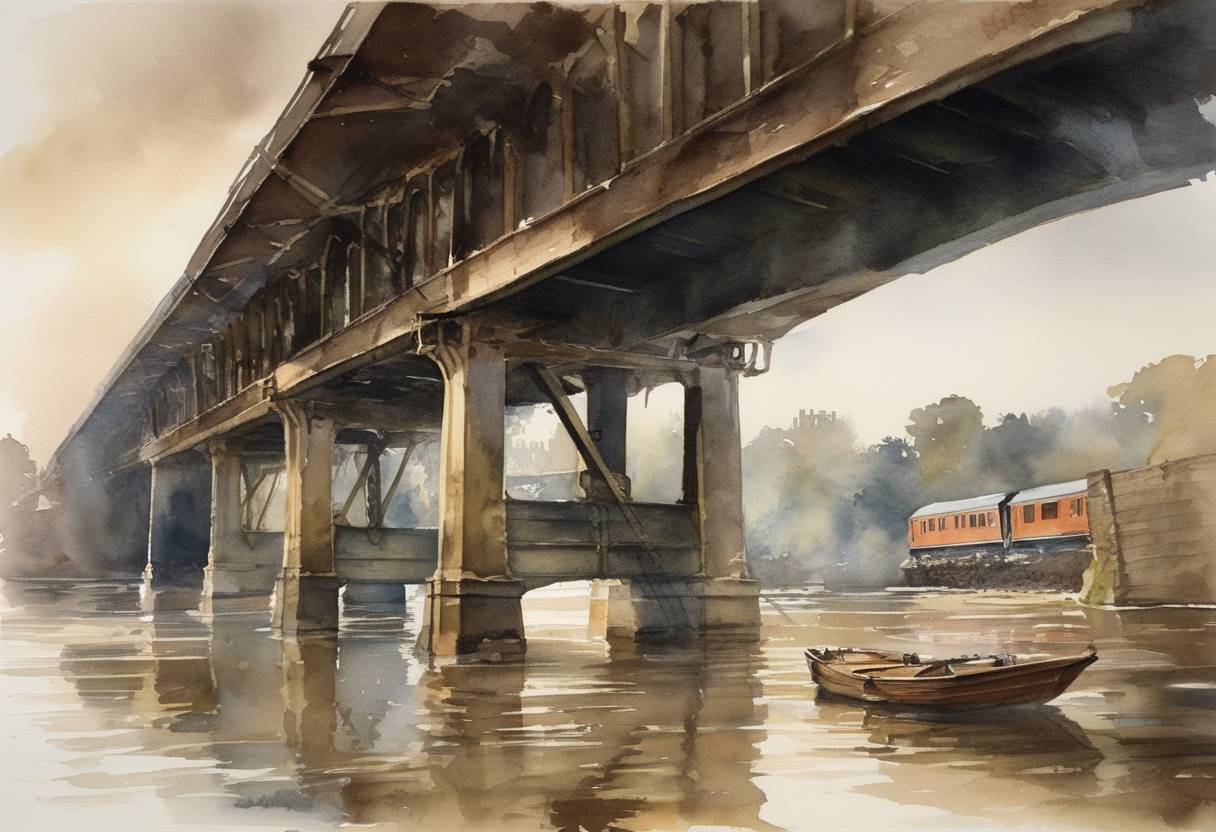
On January 28, 1922, the Viaduct Girder Bridge over the River Thames at Sutton in England tragically collapsed due to unexpectedly high water levels. This unfortunate event led to the derailment of a passenger train traversing the bridge, resulting in the deaths of eight individuals.
The Viaduct Girder Bridge was an essential part of the railway network, facilitating transportation across the River Thames at Sutton. It was a time when rail travel was a critical mode of transport for passengers and goods alike. However, the structural integrity of bridges faced challenges from natural elements and other wear and tear factors that required regular maintenance and inspections.
On the fateful day, the River Thames experienced unusually high water levels, which compromised the bridge’s stability. As the passenger train approached and began to cross the bridge, the weakened structure could not bear the load, leading to the catastrophic collapse. The train fell into the river, resulting in fatalities and injuries among the passengers involved. The incident underscored the importance of considering environmental factors in the design and maintenance of railway infrastructure.
The collapse prompted a thorough investigation into the causes of the disaster. It highlighted the need for improved engineering standards and the implementation of rigorous inspection protocols to ensure the safety of bridges, especially those crossing significant waterways. The tragedy served as a somber reminder of the critical balance between nature and human engineering and the necessity for perpetual vigilance in infrastructural maintenance.
The event also sparked discussions on railway safety measures and emergency response strategies, leading to enhancements in the systems designed to protect passengers in the event of similar occurrences in the future.
This accident emphasized the need for advancements in engineering practices and infrastructure inspection methods. It contributed to an increased awareness of the vulnerability of key transportation links to environmental factors, thereby influencing future railway construction and maintenance policies to prioritize safety and risk management.
Source: www.gracesguide.co.uk