Evacuation of Boston: March 17, 1776
1776 · Boston, United States
British forces evacuated Boston during the American Revolutionary War, marking a significant victory for the Continental Army.
December 16, 1775
Virginia and North Carolina patriots begin the Siege of Norfolk against British forces.
Norfolk, United States | Continental Army
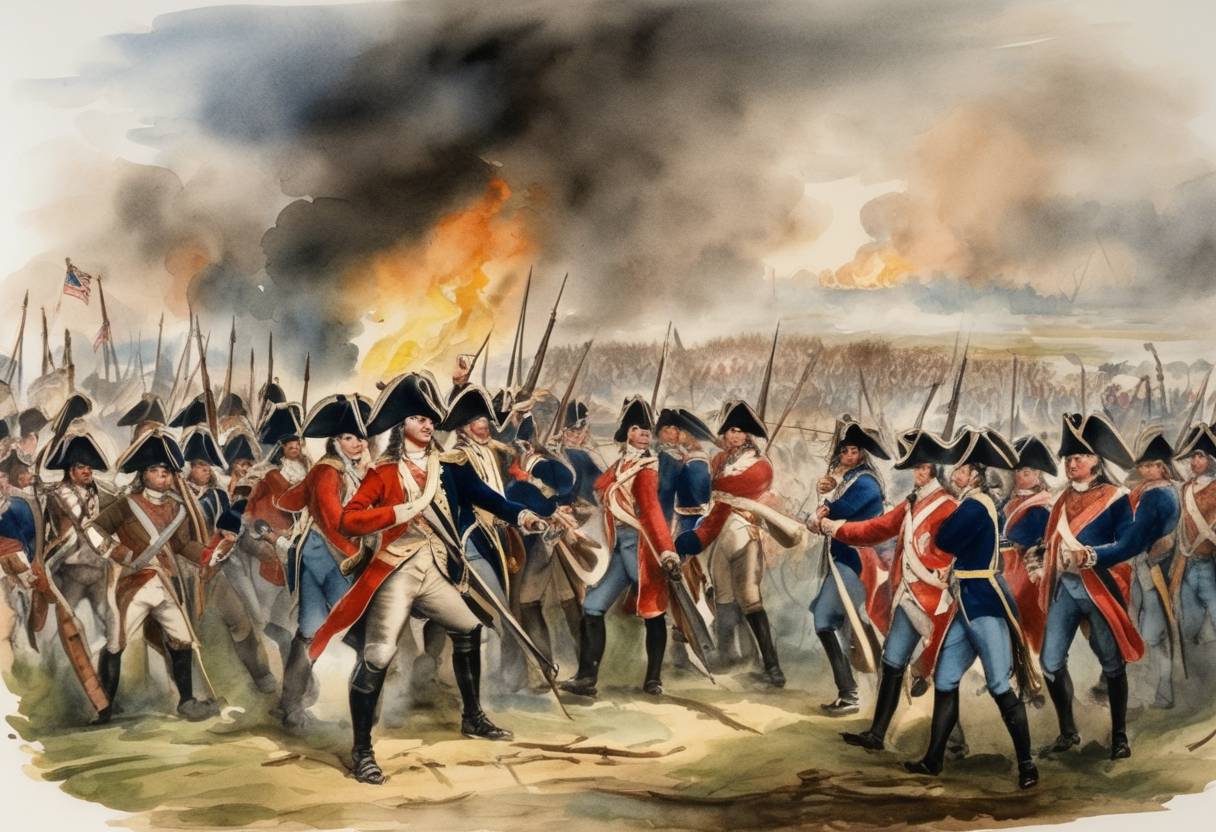
On December 16, 1775, during the early stages of the American Revolutionary War, Virginia and North Carolina patriots initiated the Siege of Norfolk. This was a pivotal confrontation aimed at undermining British control in the Virginia colony, as Norfolk was a strategic port city with strong loyalist sympathies.
Prior to the siege, tensions had been escalating between British authorities and colonial revolutionaries. Lord Dunmore, the royal governor of Virginia, had heightened these tensions by issuing the Dunmore Proclamation on November 7, 1775, which promised freedom to enslaved people who joined the British cause against the rebellion. This proclamation incited anger among Virginians, who saw it as an affront and a threat to their economic and social order.
In response to the increasing unrest, Dunmore fortified Norfolk and gathered loyalist forces, including military units composed of former enslaved individuals promised freedom for their service. The significance of Norfolk as a stronghold for loyalist forces made it a key target for the patriots.
Beginning on December 16, the patriots from Virginia and North Carolina, under the leadership of Colonel William Woodford and other regional militia commanders, converged on Norfolk. Their forces aimed to isolate the city and cut off supplies to the British and loyalist troops there.
The siege tactics employed were part of larger coordinated efforts by the patriots to obstruct British control and reinforce colonial resistance. The attackers positioned themselves strategically around the city, utilizing the support of the local populace who were largely sympathetic to the revolutionary cause.
The Siege of Norfolk culminated in the Battle of Great Bridge on December 9, 1775, prior to the siege proper, which was a decisive patriot victory and forced Lord Dunmore’s troops to retreat to their ships in Norfolk harbor. By January 1, 1776, British forces and loyalists abandoned the city and it was eventually set ablaze, which both destroyed much of Norfolk and marked a significant setback for British efforts in the Colony of Virginia.
The fall of Norfolk hindered British operations in Virginia, subsequently encouraging broader support for the revolutionary movement. Patriots gained momentum in organizing formal militias and coordinating regional efforts to further push back against British authority.
This event emphasized the strategic importance of controlling key urban centers and demonstrated the effectiveness of local militias in contesting British colonial rule during the early years of the American Revolution.
Source: www.battlefields.org