Coronation of Edward VI of England
1547 · London, England
Edward VI of England was crowned King of England at Westminster Abbey.
October 13, 1399
Henry IV of England's coronation took place at Westminster Abbey.
London, England | Monarchy of England
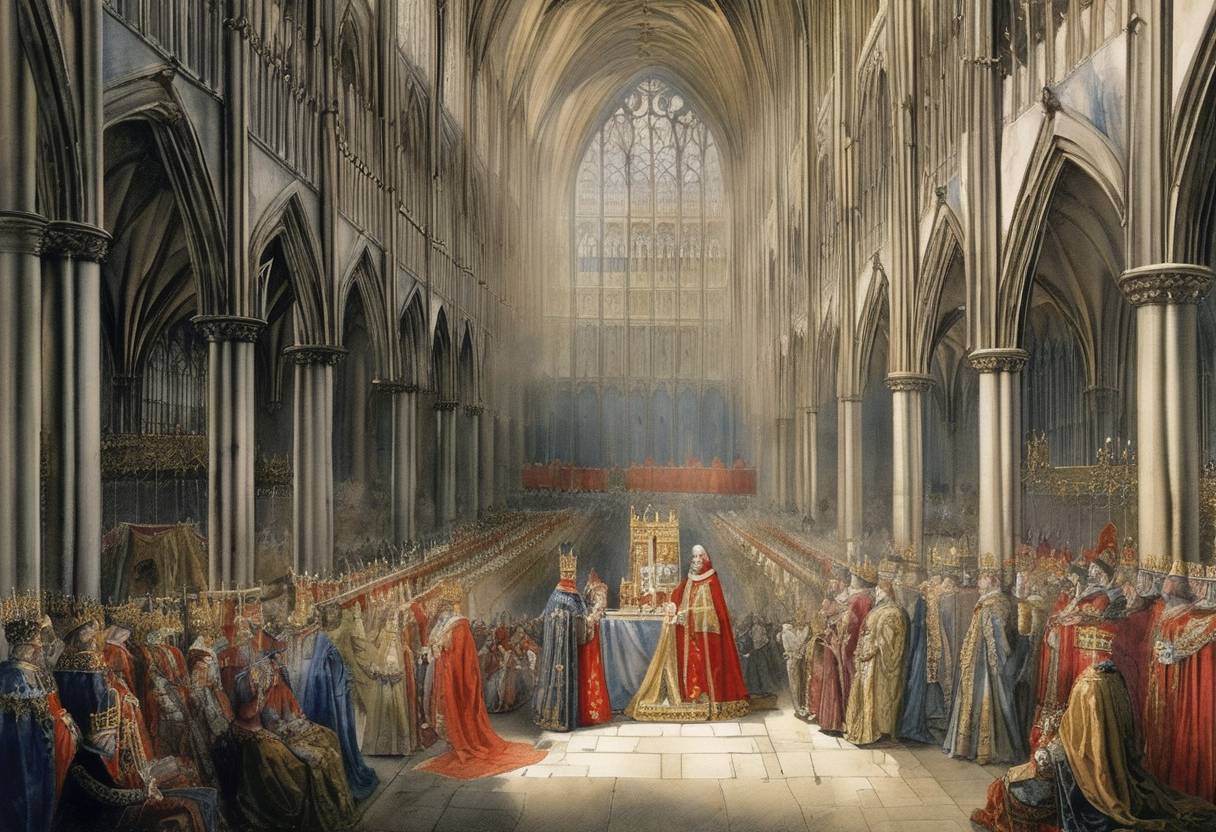
On October 13, 1399, Henry IV was crowned King of England in a grand ceremony at Westminster Abbey. This event marked the commencement of the Lancastrian dynasty, following the deposition of Richard II, and was significant for its display of royal power and legitimacy.
Henry Bolingbroke, who became Henry IV, was the son of John of Gaunt, Duke of Lancaster, a powerful noble with a claim to the English throne. His ascent to power was rooted in a political and dynastic struggle. Richard II’s rule had become increasingly unpopular due to his autocratic style and favoritism toward certain nobles, which alienated many powerful lords.
In 1399, Henry returned from exile in France, ostensibly to reclaim his Lancastrian inheritance confiscated by Richard II. However, exploiting dissatisfaction with Richard’s rule and rallying nobles to his cause, Henry deposed Richard. Richard abdicated on September 29, 1399, and Henry was declared king by a parliament convened on October 6, 1399.
The coronation was a pivotal moment to secure Henry’s claim and establish his legitimacy as a monarch ordained by God. Held at Westminster Abbey, the traditional site for English coronations, the ceremony was rich with symbolism and ritual, designed to convey the sanctity and continuity of the monarchy.
The Archbishop of Canterbury, Thomas Arundel, officiated the ceremony. The event included the medieval coronation rites, where Henry took the coronation oath promising to uphold the laws and customs of the realm, defend the church, and maintain peace. Following the oath, Henry was anointed with holy oil, symbolizing divine approval of his kingship.
Henry IV was crowned with the St. Edward’s Crown, which reinforced his connection to the revered medieval king and the legitimacy of his rule. The public demonstrations of loyalty and the attendance of influential nobles underscored the broad support Henry managed to rally from the English aristocracy.
The coronation of Henry IV set a new course for the English monarchy. His reign was challenged by rebellions and uprisings, notably those led by the Percys and Owen Glendower, which underscored the uncertainties surrounding his tenure as a king who had ascended through force. Furthermore, his reign witnessed the establishment of new legal precedents concerning the governance of England.
The event of October 13, 1399, symbolized the commencement of the Wars of the Roses, as the deposition of Richard II and the rise of the Lancastrians created long-term disputes over the succession. These tensions would eventually erupt into a series of civil wars that shaped English history for generations to come.
Source: en.wikipedia.org