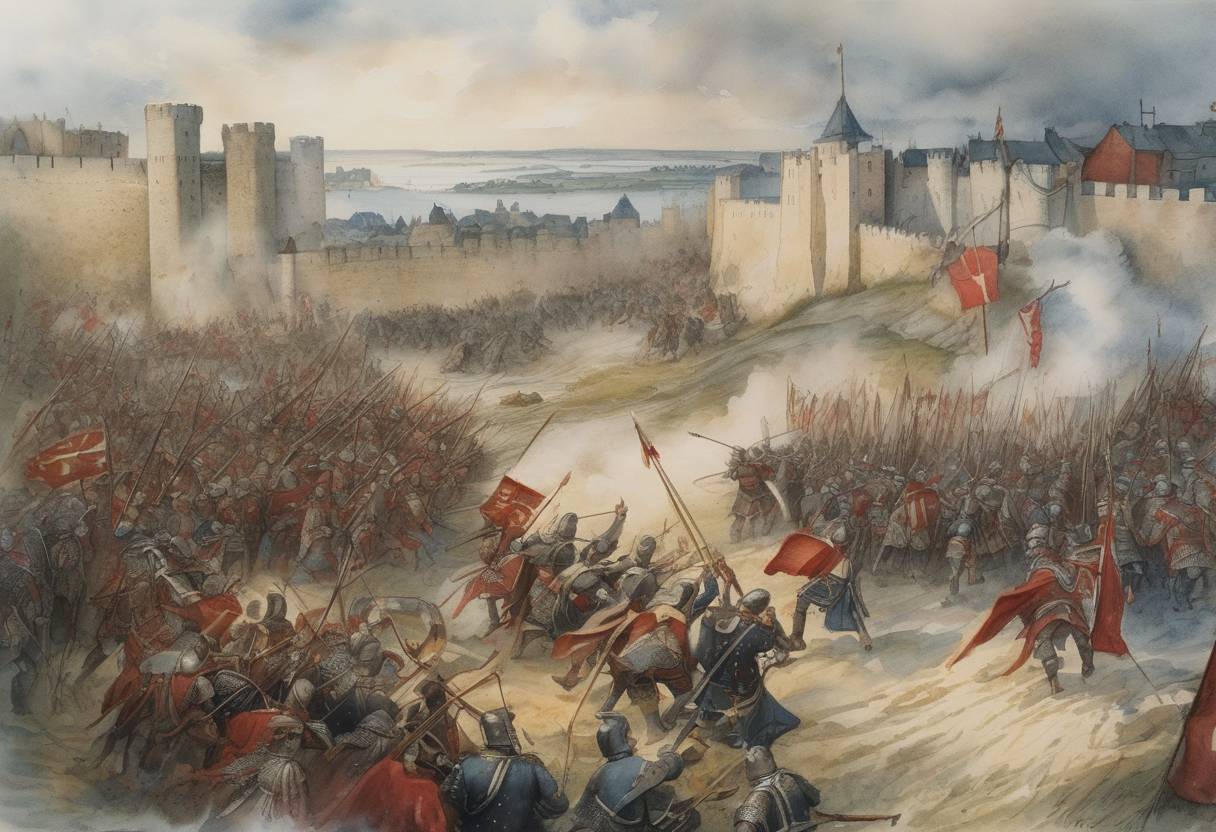
The Battle of Visby: Conclusion on October 10, 1361
The Battle of Visby concluded with a decisive Danish victory on October 10, 1361. This significant conflict resulted in Danish control over the island of Gotland, strategically located in the Baltic Sea, following a confrontation against forces loyal to Swedish King Magnus Eriksson.
Context and Build-Up
- Strategic Importance: Gotland was a valuable trade center in the Baltic region, making it a prized territory for economic and military purposes.
- Danish Ambitions: King Valdemar IV of Denmark sought to expand his influence across Scandinavia and saw Gotland as an essential acquisition.
- Swedish Defense: King Magnus Eriksson, the ruler of Sweden, aimed to protect the island from Danish aggression, although the defense was largely left to local forces.
Key Events
- Initial Landing: The Danish army landed on Gotland earlier in the summer of 1361, moving quickly and decisively towards Visby, the island’s largest city.
- Local Resistance: Resistance was primarily composed of poorly equipped local farmers and militia, putting them at a disadvantage against the seasoned Danish troops.
- Battle for Visby: The battle reached its peak outside the walls of Visby, where the Danish forces effectively overwhelmed the ill-prepared local defenders.
Conclusion and Aftermath
- Capture of Visby: On October 10, the Danes established control over Visby, solidifying their hold on Gotland. The city’s surrender marked the end of organized Swedish resistance on the island.
- Consequences for Gotland: The capture brought Gotland under Danish rule, significantly altering its political and economic dynamics.
- Long-term Impacts: This event contributed to a period of Danish maritime dominance in the Baltic, while also exacerbating tensions with Sweden, influencing subsequent Scandinavian politics.
The Battle of Visby stands as a pivotal moment in medieval Scandinavian history, illustrating the volatility of territorial control in the region and the shifting power dynamics among Nordic kingdoms during the 14th century.