The Landing of the Granma: December 2, 1956
1956 · Niquero, Cuba
Fidel Castro and his followers landed in Cuba aboard the yacht Granma, beginning the Cuban Revolution.
July 26, 1953
The Cuban Revolution began with an attack on the Moncada Barracks by Fidel Castro and his followers, marking the start of a movement that would eventually overthrow the Batista regime.
Santiago de Cuba, Cuba | 26th of July Movement
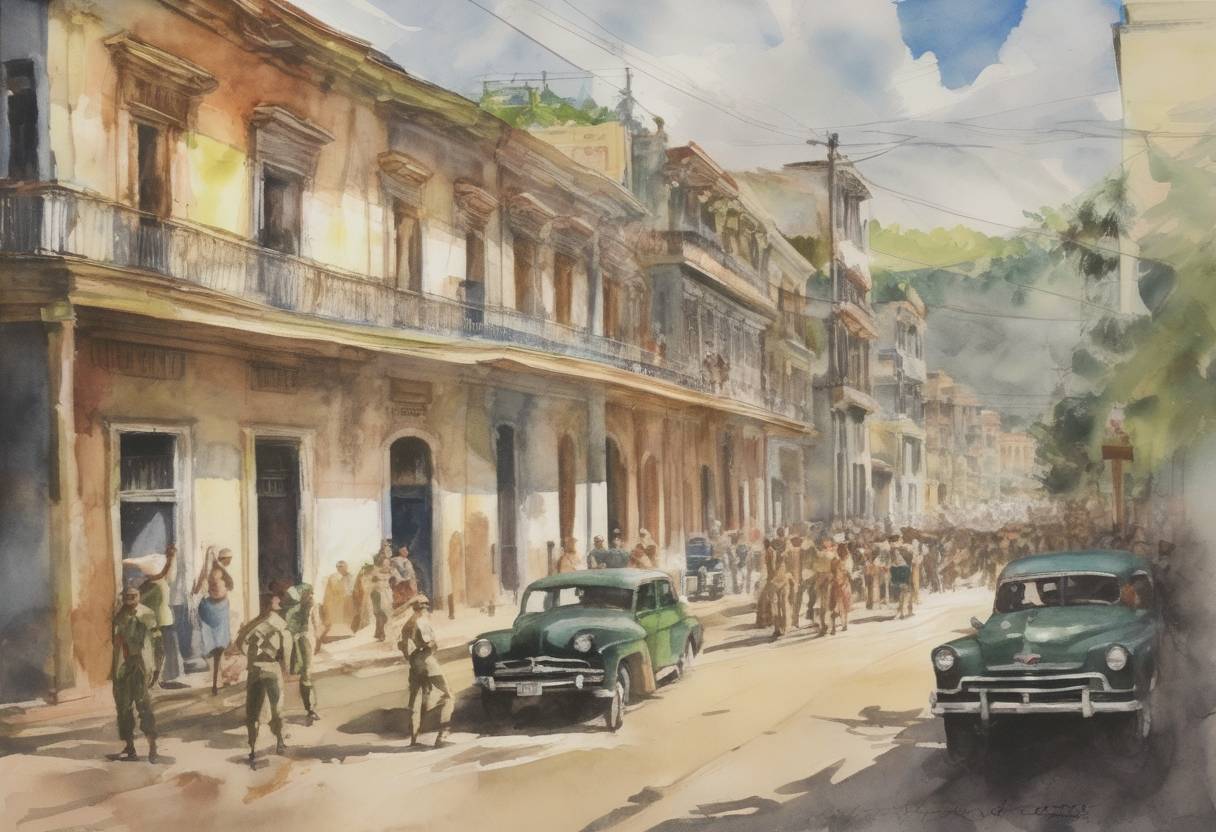
The Cuban Revolution was a pivotal event in the mid-20th century, fundamentally altering the political landscape of Cuba and influencing global geopolitics. The seeds of the revolution were sown in the widespread dissatisfaction with the corrupt and authoritarian regime of Fulgencio Batista, who had seized power in a military coup in 1952. Batista’s government was characterized by its close ties to American business interests and its oppressive measures against political dissent.
On July 26, 1953, a young lawyer named Fidel Castro led a group of approximately 160 rebels in an audacious attack on the Moncada Barracks in Santiago de Cuba, the second-largest military garrison in the country. This attack marked the beginning of the Cuban Revolution.
Despite its failure, the attack on Moncada Barracks had significant repercussions:
The attack on Moncada Barracks is often seen as the catalyst for the Cuban Revolution. Although it was a tactical failure, it set in motion a series of events that would eventually lead to the overthrow of Batista on January 1, 1959. The revolution had profound effects on Cuba and the world, leading to the establishment of a socialist state under Castro and significantly impacting Cold War dynamics, particularly in Latin America.
The legacy of the Cuban Revolution continues to influence political discourse and movements across the globe, serving as both an inspiration and a cautionary tale regarding revolutionary change.
Source: en.wikipedia.org