The Battle of Spercheios: July 16, 997
997 · Spercheios River, Greece
The Battle of Spercheios takes place, where the Byzantine forces under General Nikephoros Ouranos defeat the Bulgarian army led by Tsar Samuel.
August 17, 0986
Byzantine–Bulgarian Wars: The Byzantine army under Emperor Basil II is defeated in the Battle of the Gates of Trajan by the forces of Tsar Samuel of Bulgaria.
Trajan's Gate, Bulgaria | Byzantine Empire
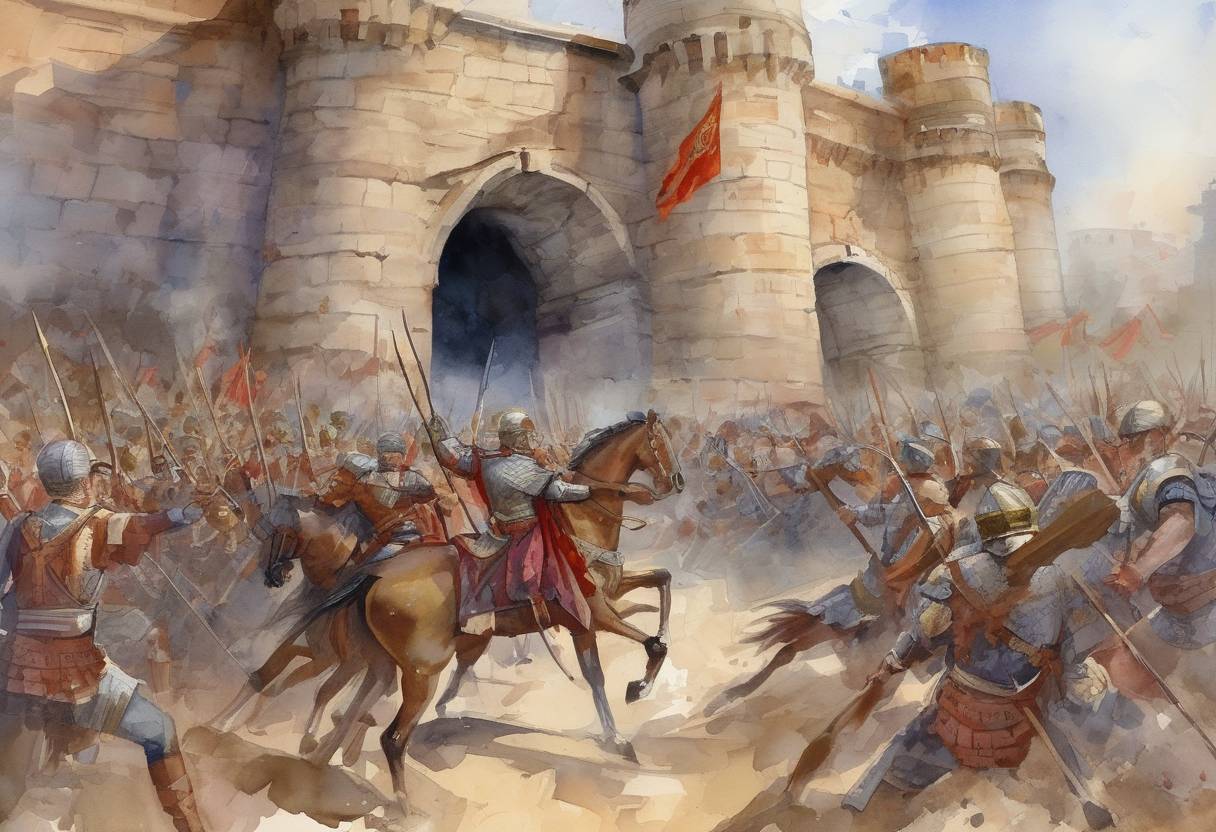
The Battle of the Gates of Trajan, fought on August 17, 986, was a significant encounter during the Byzantine–Bulgarian Wars, marking a notable defeat for the Byzantine Empire at the hands of Tsar Samuel of Bulgaria. This battle is a key event in the protracted conflict between the Byzantine Empire and the Bulgarian Empire, which spanned several centuries.
Byzantine–Bulgarian Tensions: The Byzantine Empire and the Bulgarian Empire had a long history of conflict, with both powers vying for dominance in the Balkans. The rise of the Cometopuli dynasty in Bulgaria, with Tsar Samuel as a prominent leader, intensified these hostilities.
Emperor Basil II: Known as Basil the Bulgar Slayer, Basil II ascended to the Byzantine throne in 976. His reign was marked by efforts to consolidate imperial power and expand Byzantine influence, particularly against the Bulgarians.
Bulgarian Resistance: Under Tsar Samuel, Bulgaria resisted Byzantine attempts at subjugation. Samuel was a skilled military leader who capitalized on the rugged terrain of the Balkans to conduct effective guerrilla warfare against the Byzantines.
Location: The battle took place at the Gates of Trajan, a narrow mountain pass in the Sredna Gora mountain range, which was strategically significant for controlling access between Thrace and the interior of the Balkan Peninsula.
Byzantine Campaign: In 986, Emperor Basil II launched a campaign to capture the Bulgarian stronghold of Sredets (modern-day Sofia). However, the siege was unsuccessful, and Basil’s forces began a retreat back to Byzantine territory.
Bulgarian Ambush: As the Byzantine army retreated through the Gates of Trajan, Tsar Samuel’s forces launched a surprise attack. The narrow pass hindered the Byzantine army’s ability to maneuver, leading to a devastating defeat.
Outcome: The Byzantine army suffered heavy casualties, and Basil II narrowly escaped with his life. This defeat significantly bolstered Bulgarian morale and solidified Samuel’s control over much of the Balkans.
Basil II’s Response: The defeat at the Gates of Trajan was a major setback for Basil II, but it did not deter his ambitions. He would later regroup and eventually achieve significant victories against the Bulgarians, culminating in the decisive Battle of Kleidion in 1014.
Bulgarian Strength: The victory at the Gates of Trajan allowed Tsar Samuel to consolidate his power and expand Bulgarian influence in the region. It marked a high point in Bulgarian resistance against Byzantine encroachment.
Long-term Impact: The battle underscored the challenges of Byzantine military campaigns in the Balkans and highlighted the resilience of the Bulgarian state. It also set the stage for continued conflict, which would eventually lead to the fall of the First Bulgarian Empire in 1018.
The Battle of the Gates of Trajan remains a significant episode in the history of Byzantine-Bulgarian relations, illustrating the ebb and flow of power between these two medieval empires.
Source: en.wikipedia.org