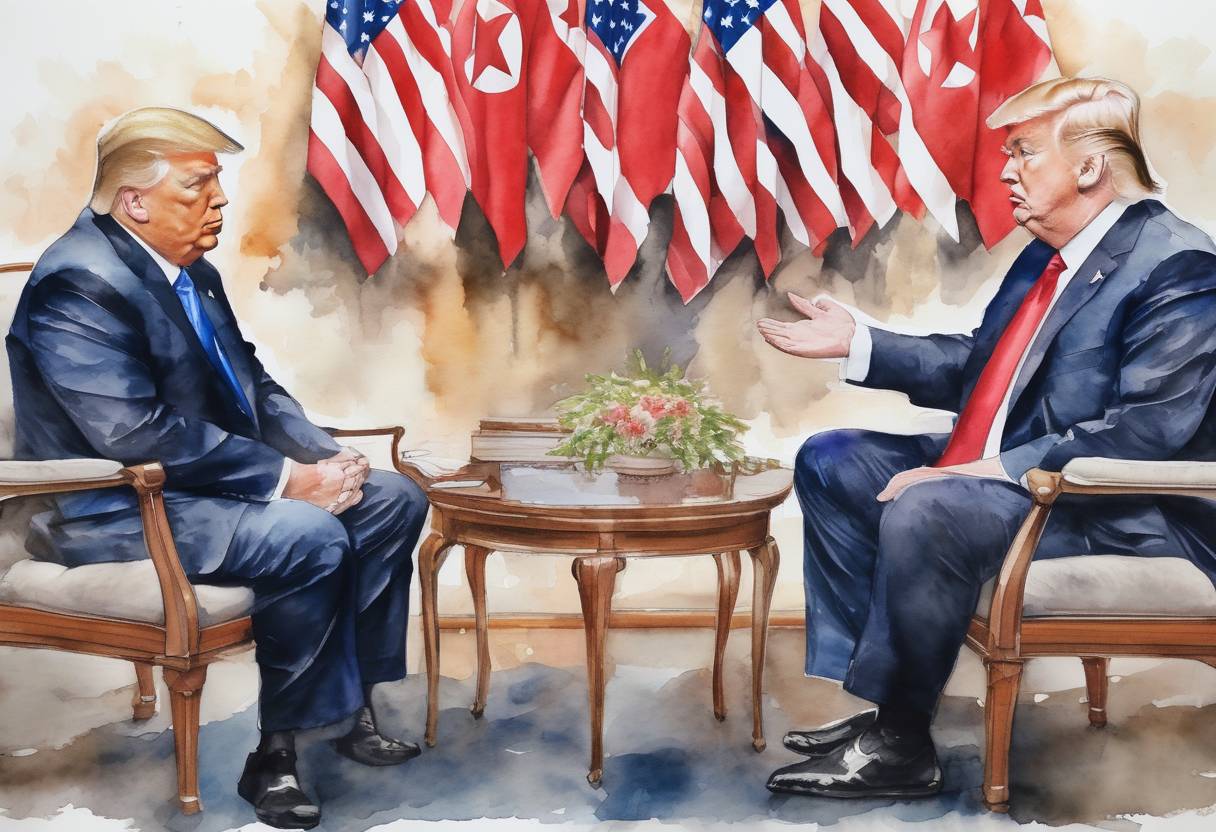
The Singapore Summit: June 11-12, 2018
The Singapore Summit, held on June 12, 2018, marked a historic meeting between U.S. President Donald Trump and North Korean leader Kim Jong-un. This summit was the first-ever meeting between a sitting U.S. president and a North Korean leader, symbolizing a significant moment in international diplomacy.
Context Leading Up to the Summit
The relationship between the United States and North Korea had been fraught with tension for decades, primarily due to North Korea’s nuclear weapons program and its history of human rights violations. Prior to the summit, 2017 saw heightened tensions, with North Korea conducting multiple missile tests and the U.S. responding with increased sanctions and military posturing.
In early 2018, diplomatic efforts began to thaw relations. South Korea played a crucial mediating role, with South Korean officials conveying Kim Jong-un’s interest in meeting with President Trump. This led to a series of diplomatic exchanges and the eventual agreement to hold a summit in Singapore.
Key Events of the Summit
- Location and Date: The summit took place at the Capella Hotel on Sentosa Island, Singapore, on June 12, 2018.
- Agenda: The primary focus was on denuclearization of the Korean Peninsula and establishing a new relationship between the two nations.
- Outcomes: The summit concluded with a joint statement in which North Korea committed to work towards complete denuclearization of the Korean Peninsula. In return, the U.S. agreed to provide security guarantees to North Korea. The statement, however, was criticized for its lack of specific details and timelines.
Aftermath and Consequences
The Singapore Summit was seen as a diplomatic breakthrough, reducing immediate tensions and opening channels for further dialogue. However, subsequent negotiations faced challenges:
- Lack of Progress: Despite the initial optimism, subsequent talks did not yield significant progress on denuclearization. Disagreements over the definition and verification of denuclearization led to stalled negotiations.
- Continued Sanctions: The U.S. maintained economic sanctions on North Korea, insisting on concrete steps towards denuclearization before any relief.
- Future Engagements: The summit set a precedent for future meetings, including a second summit in Hanoi in 2019, which also ended without a comprehensive agreement.
Broader Historical Significance
The Singapore Summit was a pivotal moment in U.S.-North Korea relations, highlighting the potential for diplomacy in resolving longstanding conflicts. It demonstrated the complexities of international negotiations, especially concerning nuclear disarmament and geopolitical security. While the summit did not achieve its ambitious goals, it underscored the importance of dialogue and engagement in international relations.
Overall, the Singapore Summit remains a significant event in the ongoing narrative of U.S.-North Korea relations, reflecting both the possibilities and limitations of diplomatic efforts in addressing global security challenges.