The Second Continental Congress Convenes in Philadelphia
1775 · Philadelphia, United States
The Second Continental Congress convenes in Philadelphia, Pennsylvania.
June 14, 1777
The Continental Congress adopts the Stars and Stripes as the flag of the United States.
Philadelphia, United States | Continental Congress
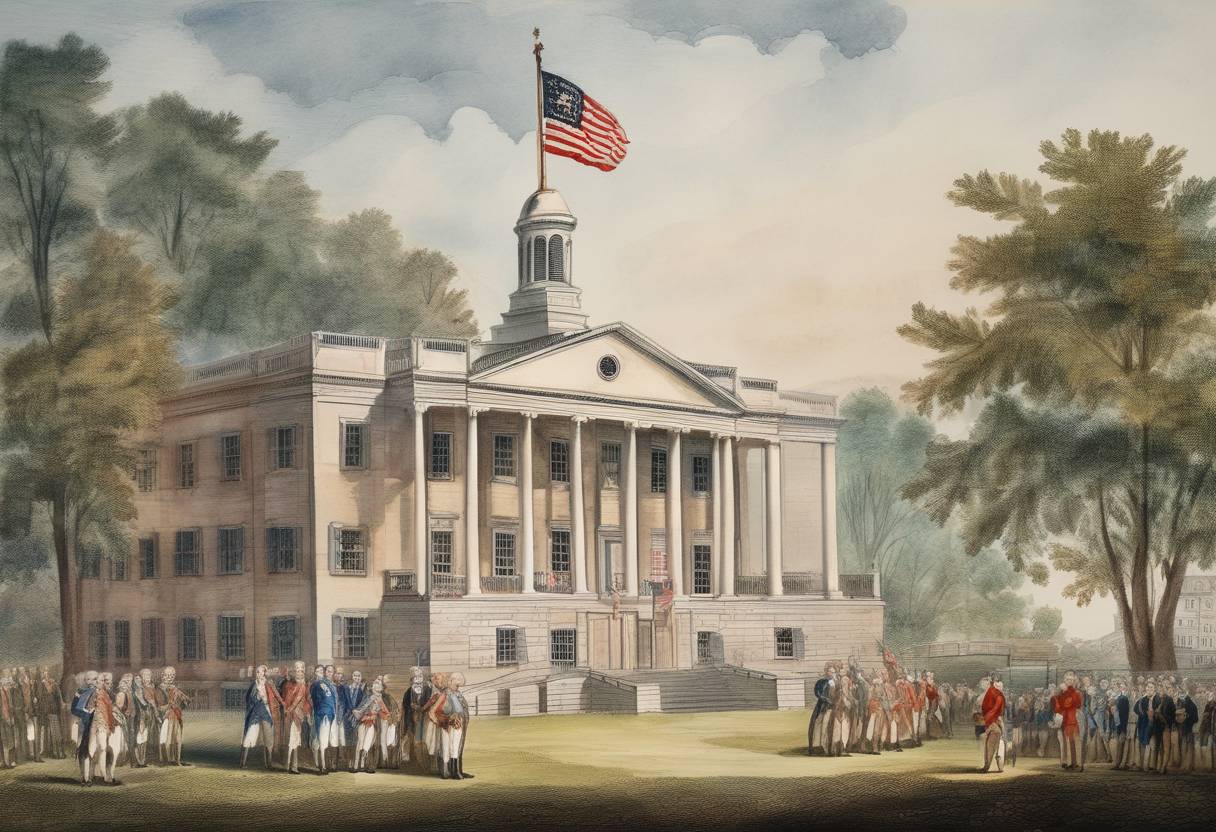
On June 14, 1777, the Continental Congress adopted the Stars and Stripes as the official flag of the United States, a significant moment in American history that symbolized unity and identity for the newly independent nation.
The decision to adopt a national flag came during the American Revolutionary War, a period marked by the Thirteen Colonies’ struggle for independence from British rule. Prior to this, various flags were used by different colonial and military groups, but there was no single flag that represented the entire nation.
The Continental Congress, meeting in Philadelphia, passed the Flag Resolution, which stated:
“Resolved, That the flag of the thirteen United States be thirteen stripes, alternate red and white; that the union be thirteen stars, white in a blue field, representing a new constellation.”
This resolution established the design elements that would become iconic: thirteen stripes to represent the original colonies and thirteen stars to symbolize unity and a new constellation in the world.
The adoption of the Stars and Stripes was a unifying symbol for the United States, providing a sense of identity and pride. It became a rallying point for the American people during the Revolutionary War and has since evolved as the nation grew, with stars added to represent each new state.
The flag has undergone several changes over the years, with the most significant being the addition of stars as new states joined the Union. Today, the flag consists of 50 stars, representing the 50 states, while maintaining the original 13 stripes.
The adoption of the Stars and Stripes marked an important step in the establishment of national symbols that fostered a sense of unity and patriotism. It laid the groundwork for the development of other national symbols and traditions that continue to play a crucial role in American cultural and political life.
June 14 is now celebrated annually as Flag Day in the United States, commemorating the adoption of the flag and honoring its significance in American history and culture.
Source: en.wikipedia.org