1083 · Canterbury, England
The Anselm of Canterbury, a Benedictine monk, philosopher, and theologian, was consecrated as the Archbishop of Canterbury.
February 9, 1555
Bishop of Gloucester, John Hooper, was burned at the stake for heresy during the Marian Persecutions in England.
Gloucester, England | Catholic Church
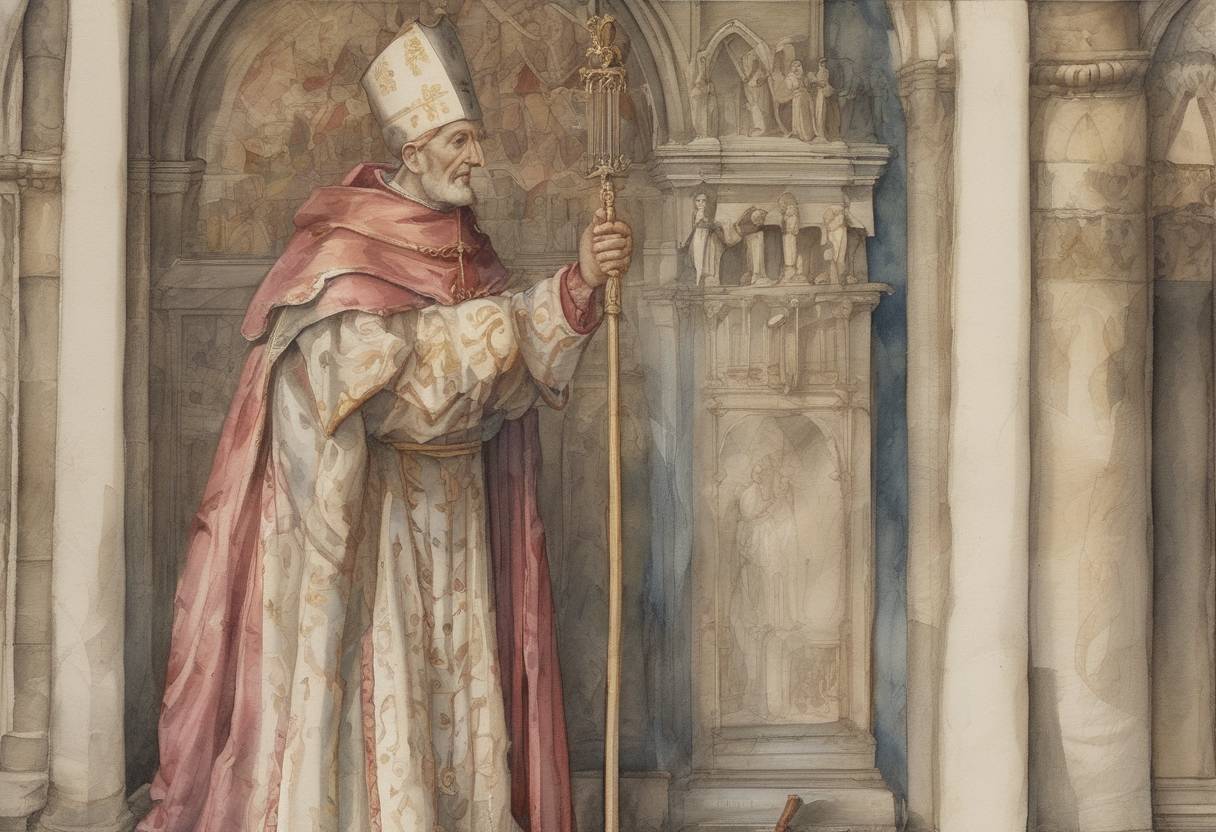
On February 9, 1555, John Hooper, the Bishop of Gloucester, was executed by burning at the stake for heresy during the Marian Persecutions in England. This event was a significant moment in the religious turmoil of 16th-century England, reflecting the intense conflict between Protestant reformers and the Catholic restoration under Queen Mary I.
John Hooper was a prominent Protestant reformer who played a crucial role in advancing the Reformation in England. Born around 1495, Hooper was educated at Merton College, Oxford, and later became a Cistercian monk. However, he embraced Protestantism and fled to the continent during the reign of Henry VIII, where he was influenced by the teachings of Swiss reformers like Heinrich Bullinger.
Upon returning to England during the reign of Edward VI, Hooper quickly rose to prominence. He was appointed Bishop of Gloucester in 1551, where he was known for his zealous reform efforts, including advocating for a more simplified form of worship and opposing the use of traditional vestments.
The accession of Mary I to the throne in 1553 marked a dramatic shift in England’s religious landscape. A devout Catholic, Mary sought to reverse the Protestant reforms of her predecessors and restore Roman Catholicism as the state religion. This led to the Marian Persecutions, a campaign against Protestant leaders and adherents.
John Hooper was arrested in September 1553, shortly after Mary became queen. He was imprisoned in the Fleet Prison and later transferred to the Tower of London. Despite being offered opportunities to recant his Protestant beliefs, Hooper remained steadfast in his convictions.
On February 9, 1555, John Hooper was taken to Gloucester, where he was to be executed. His execution was intended to serve as a public demonstration of the consequences of heresy and to deter others from Protestant beliefs. Hooper’s execution was notably prolonged and painful, as the fire was poorly managed, causing him to suffer for nearly 45 minutes before succumbing to the flames.
John Hooper’s martyrdom became a symbol of Protestant resistance against Catholic persecution. His steadfastness in the face of death inspired many Protestants and was later commemorated in John Foxe’s “Book of Martyrs,” which documented the sufferings of Protestant martyrs during the Marian Persecutions.
The Marian Persecutions ultimately failed to suppress Protestantism in England. Following Mary’s death in 1558 and the accession of Elizabeth I, Protestantism was re-established as the state religion, and the Church of England was firmly rooted in the Protestant tradition.
Hooper’s execution is remembered as a poignant example of the religious strife that characterized the Tudor period and the enduring struggle for religious freedom and reform.
Source: en.wikipedia.org