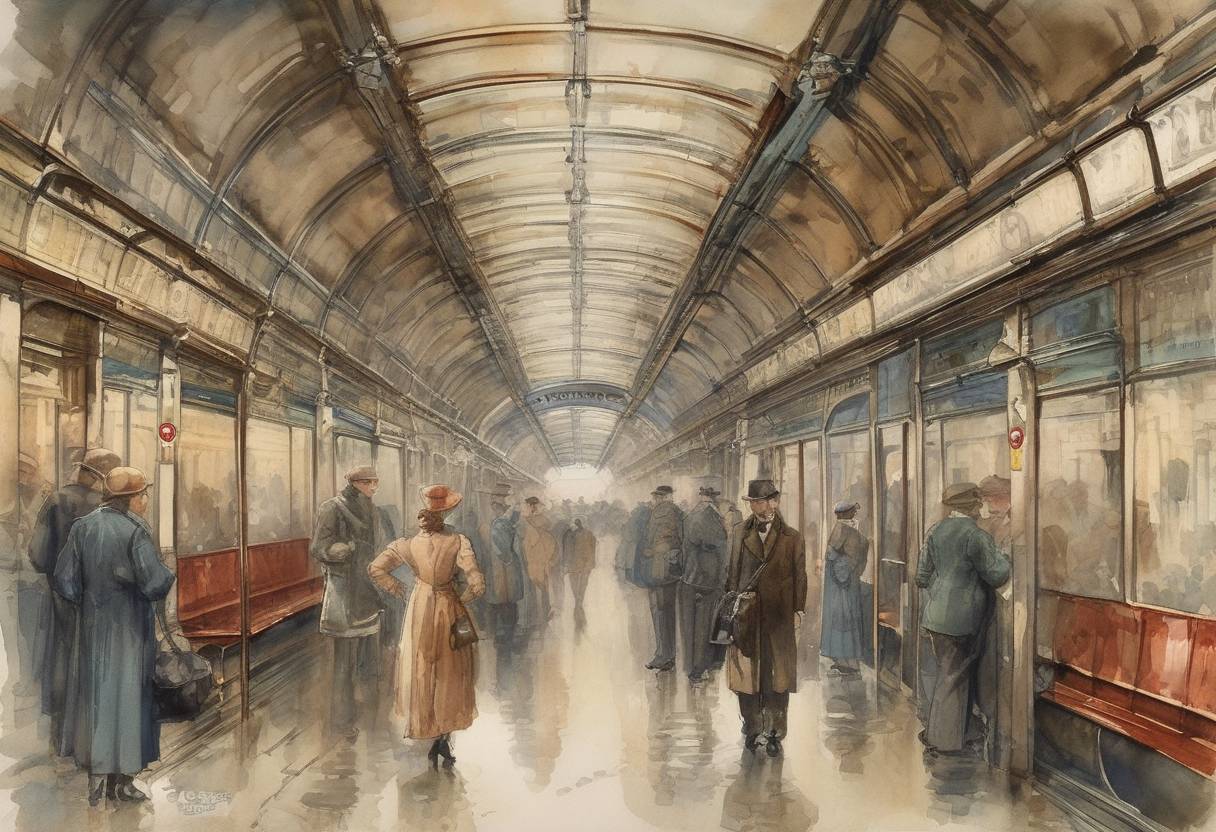
Inauguration of the Paris Métro Line 1 - July 19, 1900
On July 19, 1900, the first line of the Paris Métro, known as Line 1, was inaugurated, marking a pivotal moment in the development of urban public transportation in Paris and setting a precedent for metro systems worldwide.
Context and Background
Urbanization and Transportation Needs: By the late 19th century, Paris was experiencing rapid urbanization, leading to increased demand for efficient public transportation. The existing horse-drawn omnibuses and trams were insufficient for the growing population.
Planning and Design: The idea for an underground railway in Paris was first proposed in the mid-19th century. However, it wasn’t until the 1890s that plans were seriously developed. The Paris Métro was designed to provide a reliable and efficient means of transportation across the city.
World’s Fair Influence: The 1900 Exposition Universelle (World’s Fair) in Paris provided the impetus to complete the first line. The event attracted millions of visitors, necessitating improved transportation infrastructure.
Key Features of Line 1
Route: The initial route of Line 1 connected Porte Maillot in the west to Porte de Vincennes in the east, covering a distance of approximately 10.3 kilometers (6.4 miles).
Stations: The line originally included 18 stations, with notable stops such as Charles de Gaulle-Étoile, Champs-Élysées, and Bastille.
Engineering and Construction: The construction of Line 1 involved significant engineering challenges, including tunneling beneath the Seine River. The project was led by engineer Fulgence Bienvenüe, who would later become known as the “father of the Paris Métro.”
Inauguration and Impact
Opening Ceremony: The inauguration on July 19, 1900, was a grand event attended by dignitaries and the public. The line opened to passengers the following day.
Public Reception: The Métro was an immediate success, praised for its speed, efficiency, and convenience. It quickly became an integral part of daily life in Paris.
Expansion and Legacy: Following the success of Line 1, the Paris Métro expanded rapidly. Today, it is one of the most extensive and heavily used metro systems in the world, with 16 lines serving the Paris metropolitan area.
Broader Historical Significance
Urban Transportation Model: The Paris Métro set a standard for urban rail systems worldwide, influencing the design and development of metro systems in cities across the globe.
Cultural Icon: Beyond its practical function, the Métro has become a cultural symbol of Paris, known for its distinctive Art Nouveau station entrances designed by architect Hector Guimard.
The inauguration of Line 1 of the Paris Métro on July 19, 1900, was not just a milestone in transportation but also a significant cultural and technological achievement that continues to impact urban transit systems today.