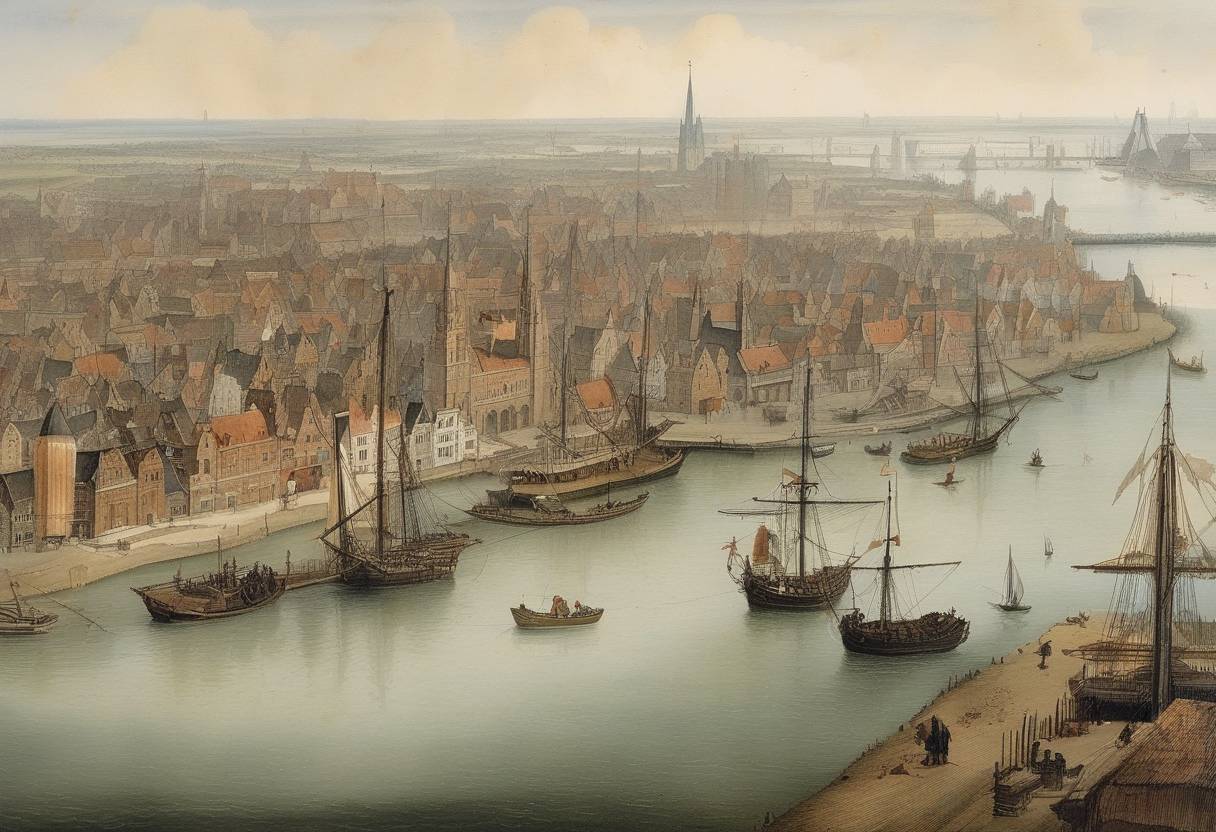
On June 7, 1340, Rotterdam, then a small settlement in the County of Holland, was granted its city rights. This significant legal milestone was a crucial step in its development, laying the foundation for its evolution into one of the most important port cities in the world.
Historical Context
- The County of Holland: During the 14th century, the County of Holland was a prominent region within the Holy Roman Empire. It encompassed what is now the western part of the Netherlands, an area characterized by its trade and burgeoning urban centers.
- Strategic Location: Rotterdam’s position on the River Rotte, near its confluence with the Nieuwe Maas, offered strategic advantages for trade and fishing, contributing to its growth potential.
Significance of City Rights
- Legal Status and Privileges: City rights were often granted by regional rulers to promote urban development, providing settlements with self-governance, market rights, and fortification capabilities.
- Economic Impact: With the city rights, Rotterdam could hold markets and fairs, levy tolls, and control shipping on regional waterways, boosting its economic prospects.
- Port Development: The granting of city rights encouraged the expansion of Rotterdam’s harbor facilities, which, over the centuries, developed into one of the busiest ports in the world.
- Urban Expansion: The autonomy allowed city planners to expand infrastructure, develop civic buildings, and fortify the city, attracting new residents and artisans.
Broader Historical Significance
- Trade Networks: As a part of the Hanseatic League’s trade network in the North Sea, Rotterdam’s development was instrumental in linking Continental Europe with the British Isles and beyond.
- Cultural and Economic Hub: Over time, Rotterdam became a center for commerce, innovation, and culture, playing a key role in the Dutch Golden Age and shaping regional maritime practices.
The granting of city rights in 1340 marked the beginning of Rotterdam’s transformation from a modest settlement into a vital economic powerhouse, a legacy that continues to influence its role as a global city today.