The Supreme Court Declares Segregated Buses Illegal: November 13, 1956
1956 · Washington D.C., United States
The Supreme Court of the United States declares Alabama laws requiring segregated buses illegal, ending the Montgomery Bus Boycott.
June 7, 1892
Homer Plessy was arrested for refusing to leave a whites-only car on a train in New Orleans, leading to the landmark Plessy v. Ferguson Supreme Court case.
New Orleans, United States | Supreme Court of the United States
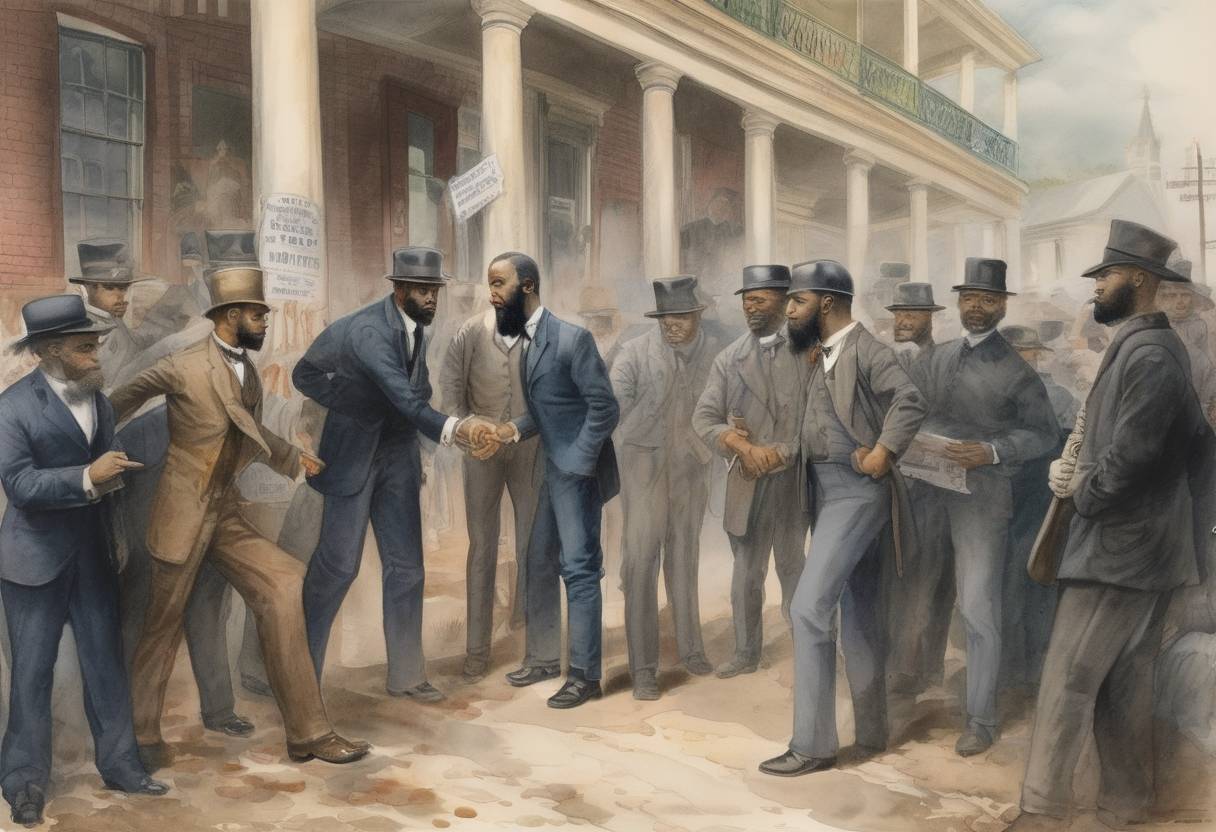
On June 7, 1892, Homer Plessy, a man of mixed race, was arrested in New Orleans, Louisiana, for refusing to leave a whites-only car on a train. This event set the stage for the landmark Supreme Court case, Plessy v. Ferguson, which would have profound implications for racial segregation laws in the United States.
In the late 19th century, Southern states, including Louisiana, were enacting Jim Crow laws that enforced racial segregation in public facilities. The Louisiana Separate Car Act of 1890 required separate railway cars for whites and blacks. The Citizens’ Committee, a group of African American and Creole professionals in New Orleans, sought to challenge this law as unconstitutional.
Homer Plessy, who was seven-eighths white and one-eighth black, was chosen by the Citizens’ Committee to test the law due to his light skin color. On June 7, 1892, Plessy purchased a first-class ticket and boarded the East Louisiana Railroad train, sitting in the whites-only car. When he refused to move to the car designated for black passengers, he was arrested by a private detective hired by the committee to ensure the case would proceed to court.
Plessy’s case was brought before Judge John Howard Ferguson in the Criminal Court of New Orleans. Ferguson upheld the state law, ruling that Louisiana had the right to regulate railroad companies operating within its borders. Plessy appealed the decision, and the case eventually reached the United States Supreme Court.
On May 18, 1896, the Supreme Court delivered its decision in Plessy v. Ferguson. By a 7-1 vote, the Court upheld the constitutionality of racial segregation laws for public facilities under the doctrine of “separate but equal.” Justice Henry Billings Brown wrote the majority opinion, stating that the segregation of races was not a violation of the 14th Amendment, which guarantees equal protection under the law.
The Plessy v. Ferguson decision legitimized state laws establishing racial segregation and led to the proliferation of Jim Crow laws across the South. These laws remained in effect until the mid-20th century, when the Civil Rights Movement successfully challenged segregation and discrimination.
The case highlighted the deep racial divisions in American society and underscored the challenges of achieving racial equality. It wasn’t until the 1954 Supreme Court decision in Brown v. Board of Education that the “separate but equal” doctrine was overturned, marking a significant turning point in the fight against racial segregation.
Homer Plessy’s act of defiance and the subsequent legal battle remain pivotal moments in American history, symbolizing the struggle for civil rights and justice.
Source: en.wikipedia.org