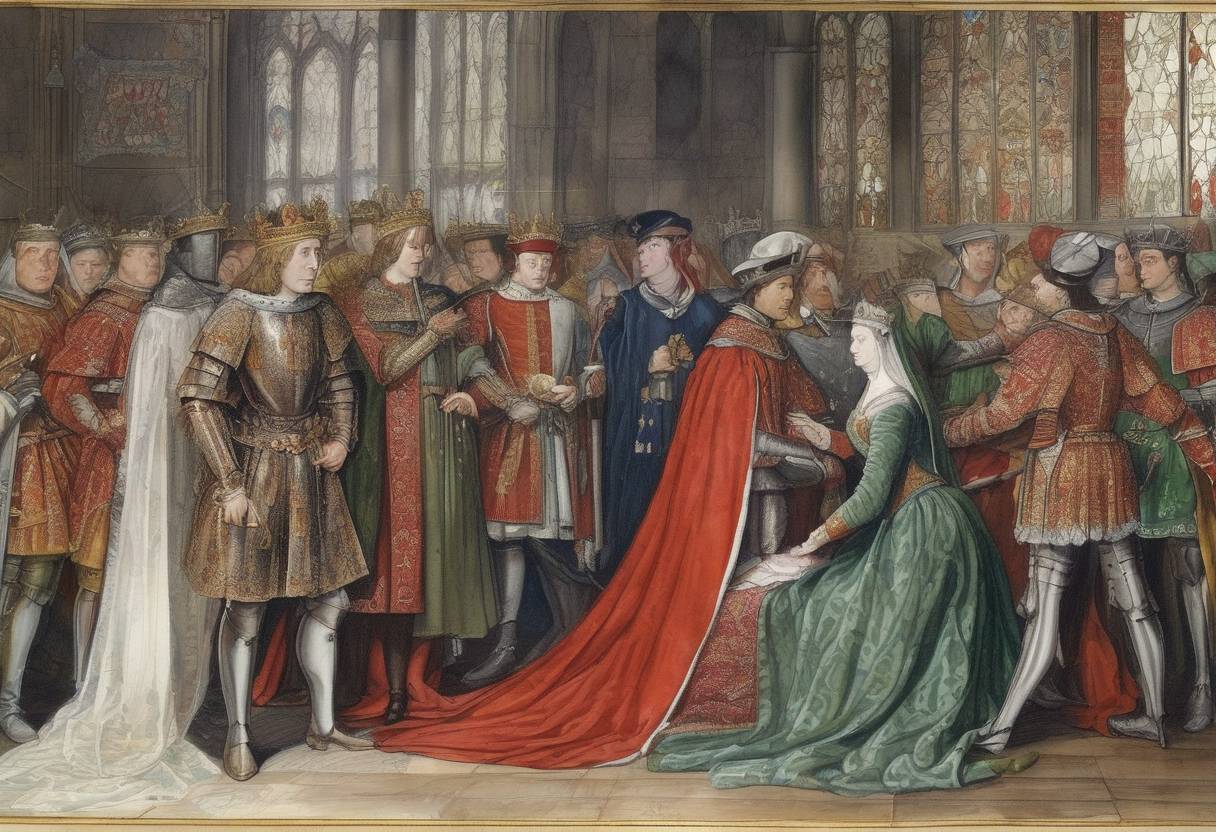
Deposition of Henry VI and Ascension of Edward IV on March 4, 1461
The Wars of the Roses, a series of dynastic conflicts between the houses of Lancaster and York, reached a pivotal moment on March 4, 1461, when Henry VI was deposed by the Yorkists, and Edward IV ascended to the English throne. This event marked a significant turning point in the struggle for power between these two noble houses.
Background
The Wars of the Roses were rooted in the complex web of claims to the English throne following the Hundred Years’ War. The Lancastrian King Henry VI, who ascended to the throne as an infant, was plagued by bouts of mental illness and weak leadership, which led to political instability. His reign was characterized by factional disputes and a loss of territories in France, which diminished his support among the nobility.
The Yorkist claim to the throne was championed by Richard, Duke of York, who was a direct descendant of Edward III. Tensions between the Yorkists and Lancastrians escalated into open conflict in the mid-15th century, with several battles fought over the rightful succession.
Key Events Leading to the Deposition
Battle of Wakefield (December 30, 1460): Richard, Duke of York, was killed, but his cause was taken up by his son, Edward, Earl of March.
Battle of Mortimer’s Cross (February 2, 1461): Edward secured a decisive victory against the Lancastrians, bolstering his claim to the throne.
Second Battle of St Albans (February 17, 1461): The Lancastrians temporarily regained control of Henry VI, but their victory was short-lived.
Battle of Towton (March 29, 1461): This was one of the largest and bloodiest battles of the Wars of the Roses, resulting in a decisive Yorkist victory. It solidified Edward’s position and paved the way for his ascension.
Ascension of Edward IV
On March 4, 1461, Edward was proclaimed King Edward IV in London. His ascension was supported by key Yorkist allies, including Richard Neville, the Earl of Warwick, known as the “Kingmaker” for his influential role in the political machinations of the time.
Edward’s claim was strengthened by his military successes and the support of the influential merchant class in London, who favored stability and economic prosperity. His reign marked the beginning of a new era, as he sought to consolidate power and bring an end to the ongoing conflict.
Aftermath and Historical Significance
Edward IV’s reign was initially marked by efforts to stabilize the kingdom and strengthen the monarchy. However, the conflict between the Yorkists and Lancastrians persisted, leading to further battles and political intrigue.
The deposition of Henry VI and the rise of Edward IV underscored the fragility of hereditary monarchy and the shifting allegiances among the English nobility. It also highlighted the importance of military prowess and strategic alliances in determining the outcome of dynastic disputes.
Edward IV’s reign would eventually face challenges, including a brief restoration of Henry VI in 1470, but he ultimately secured his position until his death in 1483. The Wars of the Roses continued until the rise of the Tudor dynasty, which brought a relative end to the dynastic conflicts with the ascension of Henry VII in 1485.
The events of March 4, 1461, remain a crucial chapter in the history of the Wars of the Roses, illustrating the volatile nature of medieval English politics and the enduring struggle for power between rival factions.