Gustav Vasa Elected King of Sweden - June 6, 1523
1523 · Strängnäs, Sweden
Gustav Vasa was elected King of Sweden, marking the end of the Kalmar Union and the beginning of modern Sweden.
April 29, 1386
A treaty was signed forming the Kalmar Union between Denmark and Sweden, which was later joined by Norway. This union united the kingdoms under a single monarch, Queen Margaret I of Denmark, in an effort to create a consolidated political entity in Scandinavia.
Kalmar, Sweden | Scandinavian Kingdoms
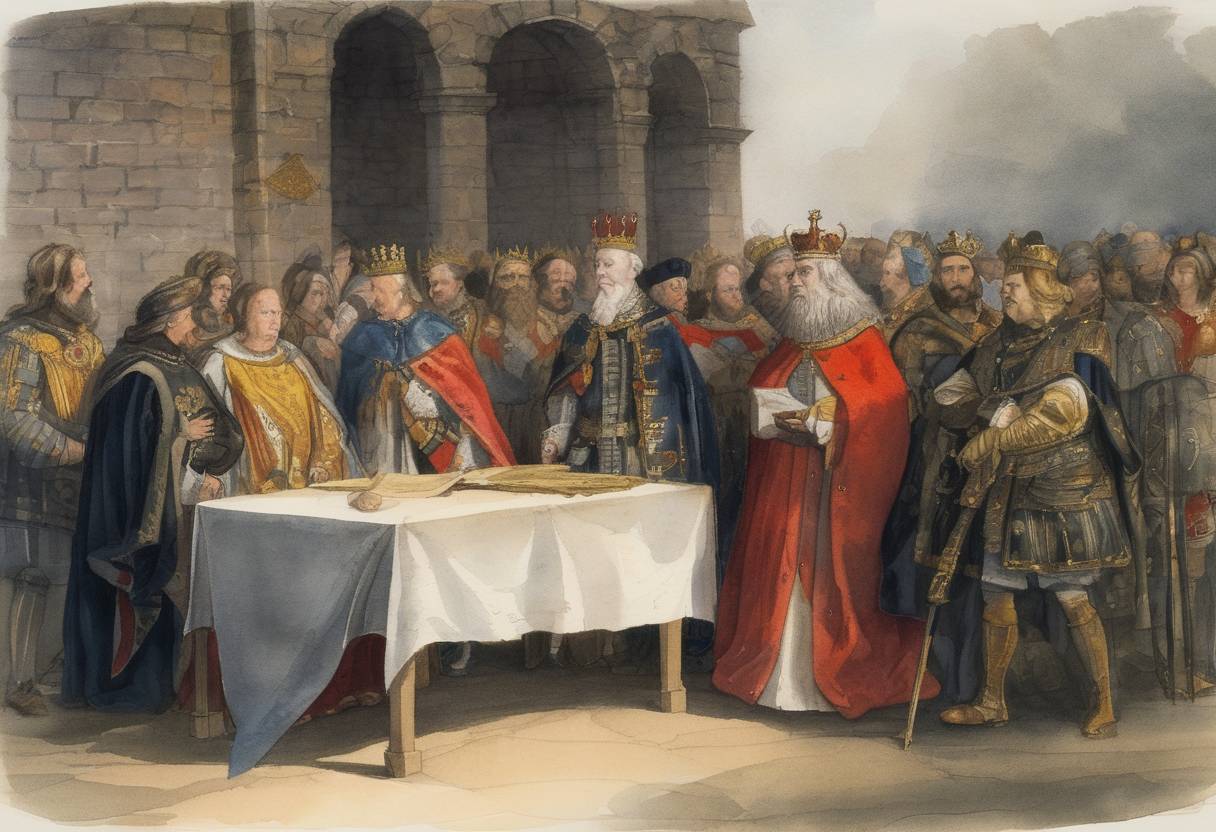
On April 29, 1386, a significant political movement in medieval Scandinavia took place with the signing of an important treaty in Halmstad, which paved the way for the formation of the Kalmar Union. This early agreement laid the groundwork for the eventual establishment of the union, which formally united Denmark, Sweden, and Norway under a single monarch.
The Kalmar Union was a political entity that arose amidst the complex dynastic and territorial challenges facing the Scandinavian countries. The union sought to unify the three kingdoms under one ruler to consolidate power and stabilize the region politically and economically. The movement towards unity was driven partly by the desire to counter the influence of the Hanseatic League and other European powers.
Queen Margaret I of Denmark played a pivotal role in the unification process. Margarethe, regent of Denmark and Norway, was a skilled leader known for her diplomatic acumen and ability to navigate the intricacies of medieval European politics. Her strategic vision helped bring the Scandinavian kingdoms closer together, culminating in the Kalmar Union’s formal establishment in 1397, a process that began with earlier agreements like the one signed in 1386.
The Kalmar Union aimed to bolster Scandinavian strength and facilitate cooperation among the kingdoms. However, while it served to consolidate power under a single monarch, internal conflicts and power struggles frequently challenged the union. The disparate cultural and economic interests of each kingdom often led to tension and friction.
Ultimately, the Kalmar Union experienced varying degrees of stability and unrest until its effective dissolution in the early 16th century, although it laid the foundation for future cooperation among the Scandinavian nations.
The creation of the Kalmar Union was a pivotal moment in Scandinavian history. It demonstrated the potential for political unity amongst diverse states and illustrated the ambitions of medieval rulers in addressing new economic and political landscapes. The union highlighted the transformative power of strategic diplomacy in crafting enduring political entities, despite the eventual challenges it faced.
Source: en.wikipedia.org