The Opening of The Royal Opera House in Covent Garden, London
1732 · London, United Kingdom
The Royal Opera House opens in Covent Garden, London.
October 31, 1750
Carlo Goldoni's play 'Mirandolina' premieres in Venice, contributing to the development of comedic theater.
Venice, Republic of Venice (Now Italy) | Italian Theatre
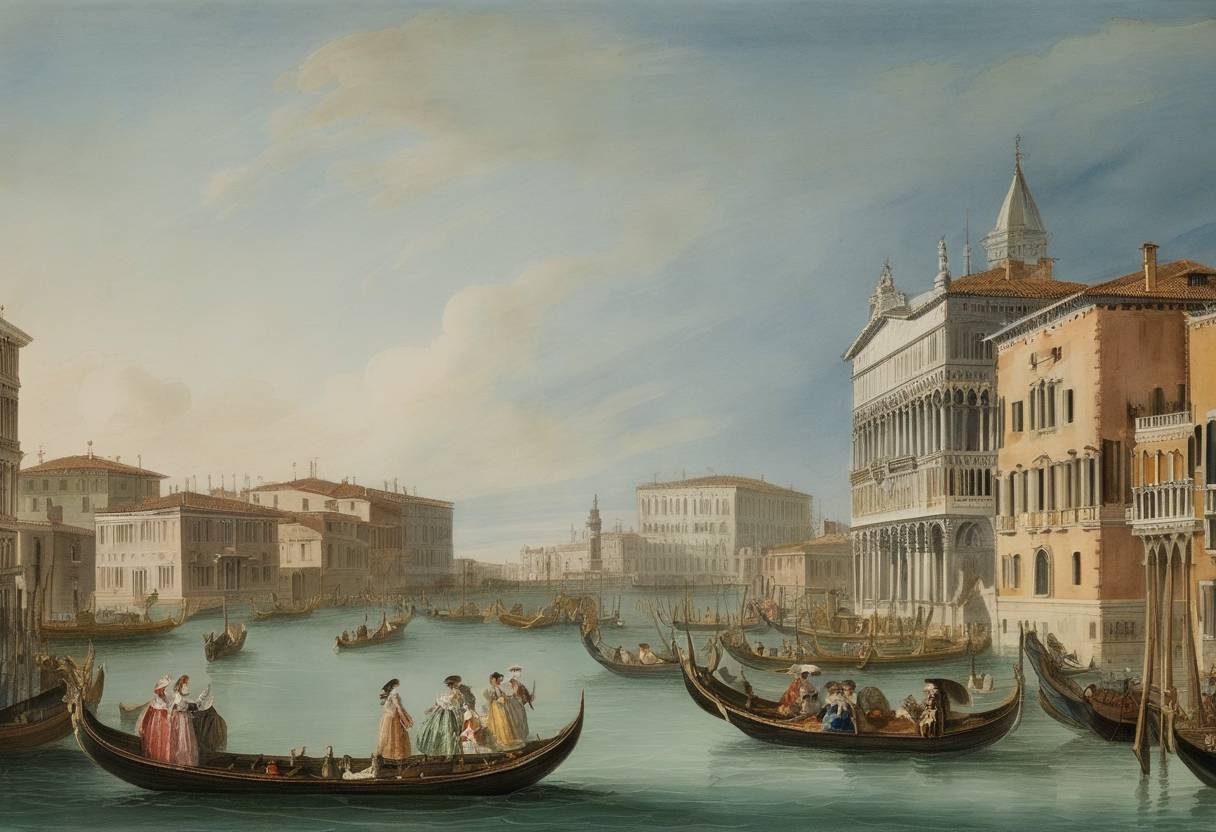
On October 31, 1750, the play “La locandiera” (The Mistress of the Inn), often referred to as “Mirandolina,” premiered in Venice. This work is one of Carlo Goldoni’s most renowned plays and is considered a pivotal contribution to the development of comedic theater in the 18th century.
During the 18th century, European theater was undergoing a transformation, moving away from the rigid structures of Commedia dell’arte, which relied heavily on improvisation and stock characters. Goldoni sought to reform Italian comedy by infusing it with more grounded, realistic elements and well-developed characters.
The plot of “Mirandolina” revolves around the titular character, a charming and intelligent innkeeper in Florence, who deftly manages the affections of her various suitors: a boastful marquis, a wealthy count, and a misogynistic and skeptical cavalier. Mirandolina’s wit and independence highlight themes of gender, class, and social dynamics, presenting a complex female protagonist who was uncommon in contemporary portrayals.
Innovative Structure: Goldoni’s approach in “Mirandolina” departed from the traditional methods of Commedia dell’arte by providing actors with a complete script rather than outlines for improvisation. This marked a significant shift towards a more scripted and structured form of comedy with nuanced characters and realistic dialogues.
Cultural Influence: The success of “Mirandolina” not only reinforced Goldoni’s reputation as a leading playwright of the time but also paved the way for future writers to explore character-driven narratives in comedic contexts.
Enduring Popularity: The play has remained an essential piece of the theatrical canon and continues to be performed worldwide, admired for its lively humor and insightful social commentary.
Carlo Goldoni’s work, including “Mirandolina,” played a crucial role in the evolution of theatrical arts in Europe. By emphasizing naturalistic dialogue and relatable characters, Goldoni’s style influenced the progression from Commedia dell’arte to more modern forms of theater, contributing substantially to the development of European comedy and dramatic literature.
Source: en.wikipedia.org