Founding of Mission San Luis Rey de Francia
1798 · Oceanside, Spanish California
Mission San Luis Rey de Francia, the 18th Spanish mission in California, is founded.
July 16, 1769
Father Junípero Serra founds Mission San Diego de Alcalá, the first of the 21 California missions.
San Diego, New Spain | Catholic Church
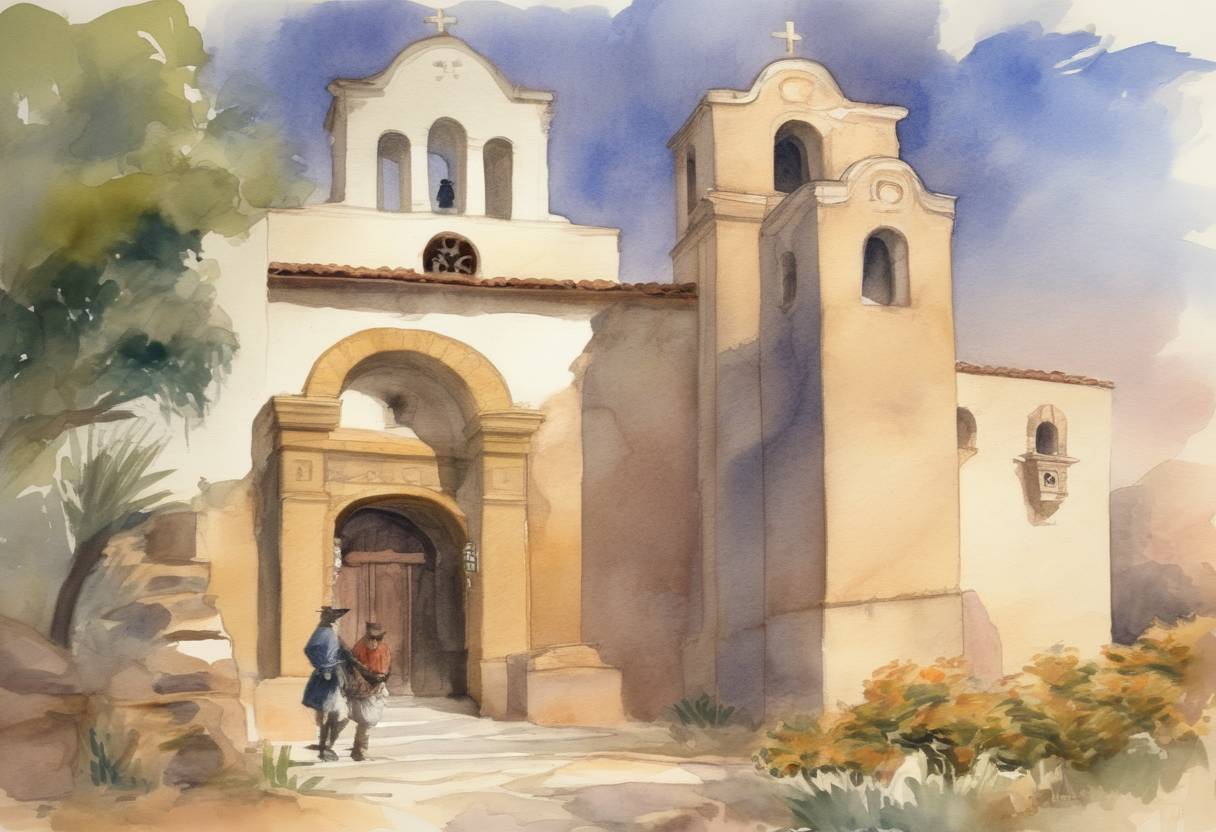
On July 16, 1769, Father Junípero Serra, a Spanish Franciscan friar, founded Mission San Diego de Alcalá, marking the establishment of the first of the 21 California missions. This event was a significant milestone in the Spanish colonization of California and played a crucial role in the spread of Christianity among the Indigenous peoples of the region.
Spanish Expansion: The establishment of the mission was part of Spain’s broader strategy to expand its influence in the New World. The Spanish Crown aimed to secure its claims in Alta California against potential encroachments by other European powers, particularly Russia and England.
Sacred Expedition: The founding of Mission San Diego de Alcalá was part of the “Sacred Expedition,” led by Gaspar de Portolá and accompanied by Father Serra. This expedition sought to establish a series of missions and presidios (military forts) along the California coast.
Arrival in San Diego: The expedition reached San Diego Bay on July 1, 1769. The site was chosen for its strategic location and its potential as a harbor.
Initial Challenges: Upon arrival, the expedition faced numerous challenges, including limited supplies, harsh conditions, and resistance from some Indigenous groups. Despite these difficulties, Father Serra was determined to establish the mission.
Mission Site: The mission was initially established near the San Diego River, a location chosen for its access to fresh water and fertile land. The mission’s primary purpose was to convert the local Kumeyaay people to Christianity and integrate them into Spanish colonial society.
Construction: The initial structures were modest, consisting of a simple church and living quarters made from local materials. Over time, the mission expanded to include more substantial buildings and agricultural facilities.
Cultural Impact: The mission system had a profound impact on the Indigenous populations, leading to significant cultural, social, and economic changes. While it facilitated the spread of Christianity, it also disrupted traditional ways of life and exposed Indigenous peoples to new diseases.
Legacy: Mission San Diego de Alcalá served as a model for subsequent missions and played a pivotal role in the development of California. It remains a significant historical and cultural site, reflecting the complex legacy of the mission system.
Modern Recognition: Today, Mission San Diego de Alcalá is recognized as a National Historic Landmark and continues to function as an active parish, preserving its historical significance and serving as a reminder of California’s colonial past.
The founding of Mission San Diego de Alcalá marked the beginning of a transformative era in California’s history, setting the stage for the region’s integration into the Spanish Empire and its eventual path to becoming part of the United States.
Source: en.wikipedia.org