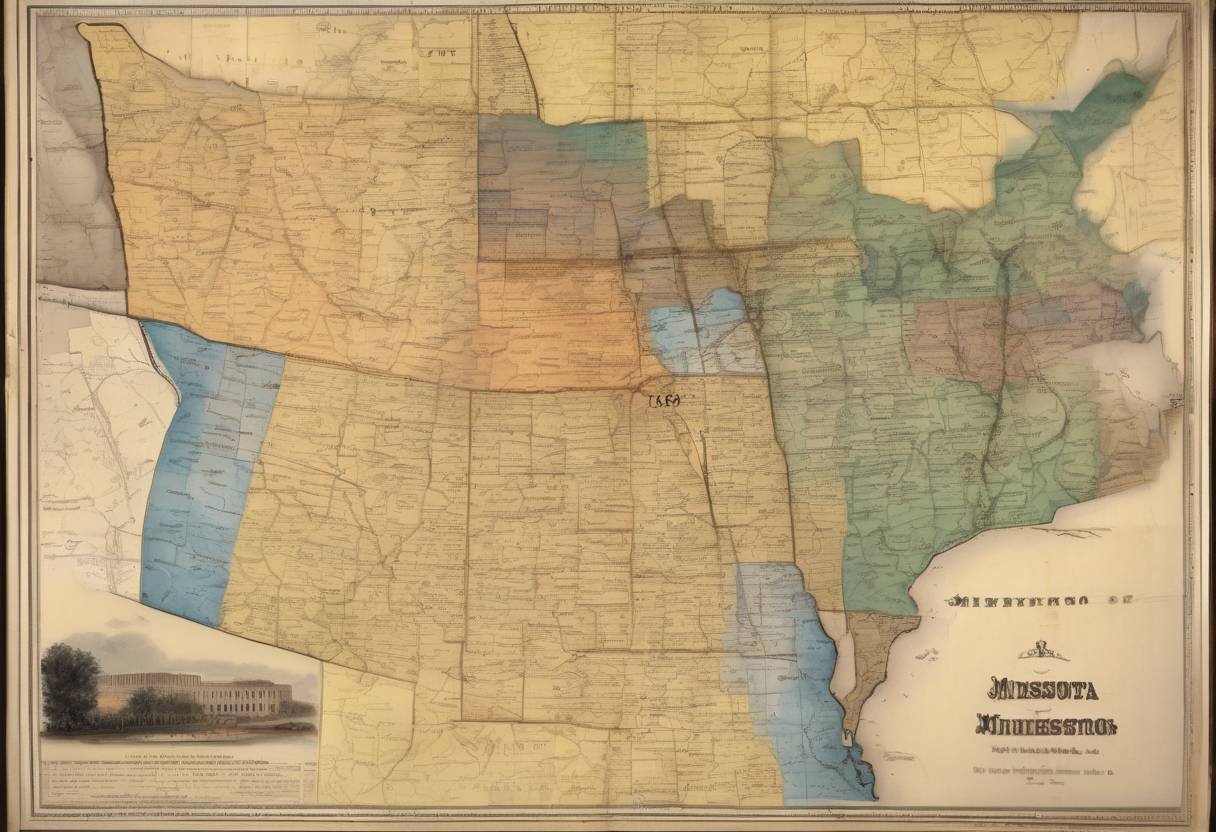
Minnesota’s Admission as the 32nd U.S. State
On May 11, 1858, Minnesota was officially admitted to the United States as the 32nd state. This significant event marked the culmination of a series of developments in the region and had lasting impacts on the state’s growth and the broader expansion of the United States.
Historical Context
Early Exploration and Settlement
- Indigenous Peoples: Before European settlement, the area now known as Minnesota was inhabited by various Native American tribes, including the Dakota Sioux and the Ojibwe.
- European Exploration: French explorers, such as Pierre-Esprit Radisson and Médard des Groseilliers, were among the first Europeans to explore the region in the mid-17th century. The area later came under French and then British control before becoming part of the United States through the Louisiana Purchase in 1803.
Territorial Development
- Minnesota Territory: Established on March 3, 1849, the Minnesota Territory included parts of present-day Minnesota, North Dakota, and South Dakota. The creation of the territory was a response to the growing population and the need for organized governance.
- Population Growth: The mid-19th century saw a significant influx of settlers, particularly from New England and Northern Europe, drawn by the promise of fertile land and economic opportunity.
Path to Statehood
- Constitutional Convention: In 1857, a constitutional convention was held to draft a state constitution. Despite political differences, particularly between Democrats and Republicans, a compromise was reached, paving the way for statehood.
- Congressional Approval: The U.S. Congress approved Minnesota’s statehood, and President James Buchanan signed the act admitting Minnesota to the Union on May 11, 1858.
Significance and Aftermath
- Economic Development: Statehood facilitated infrastructure development, including railroads and roads, which spurred economic growth and increased settlement.
- Political Influence: As a new state, Minnesota gained representation in Congress, allowing it to influence national legislation and policy.
- Cultural Impact: The diverse population contributed to a rich cultural tapestry, with influences from Native American, European, and other immigrant communities shaping the state’s identity.
Broader Historical Impact
Minnesota’s admission as a state was part of the broader westward expansion of the United States during the 19th century. This period was characterized by the settlement of new territories, the displacement of Native American tribes, and the growing tensions over issues such as slavery, which would eventually lead to the Civil War.
Minnesota’s journey to statehood reflects the complex interplay of cultural, economic, and political factors that shaped the United States during this era. Its admission as the 32nd state was a milestone in the nation’s expansion and development.