Donus Becomes Pope on November 2, 676
676 · Rome, Italy
Donus becomes Pope, succeeding Adeodatus II.
June 17, 0676
Pope Adeodatus II was consecrated as the head of the Catholic Church, beginning his papacy. Adeodatus II's tenure is noted for its peace during troubled times and rebuilding efforts.
Rome, Italy | Catholic Church
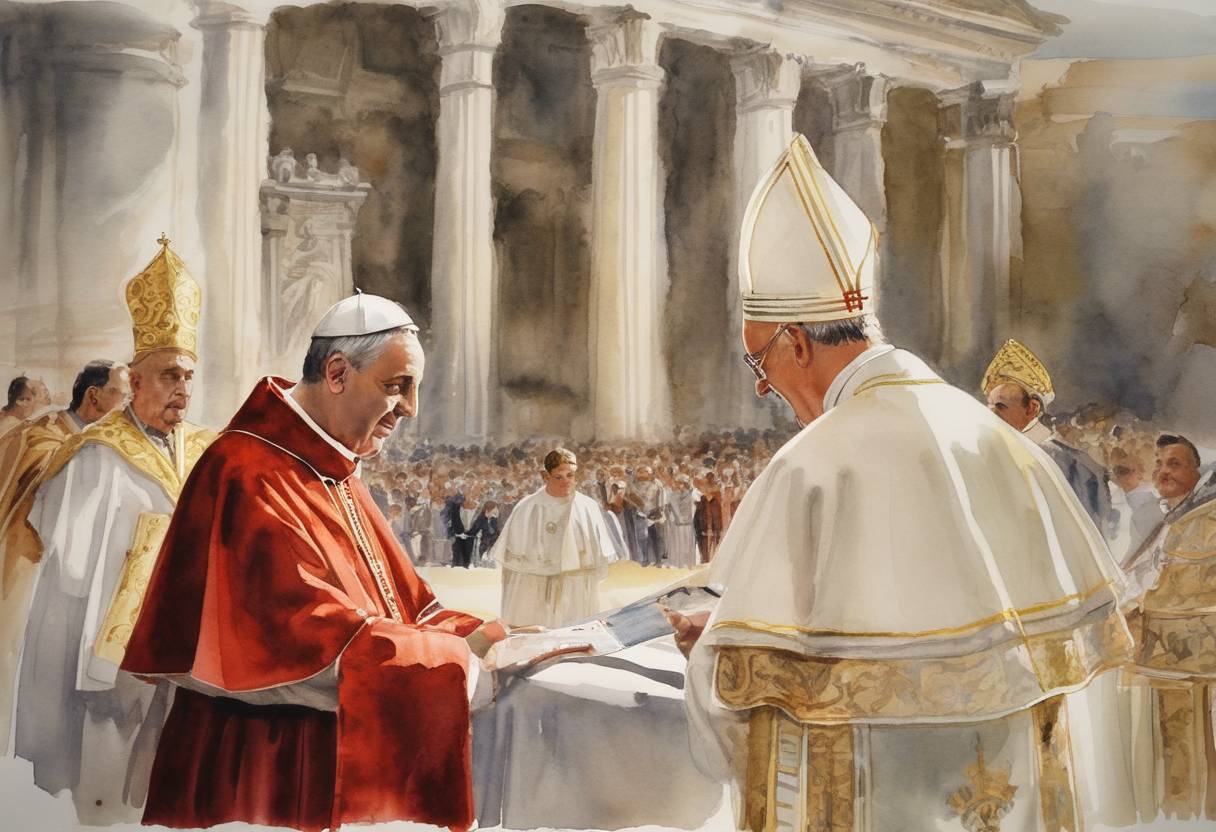
Pope Adeodatus II was consecrated as the head of the Catholic Church on June 17, 676. His election followed the nine-month papal interregnum after the death of his predecessor, Pope Donus. Adeodatus II’s papacy is characterized by its commitment to maintaining stability and peace within the Church during a time of external strife and internal challenges.
Preservation of Peace: Pope Adeodatus II’s reign was relatively peaceful, a notable achievement given the turbulent political environment of the period, which was marked by tensions between the Lombards and the Byzantine Exarchate in Italy.
Monastic Reforms and Support: Adeodatus II, previously a Benedictine monk, was keen on the reform and reinforcement of monastic practices. His papacy focused on the renewal and restoration of monasteries, particularly those that had fallen into disrepair or neglect.
Rebuilding Efforts: He initiated efforts to restore the basilica of St. Peter’s and other church buildings, emphasizing the physical and spiritual upkeep of sacred spaces. This rebuilding was seen as part of his broader mission to solidify the foundations of the Church amid societal upheavals.
Pope Adeodatus II’s leadership is often remembered for its dedication to preserving the integrity of the Church during challenging times. His focus on monastic life and structural restoration helped lay a firmer groundwork for future leaders within the Church.
Adeodatus II passed away on June 17, 678, after two years of leadership, leaving behind a legacy of peace and stabilization that would benefit his successors in the evolving landscapes of both Italy and the broader Church. His commitment to monastic values and church restoration set a lasting precedence for papal priorities in the subsequent years.