Creation of the Illinois Territory
1809 · Washington D.C., United States
The Illinois Territory was created by the 10th United States Congress.
July 8, 1796
The United States State Department issues the first U.S. passport.
Washington D.C., United States | United States State Department
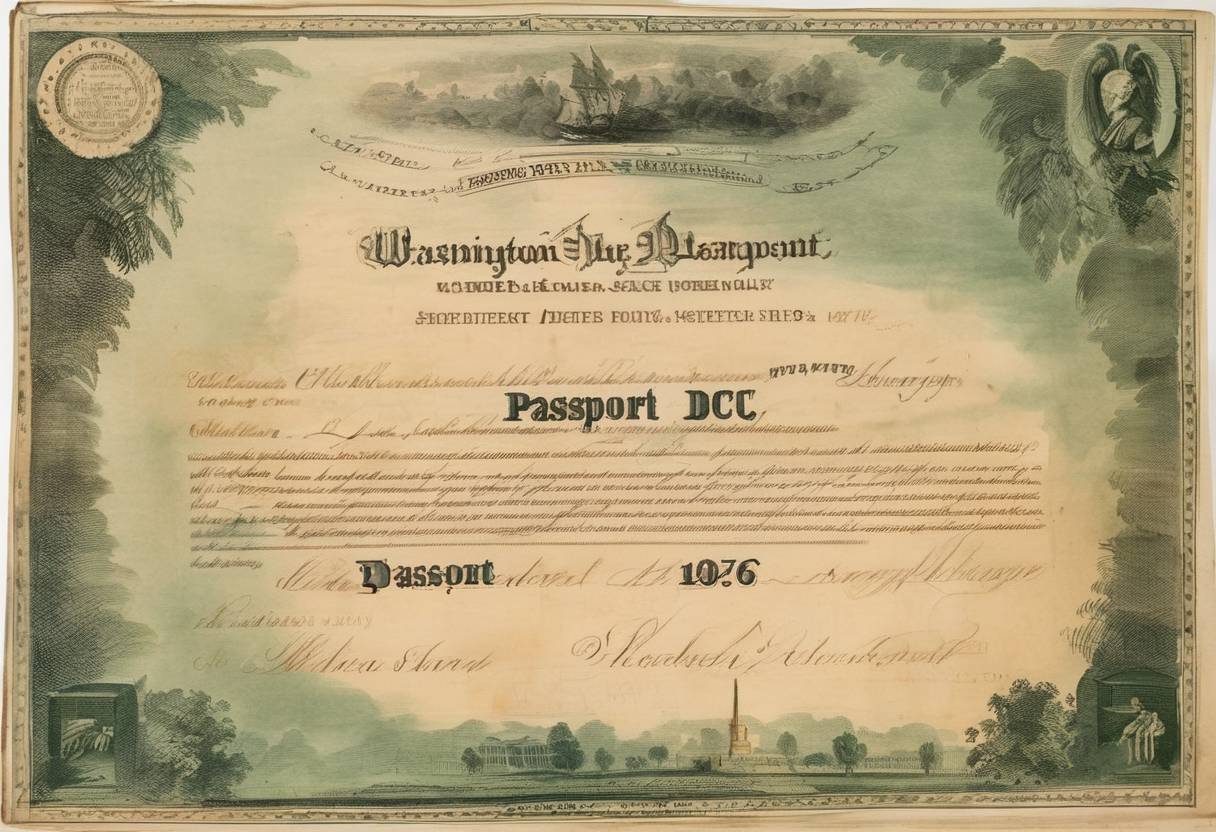
On July 8, 1796, the United States State Department issued its first passport, marking a significant step in the formalization of international travel documentation by the newly formed government. As a nation that had recently established its independence and whose government was still solidifying its international presence, the decision to issue U.S. passports was critical in legitimizing citizens’ international movements and asserting the country’s sovereignty on a global stage.
The United States had declared its independence from Great Britain in 1776, and after a prolonged war and subsequent diplomatic efforts, it secured recognition as a sovereign nation. During the early years of the republic, the new government’s priorities included establishing its institutions and engaging with other nations in matters of diplomacy and trade.
Before the establishment of a centralized system for issuing passports, American travelers relied on letters of introduction or travel certificates issued by local authorities or foreign consuls. These documents lacked standardization and the recognition offered by an official state-issued passport, which was necessary as international travel grew more complex and interconnected.
The July 8, 1796, issuance of a U.S. passport was a critical development reflecting the federal government’s growing involvement in international affairs. It also embossed the State Department’s role in managing matters of international travel and foreign relations. The institution of passports was necessary for ensuring that American citizens abroad had a means of identification and protection under U.S. law.
While the exact details of this first passport and its recipient are not widely documented, the event is notable as part of a broader shift towards formalizing the processes associated with international diplomacy and travel. It helped to establish the precedent for what would evolve into a comprehensive system to monitor and assist American citizens traveling overseas.
Following this initial issuance, the U.S. continued refining its passport application processes, eventually introducing more standardized formats, photographs, and security features. As international relations expanded, so too did the importance of passports, both for security purposes and for maintaining records of citizens abroad.
The evolution of passport authority, from a limited protocol to a well-organized facet of state responsibility, helped set the standard for the role of federal offices in managing the mobility of its citizens beyond national borders. The issuance of the first passport marked the beginning of a structured framework of international engagement and responsibility, reinforcing the identity and protection of Americans worldwide.
The practice of issuing passports has continued to evolve, reflecting both technological advances and the expanding scope of international diplomacy. The first U.S. passport in 1796 laid the foundation for ongoing developments in global governance and personal identification within the United States.