The Donkey as a Symbol of the Democratic Party: January 15, 1870
1870 · New York City, United States
A political cartoon for the first time symbolized the Democratic Party with a donkey.
January 1, 1849
The New York Herald proclaimed the start of the California Gold Rush, reporting large amounts of gold being discovered in California, spurring mass migration to the west.
New York City, United States | New York Herald
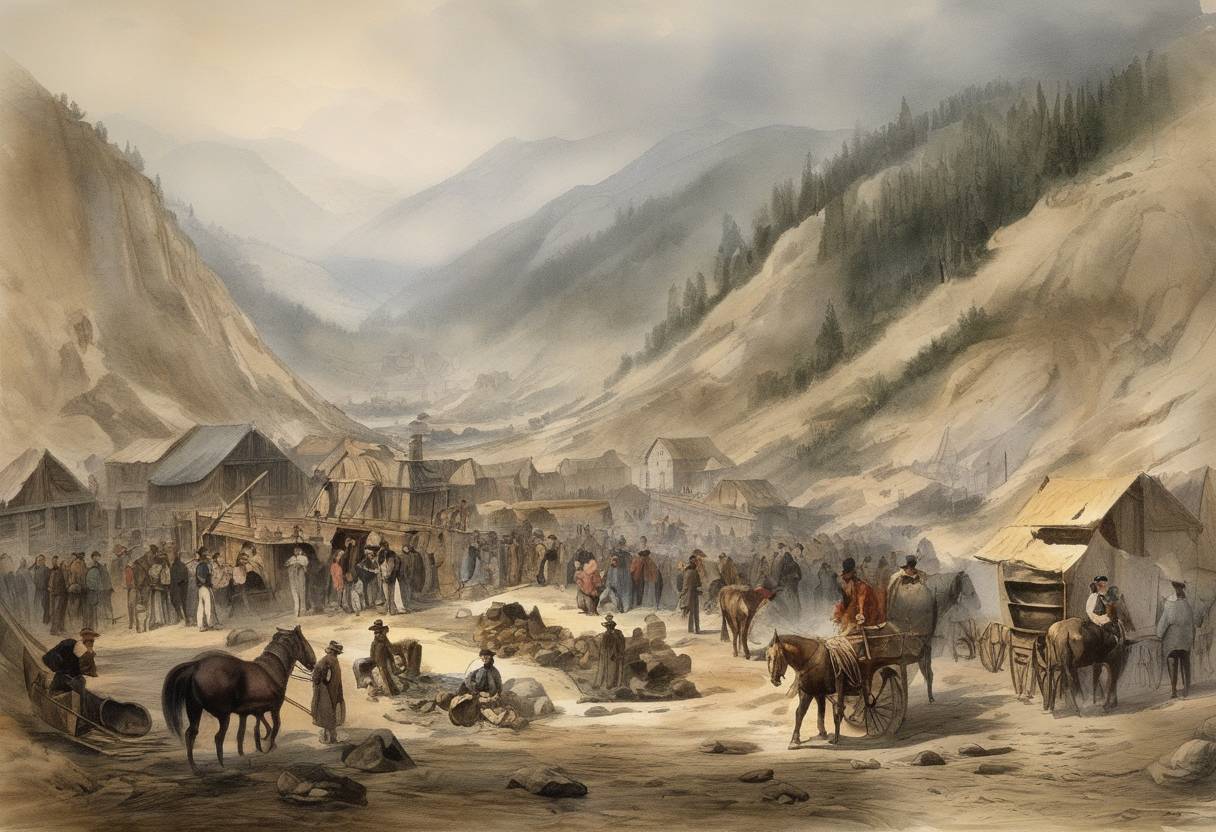
On January 1, 1849, The New York Herald played a pivotal role in amplifying the reach and impact of the California Gold Rush by proclaiming the discovery of significant gold deposits in California. This announcement was a crucial catalyst in initiating a large-scale migration towards the western United States, notably influencing the socio-economic fabric of the nation.
The seeds of the California Gold Rush were sown on January 24, 1848, when James W. Marshall discovered gold at Sutter’s Mill in Coloma, California. Initially, the news spread gradually across the region and then nationally, catalyzed by major newspaper reports such as that in The New York Herald.
On New Year’s Day 1849, The New York Herald described the rich abundance of gold in California. This publication was impactful as it reached a wide audience in the Eastern United States, compelling many to join the movement westward, seeking fortune and new beginnings. The report not only confirmed the rumors circulating about vast gold reserves but also gave them credibility, accelerating the phenomenon that would come to define the Gold Rush era.
The reporting by The New York Herald helped ignite a mass migration known as the ‘49ers, named for this wave of migrants in 1849. Tens of thousands of prospectors, settlers, and entrepreneurs traveled to California by sea and over land. San Francisco saw its population swell as it became a pivotal migration hub and economic center during this period.
The California Gold Rush, fueled by reports such as those in The New York Herald, significantly contributed to California’s rapid path to statehood in 1850. It spurred economic growth not just locally but also nationally, altering the United States’ economy and demographics. Ultimately, the Gold Rush accelerated transportation developments, contributed to the displacement of Indigenous populations, and had lasting environmental impacts due to mining activities.
This historical episode underscores the power of media in shaping societal shifts and its ability to influence the course of events by disseminating crucial information to a broad audience.
Source: en.wikipedia.org