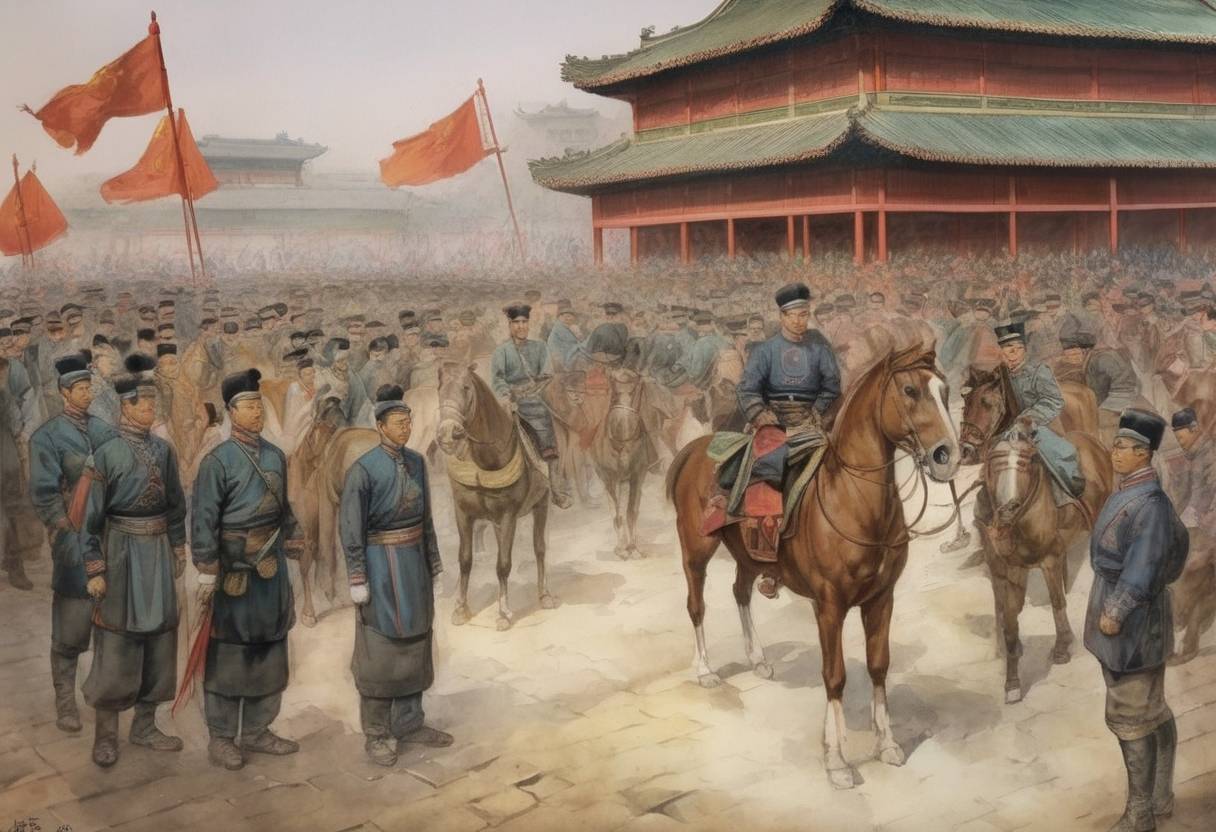
The Boxer Rebellion and the Signing of the Boxer Protocol
Background
The Boxer Rebellion, also known as the Boxer Uprising, was a violent anti-foreign, anti-colonial, and anti-Christian uprising that took place in China between 1899 and 1901. It was initiated by the “Righteous and Harmonious Fists” (Yihequan), a secret society that Westerners referred to as “Boxers” due to their martial arts practices. The movement was fueled by widespread economic distress, anti-imperialist sentiment, and opposition to foreign influence and Christian missionary activities in China.
Key Events Leading to the Protocol
1899-1900: The Boxer Rebellion gained momentum, with Boxers attacking foreign nationals, Chinese Christians, and symbols of foreign influence. The Qing Dynasty, led by Empress Dowager Cixi, initially vacillated in its response but eventually supported the Boxers, declaring war on foreign powers in June 1900.
June-August 1900: An Eight-Nation Alliance, comprising Japan, Russia, Britain, France, the United States, Germany, Italy, and Austria-Hungary, intervened militarily. The alliance’s forces captured Beijing in August 1900, effectively quelling the rebellion.
The Boxer Protocol
On September 7, 1901, the Boxer Protocol was signed, officially ending the Boxer Rebellion. The agreement was between the Qing Dynasty and the Eight-Nation Alliance. Key terms of the protocol included:
Indemnities: China was required to pay 450 million taels of silver (approximately $333 million at the time) over 39 years to the foreign powers as compensation for the losses incurred during the conflict.
Execution and Punishment: Several Chinese officials were executed or punished for their roles in supporting the Boxers.
Military Occupation: Foreign troops were stationed in Beijing and along the route to the sea to ensure compliance with the protocol.
Prohibition of Anti-Foreign Societies: The Chinese government agreed to suppress any anti-foreign societies and movements.
Fortifications: The fortifications of Beijing and other key areas were to be dismantled.
Aftermath and Historical Significance
The Boxer Protocol had significant consequences for China:
Increased Foreign Influence: The protocol marked a significant increase in foreign control and influence over Chinese affairs, further weakening the Qing Dynasty.
Financial Burden: The indemnities imposed a heavy financial burden on China, exacerbating economic difficulties.
Reform and Modernization: The humiliation and consequences of the Boxer Rebellion spurred some reform efforts within China, contributing to the eventual fall of the Qing Dynasty in 1912 and the rise of the Republic of China.
The Boxer Rebellion and its aftermath highlighted the tensions between traditional Chinese society and the encroaching forces of Western imperialism, setting the stage for further revolutionary movements in the 20th century.