The Sinking of the RMS Republic: January 23, 1909
1909 · Nantucket, United States
The RMS Republic, a passenger ship, sinks off the coast of Nantucket after colliding with another ship, resulting in the first recorded use of the CQD distress signal.
June 25, 1850
The barque Candace was launched from the builders Joseph W. Barker at Charlestown.
Charlestown, United States | Joseph W. Barker Shipyard
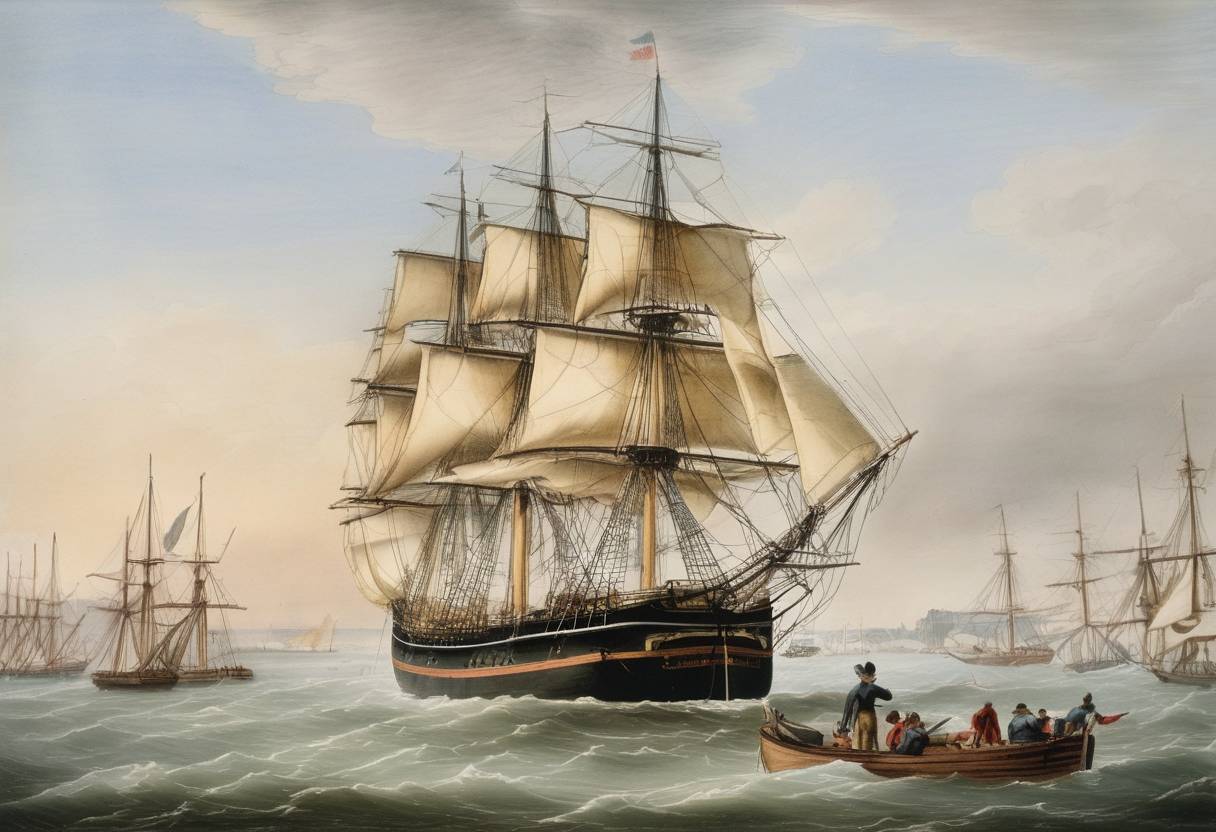
On June 25, 1850, the barque Candace was launched from the shipbuilding facilities of Joseph W. Barker in Charlestown, Massachusetts. This event marked the completion of one of many vessels emerging from this prominent shipbuilding town during the mid-19th century, a period noted for the rapid expansion of American maritime commerce.
Charlestown, a significant hub for shipbuilding during the 1800s, benefited from its strategic location near Boston and access to skilled labor and materials. This allowed shipbuilders like Joseph W. Barker to contribute significantly to the local economy and the broader maritime industry.
While specific details about the Candace’s dimensions or design might not be extensively documented, barques of this era typically featured three to five masts with mixed rigging. This design was favored for long voyages due to its balance of cargo capacity, speed, and ease of handling.
The Candace was likely designed for trading purposes, aligning with the maritime economic activities common during this period, which included transporting goods and raw materials across the Atlantic and along coastal routes.
The launch of vessels like the Candace highlights the industrial and economic development occurring within the United States during the mid-19th century. Shipbuilding was a major factor in the expansion of American trade networks and naval capabilities, playing a critical role in the economic history of the period.
While specific records of the Candace’s voyages or ultimate fate may not be widely noted in historical records, vessels of its kind typically engaged in various commercial activities, including the transport of cotton, sugar, and other commodities that fueled both domestic markets and international trade relations. These activities facilitated economic growth and integration in a rapidly changing pre-Civil War America.
Source: books.google.com