Inchon Landing: A Turning Point in the Korean War
1950 · Inchon, South Korea
UN forces, led by General Douglas MacArthur, launched the successful Inchon Landing during the Korean War, which turned the tide in favor of the United Nations Command.
March 14, 1951
During the Korean War, United Nations forces recapture Seoul from Chinese and North Korean forces.
Seoul, South Korea | United Nations Command
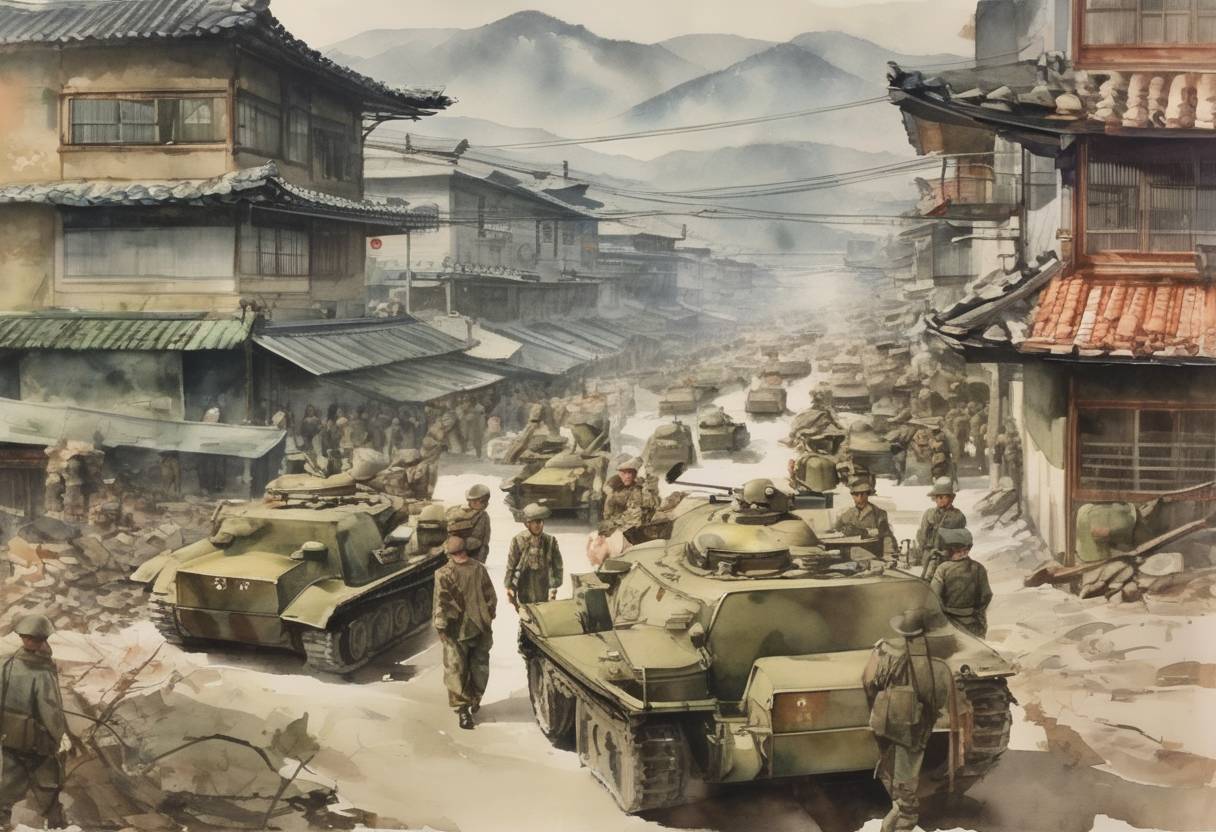
On March 14, 1951, during the Korean War, United Nations (UN) forces successfully recaptured Seoul, the capital of South Korea, from Chinese and North Korean forces. This event marked a significant turning point in the conflict, showcasing the resilience and strategic capabilities of the UN coalition.
The Korean War began on June 25, 1950, when North Korean forces, backed by the Soviet Union and later China, invaded South Korea. In response, a UN coalition, primarily composed of United States forces, intervened to support South Korea. The war saw a series of rapid advances and retreats by both sides.
Initial Capture by North Korean Forces: Seoul was initially captured by North Korean forces in the early stages of the war, shortly after the invasion began.
UN Counteroffensive: In September 1950, UN forces launched a successful counteroffensive, including the famous Inchon Landing, which led to the recapture of Seoul by the end of that month.
Chinese Intervention: In late 1950, Chinese forces entered the war, launching a massive counterattack that pushed UN forces southward, resulting in the second fall of Seoul in January 1951.
Operation Ripper: Under the command of General Matthew Ridgway, UN forces initiated Operation Ripper in March 1951. This operation aimed to push Chinese and North Korean forces back across the 38th parallel and recapture Seoul.
The recapture of Seoul on March 14, 1951, remains a pivotal moment in the Korean War, illustrating the ebb and flow of military fortunes and the broader struggle between communist and non-communist forces during the Cold War era.
Source: en.wikipedia.org